World · India Bureau
NASA's 1995 Space Experiment: Japanese Quail Eggs Aboard Mir Station
Three decades ago, NASA conducted a groundbreaking biological experiment by sending fertilized Japanese quail eggs to the Russian Mir space station. The eggs spent 16 days in the microgravity environment, marking a significant milestone in space-based life sciences research.
LSN India ·
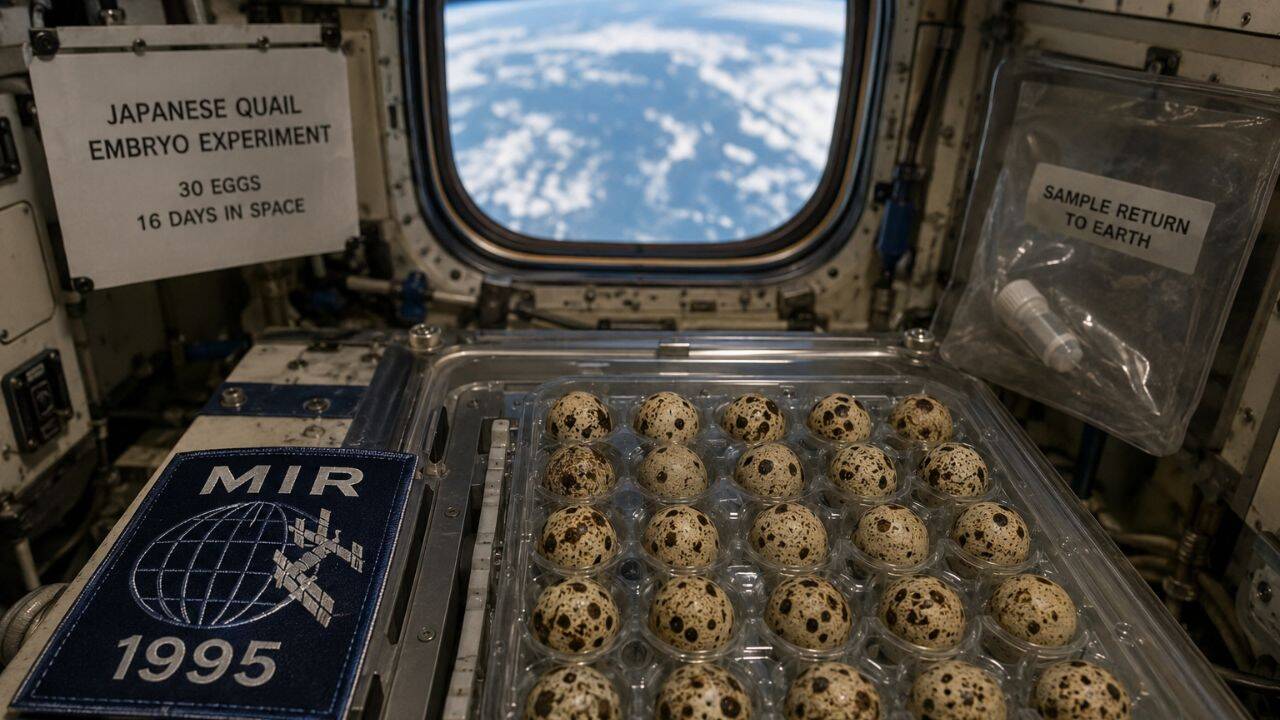
In 1995, the National Aeronautics and Space Administration (NASA) embarked on an ambitious experiment that would expand scientific understanding of reproduction and development in microgravity conditions. The space agency dispatched 30 fertilized Japanese quail eggs to the Mir space station, the orbiting Russian laboratory that served as a hub for international space research during the 1990s.
The eggs remained aboard Mir for a 16-day period, during which scientists monitored their development in the unique environment of space where gravity's effects are virtually eliminated. This experiment was part of a broader research initiative to understand how biological processes essential to life, including embryonic development, are affected by weightlessness.
Japanese quail eggs were selected for the study due to their relatively short incubation period and well-documented developmental stages, making them ideal subjects for space-based biological research. The findings from this mission contributed valuable data to the field of astrobiology and helped inform future long-duration spaceflight experiments.
The 1995 mission exemplified the collaborative spirit of space exploration during the post-Cold War era, when American and Russian space agencies worked together on the Mir station. Such experiments laid the groundwork for understanding how living organisms adapt to space conditions, knowledge that remains crucial for planning extended human missions beyond Earth's orbit.