Business · India Bureau
NASA's space-grown corn reveals microgravity challenges for future farming
NASA scientists have discovered that corn seeds struggle to grow normally in space, with microgravity disrupting the directional development of roots and shoots. The findings highlight critical challenges that must be addressed before humans can cultivate food crops during extended space missions.
LSN India ·
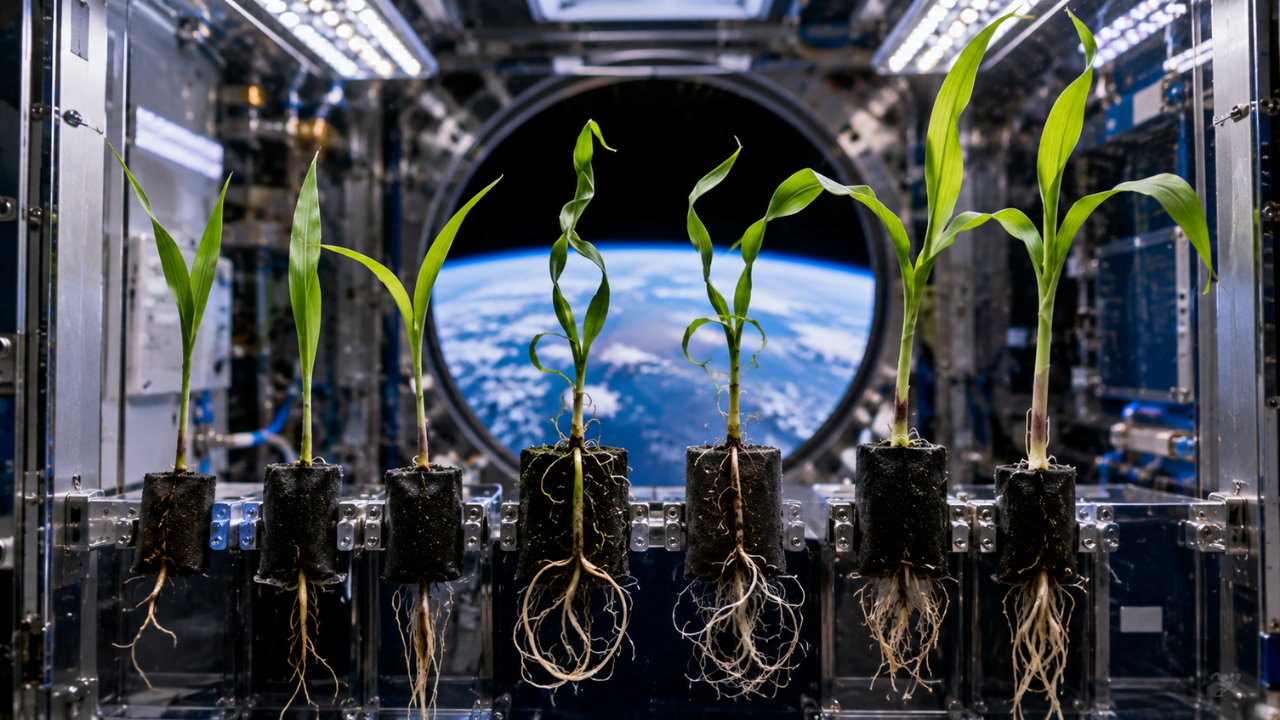
Researchers at the U.S. space agency found that corn seeds, when grown in microgravity environments aboard spacecraft, exhibit erratic growth patterns without the directional cues provided by Earth's gravity. Unlike plants on Earth, which rely on gravitational signals to guide roots downward and shoots upward, space-grown corn showed inconsistent development, raising concerns about food production sustainability for long-duration missions.
The experiments revealed that corn is not alone in facing these challenges. Other plant species, including Arabidopsis thaliana, a model organism frequently used in botanical research, demonstrated similar growth irregularities when exposed to the weightless conditions of space. These findings underscore the complexity of adapting terrestrial agriculture to extraterrestrial environments.
Facing these obstacles, NASA scientists are actively developing technological solutions to compensate for the absence of gravitational forces. Researchers are designing systems that could artificially replicate or counterbalance gravity's effects, potentially enabling crops to develop normally in space habitats.
Understanding how plants respond to microgravity is essential for NASA's ambitious plans to support human exploration beyond Earth. As space agencies prepare for extended missions to the Moon and Mars, the ability to grow reliable food sources in space will be critical to mission success and crew sustainability. The agency's continued focus on plant biology in space environments represents a fundamental step toward making off-world agriculture a practical reality.