World · India Bureau
NASA's Swift Space Telescope Set to Fall to Earth After 22 Years
NASA's Swift Observatory, which has provided invaluable gamma-ray and X-ray observations for over two decades, will re-enter Earth's atmosphere following the failure of a rescue mission. The spacecraft is expected to descend around November 6, with most debris burning up during re-entry.
LSN India ·
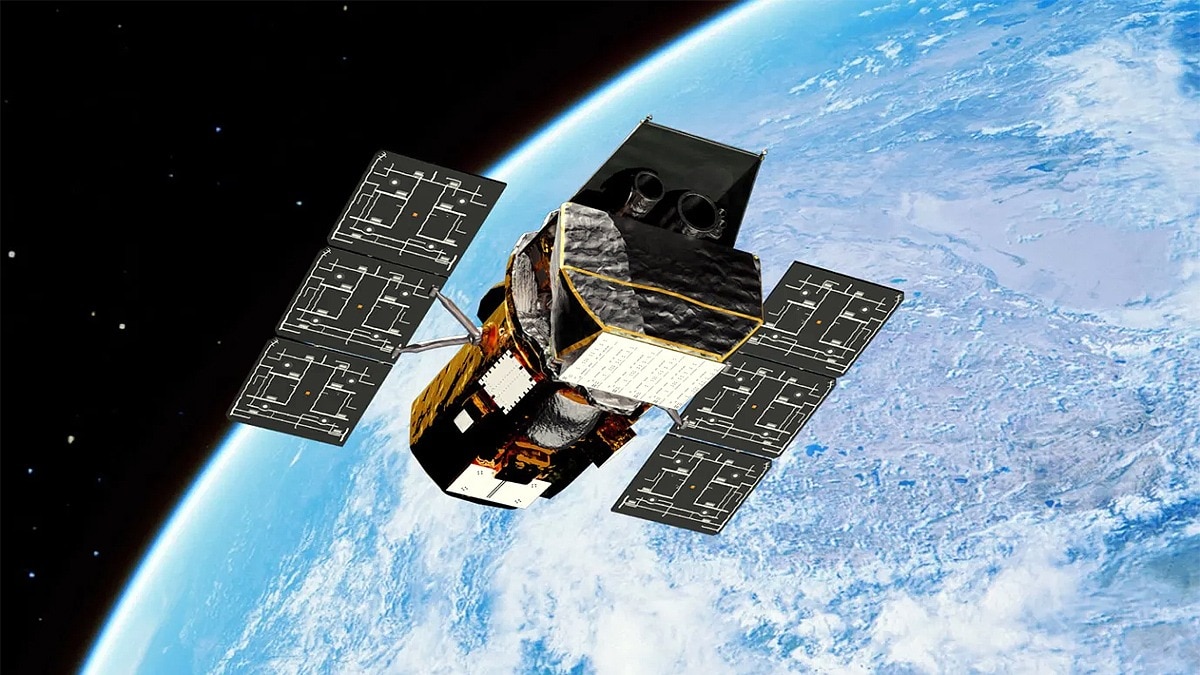
After more than 22 years of groundbreaking astronomical observations, NASA's Swift Gamma-Ray Burst Mission is approaching the end of its operational life as it prepares to re-enter Earth's atmosphere. The space agency's attempt to extend the satellite's mission through a rescue operation has been unsuccessful, prompting preparations for the spacecraft's final descent.
The Swift Observatory, launched in 2004, has revolutionized gamma-ray astronomy and contributed significantly to our understanding of some of the universe's most violent phenomena. Despite its age, the satellite has continued to deliver crucial scientific data that researchers worldwide continue to analyze and utilize.
NASA estimates the spacecraft will enter Earth's atmosphere around November 6. While the majority of Swift's structure is expected to burn up during re-entry due to atmospheric friction, some fragments may survive to reach the surface. The space agency has calculated the risks and determined that the probability of any debris impacting populated areas remains low.
The scientific legacy of the Swift mission will endure long after its descent. Researchers indicate that the vast repository of observational data collected throughout its operational lifetime will remain a valuable resource for the astronomical community for years to come, supporting ongoing research and discoveries in gamma-ray astronomy.