Technology · India Bureau
NASA satellite imagery reveals Australia's massive ancient spider-shaped crater
NASA satellite imagery has captured striking details of a vast crater in Australia that resembles a giant spider when viewed from space. The formation offers new insights into the region's geological history and ancient impact events.
LSN India ·
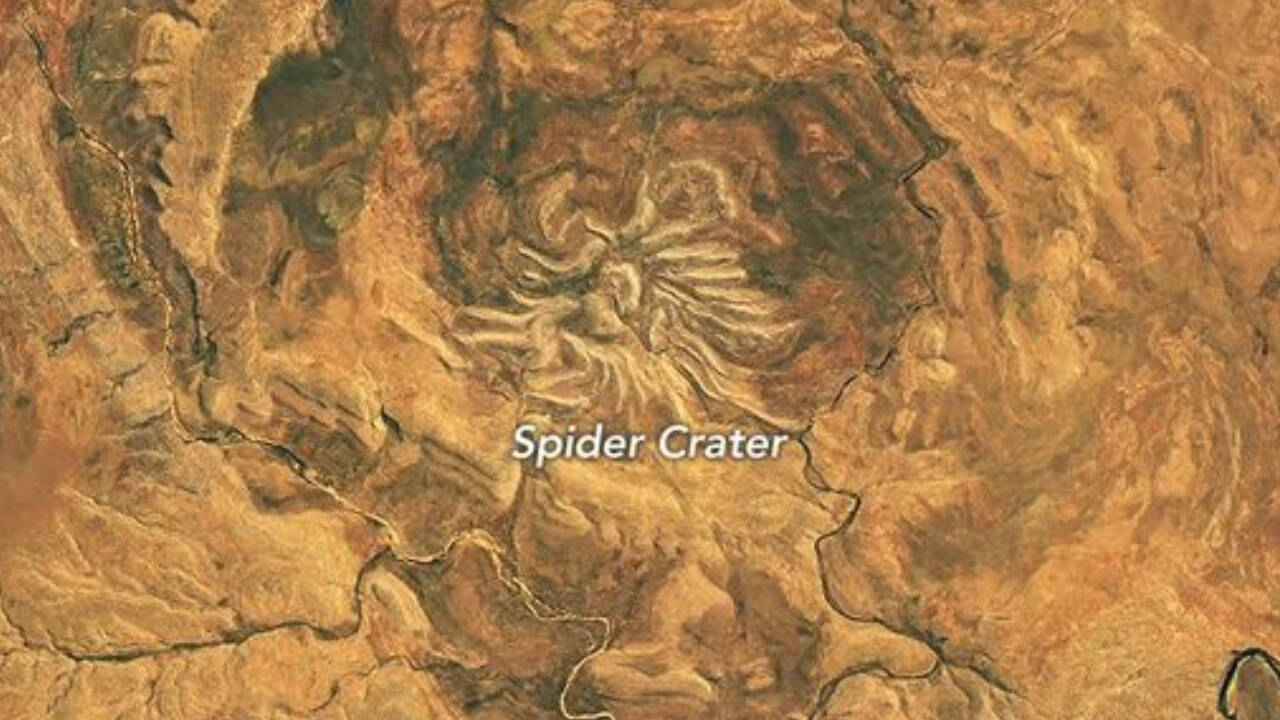
Satellite images captured by NASA have revealed a remarkable geological formation in Australia that bears a striking resemblance to a giant spider when observed from orbit. The crater, with its distinctive radiating arms extending outward from a central impact zone, showcases the dramatic geological forces that have shaped the Australian landscape over millions of years.
The spider-shaped formation is a classic example of an impact crater, created when a celestial object struck Earth's surface with tremendous force. The distinctive radiating pattern visible in the satellite imagery represents fractures and ridges that formed as a result of the violent impact and subsequent geological processes. Such formations provide valuable clues to scientists studying Earth's collision history and the effects of extraterrestrial impacts on planetary geology.
NASA's advanced satellite technology enables researchers to study such remote geological features in unprecedented detail, revealing patterns and structures that might otherwise remain difficult to observe from ground level. The high-resolution imagery captures the subtle variations in terrain, vegetation, and mineral composition that define the crater's boundaries and structure.
Craters of this type represent significant chapters in Earth's geological narrative, documenting periods when the planet was subject to more frequent cosmic bombardment. The Australian crater serves as a natural laboratory for geologists and planetary scientists seeking to understand impact mechanics and the long-term effects of major geological events on terrestrial ecosystems and landscapes.