World · Pakistan Bureau
NASA tackles Martian dust threat before human Mars missions
As NASA prepares for crewed missions to Mars, scientists are working to address a critical challenge posed by the planet's abrasive dust. The fine particles pose potential hazards to equipment, habitats, and astronaut health that must be resolved before humans set foot on the Red Planet.
LSN Pakistan ·
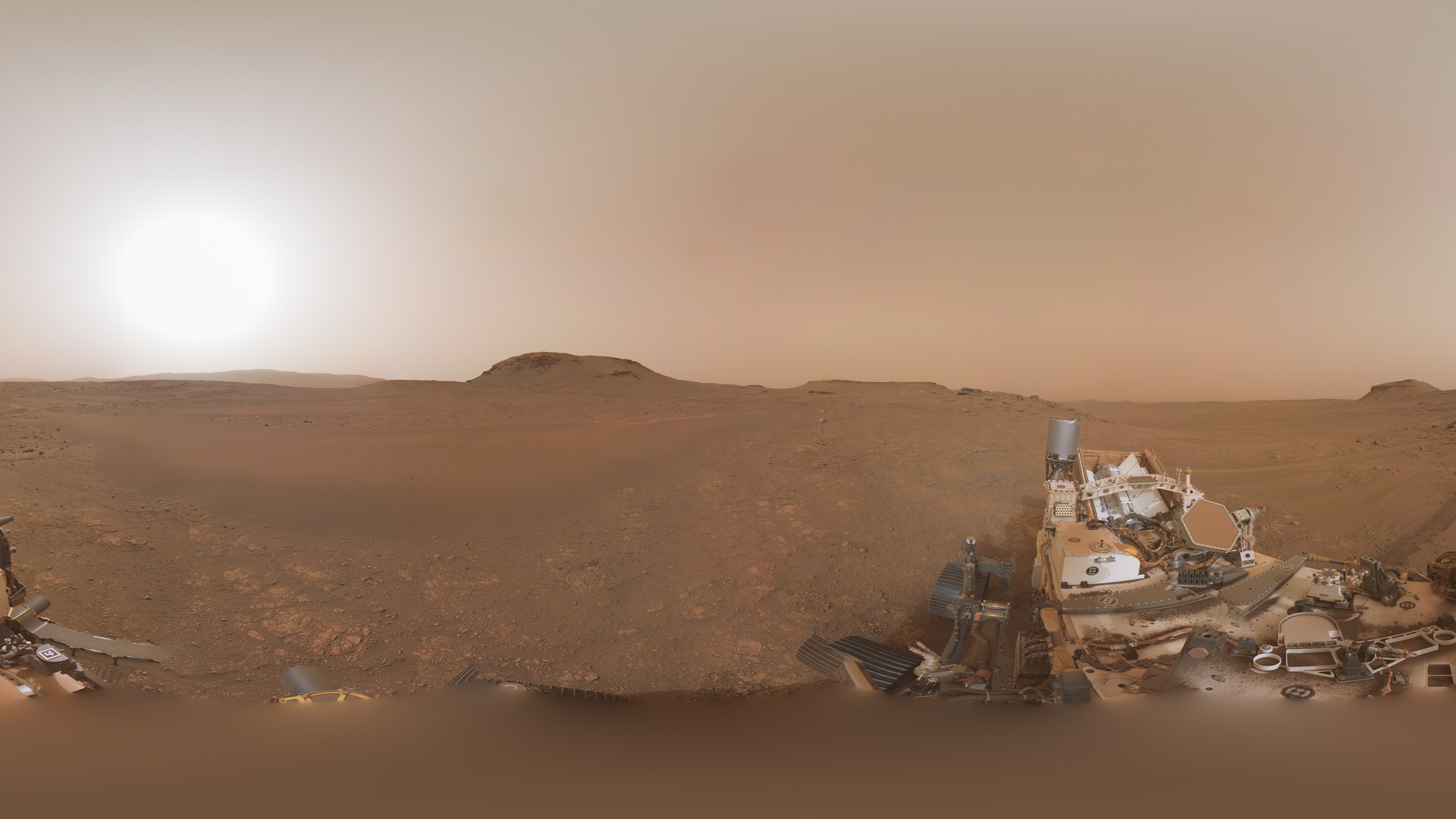
Mars presents a formidable obstacle to human exploration in the form of its pervasive dust, which differs significantly from Earth's dust in both composition and behavior. The Martian dust is extremely fine and electrostatically charged, allowing it to penetrate seals, damage equipment, and potentially compromise spacesuits and life support systems. NASA scientists have identified this dust hazard as one of the key technical challenges that must be overcome before crewed missions can safely proceed.
Research conducted through various Mars rovers and orbiters has revealed that the dust contains abrasive mineral particles that can cause mechanical wear on moving parts and optical surfaces. Additionally, the dust's electrostatic properties allow it to cling to surfaces in ways not fully replicated in Earth-based laboratories. Engineers are developing specialized materials, coatings, and filtration systems designed to withstand prolonged exposure to Martian dust while maintaining equipment functionality.
The space agency is conducting extensive testing and simulation studies to better understand dust interaction with spacecraft components, rovers, and extravehicular activity suits. These efforts include analyzing samples brought back by rovers and developing protective technologies that can be incorporated into future habitat designs and equipment. Resolving the dust hazard is considered essential to ensuring crew safety and mission success during sustained human presence on Mars.
NASA's approach combines material science innovations with engineering solutions aimed at minimizing dust infiltration and managing its effects on critical systems. As plans for lunar missions under the Artemis program advance, the agency is also gathering data that will inform strategies for Mars exploration. The dust problem exemplifies the complex environmental challenges that space agencies must overcome in their pursuit of deep space human exploration.
Photo: NASA's Perseverance rover on Mars during a global dust storm, in a Navcam panorama from Sol 592, 20 October 2022. NASA/JPL-Caltech, processed by semeion.photo, via Wikimedia Commons (public domain).