World · India Bureau
Natural forests outperform planted ones on China's Loess Plateau
An 18-year study of China's Loess Plateau reveals that naturally regenerated forests retain significantly more soil moisture than deliberately planted forests, offering important insights into land restoration strategies.
LSN India ·
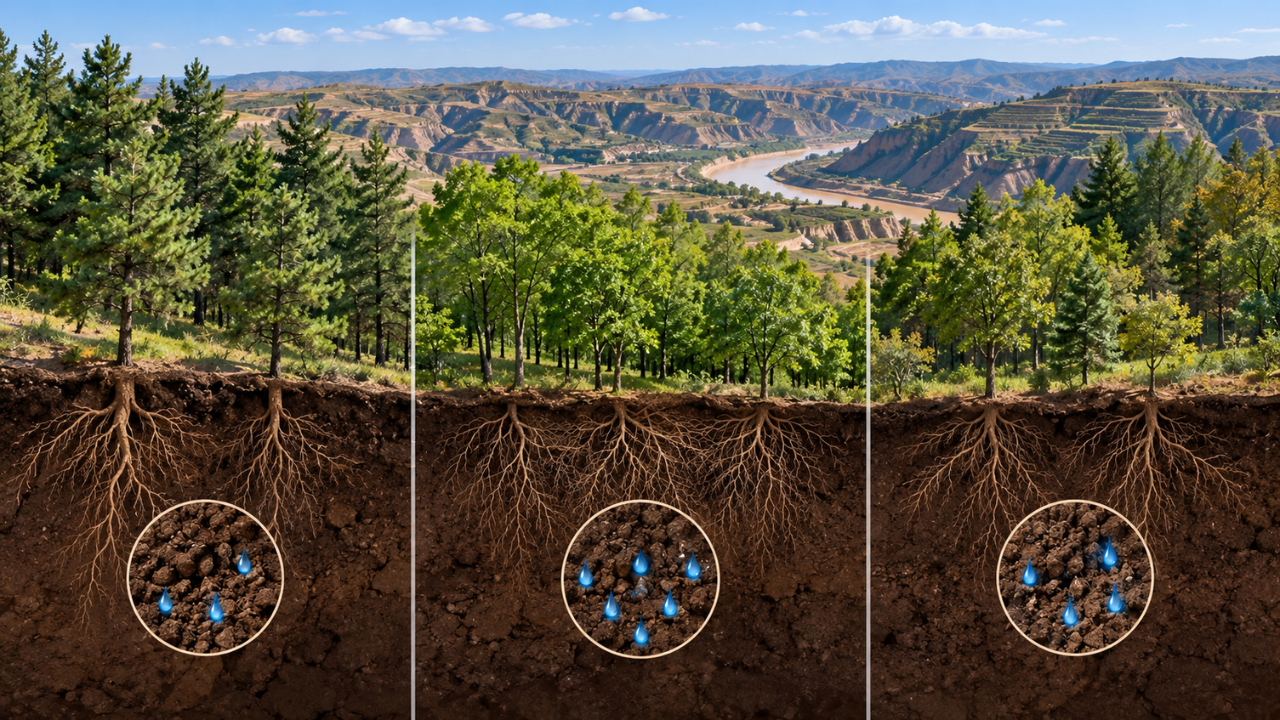
Research conducted across China's Loess Plateau has demonstrated a marked difference in soil moisture retention between naturally regenerated forests and those established through afforestation programs. Over an 18-year period, secondary natural forests maintained approximately 8% higher soil water content compared to planted forests in the same region.
The study found that natural forests exhibited superior soil structure and water infiltration rates, enabling them to preserve moisture more effectively across seasons. In contrast, planted forests showed a declining trend in soil moisture levels throughout the research period, suggesting that artificially established woodlands may face challenges in maintaining optimal hydrological conditions.
These findings underscore the significant hydrological advantages of natural forest regeneration over conventional afforestation approaches. The Loess Plateau, historically prone to soil erosion and desertification, has been the focus of major reforestation efforts in recent decades. The research suggests that allowing natural regeneration processes may yield superior environmental outcomes in terms of soil and water conservation.
The difference in soil moisture retention has implications for both ecological restoration and water resource management in arid and semi-arid regions. Natural secondary forests' consistent performance highlights the importance of incorporating natural regeneration strategies alongside engineered afforestation programs in comprehensive land restoration initiatives.