World · Singapore Bureau
Nepal's deadly floods defy prediction as scientists study devastating surges
Researchers are racing to understand the unpredictable nature of catastrophic flood events that have ravaged Nepal, with surges of mud and water moving with such force that they are nearly impossible for residents to escape.
LSN Singapore ·
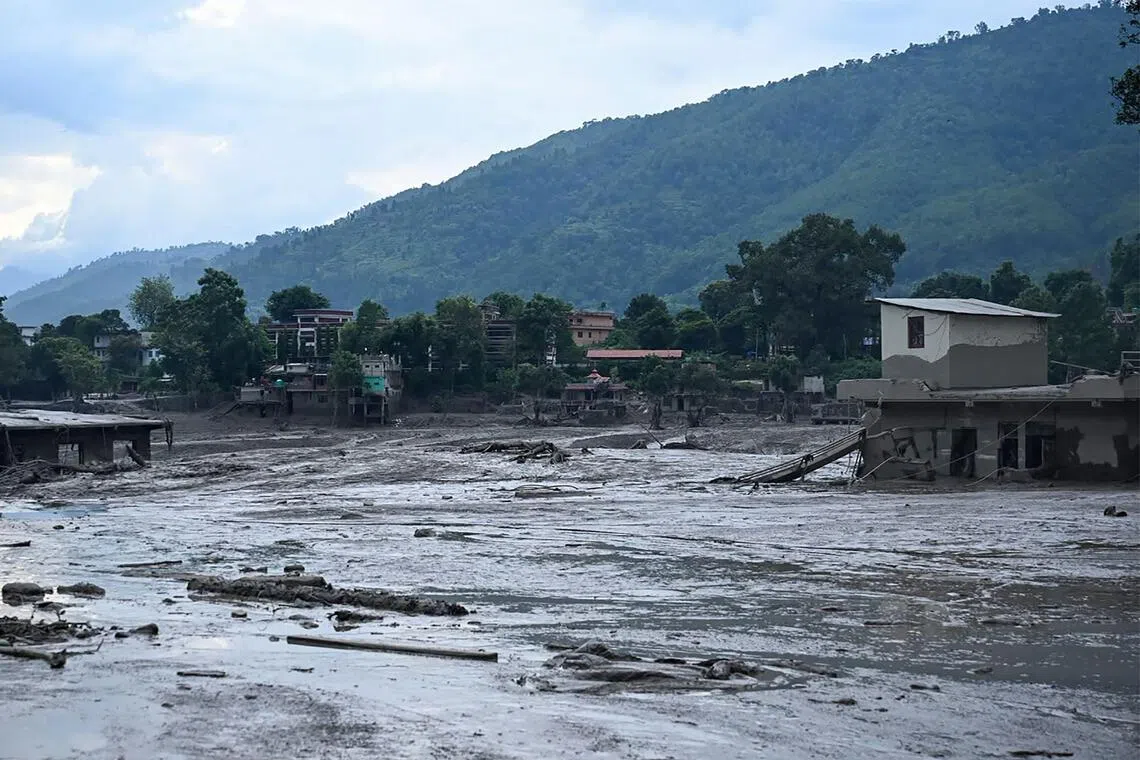
Nepal has faced repeated devastation from sudden, violent flooding events that scientists describe as behaving with extreme force and minimal warning. The surges, which combine mud and water with near-concrete density, strike with such intensity and speed that traditional escape routes often prove ineffective for affected communities.
The scientific challenge lies in the inherent unpredictability of these events. Researchers studying the phenomenon have found that existing early warning systems and evacuation protocols struggle to account for the sudden nature and overwhelming power of these flood surges. The terrain of Nepal, combined with climate patterns and geological factors, creates conditions where such catastrophic events can develop with little advance notice.
Understanding these flood mechanisms has become increasingly urgent as climate variability continues to pose risks across South Asia. Scientists are examining multiple factors that contribute to the formation and trajectory of these deadly surges, seeking ways to improve preparedness and response systems in vulnerable regions. However, the fundamental challenge remains: the speed and force of these events make them inherently difficult to predict with sufficient lead time for effective evacuation.
Experience from recent events has underscored the limitations of current flood management approaches in mountainous regions like Nepal. Authorities and researchers are working to develop more sophisticated monitoring systems and community-based strategies to mitigate the impact of future flooding, though the unpredictable nature of these surges continues to present significant obstacles to prevention and response efforts.