World · Sri Lanka Bureau
Next-generation broadband networks to integrate AI capabilities across infrastructure
Telecommunications providers are advancing beyond traditional connectivity services to deploy artificial intelligence-powered ultra-broadband networks that promise to embed intelligent processing throughout digital infrastructure. The shift marks a significant evolution in how networks will support emerging technologies and services across South Asia.
LSN Sri Lanka ·
The telecommunications sector is undergoing a fundamental transition with the emergence of AI-centric ultra-broadband (UBB) networks designed to deliver computational intelligence alongside connectivity services. Rather than functioning solely as data transmission channels, next-generation broadband infrastructure is being engineered to incorporate artificial intelligence capabilities that can process, analyze and respond to data in real time across distributed network points.
This architectural shift enables networks to support increasingly sophisticated applications and services that require both high-speed connectivity and intelligent data processing. Industries ranging from healthcare and manufacturing to smart city infrastructure and financial services are expected to benefit from embedded AI capabilities that reduce latency, enhance security and optimize resource allocation.
For Sri Lanka and the broader South Asian region, the deployment of AI-integrated broadband networks could accelerate digital transformation across economic sectors. Enhanced network intelligence promises improved service reliability, more efficient resource management, and new opportunities for innovation in emerging technologies including Internet of Things applications, autonomous systems and advanced analytics.
Telecommunications companies are investing in infrastructure upgrades to support these capabilities, with network operators globally recognizing that future competitiveness depends on delivering intelligent, adaptive network services rather than connectivity alone. The transition reflects broader industry recognition that artificial intelligence will be fundamental to next-generation telecommunications infrastructure.
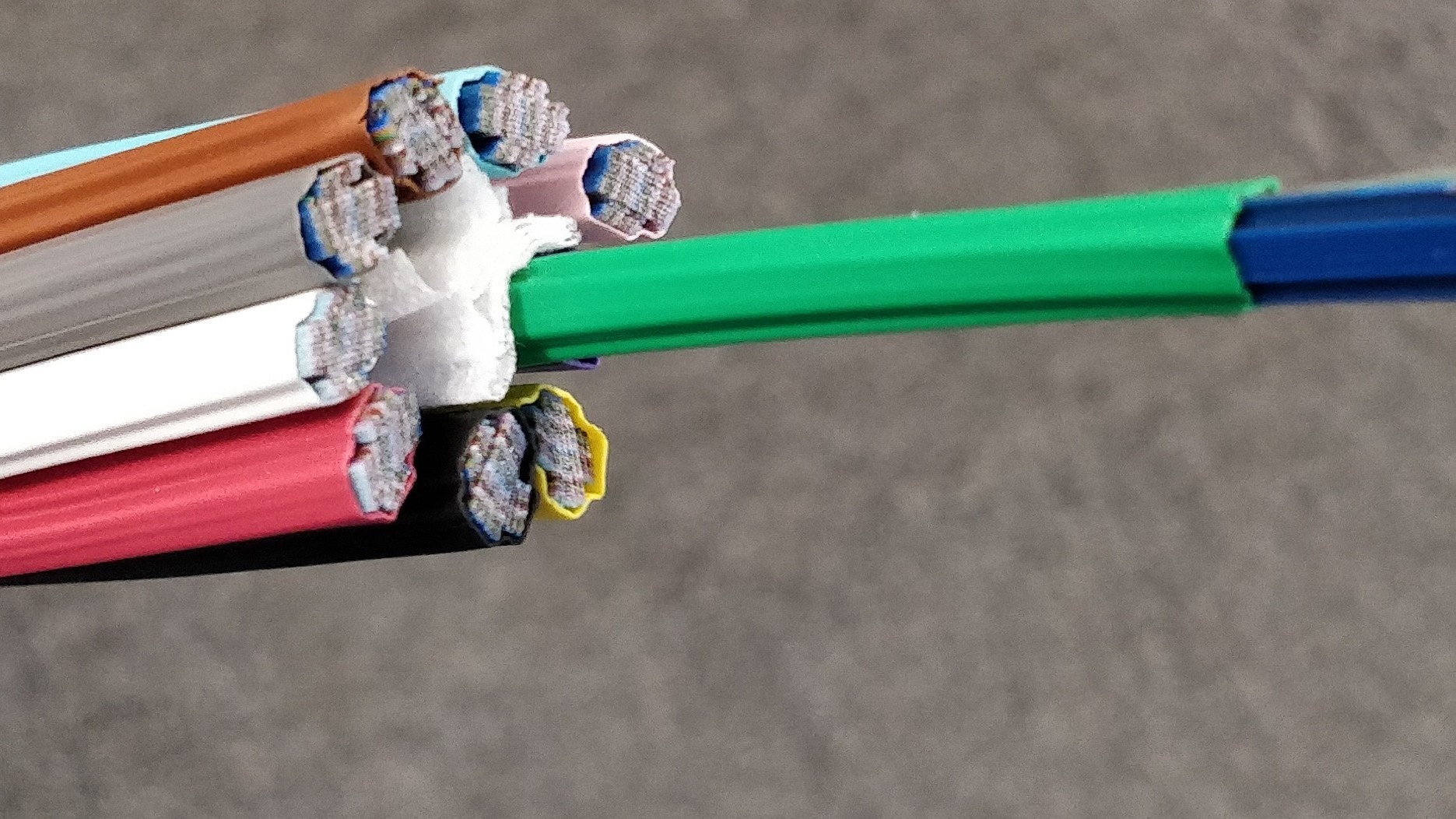
Photo: A cut-away of a fibre-optic ribbon cable, June 2022. Infestor via Wikimedia Commons (CC BY-SA 4.0).