Business · Malaysia Bureau
Nobel Chemistry Prize Honours Breakthrough in Molecular Mirror Technology
Kagan and Soai have been awarded the 2026 Nobel Prize in Chemistry for discoveries that enable chemical reactions to produce single molecular mirror images. The breakthrough has profound implications for the pharmaceutical industry and drug manufacturing worldwide.
LSN Malaysia ·
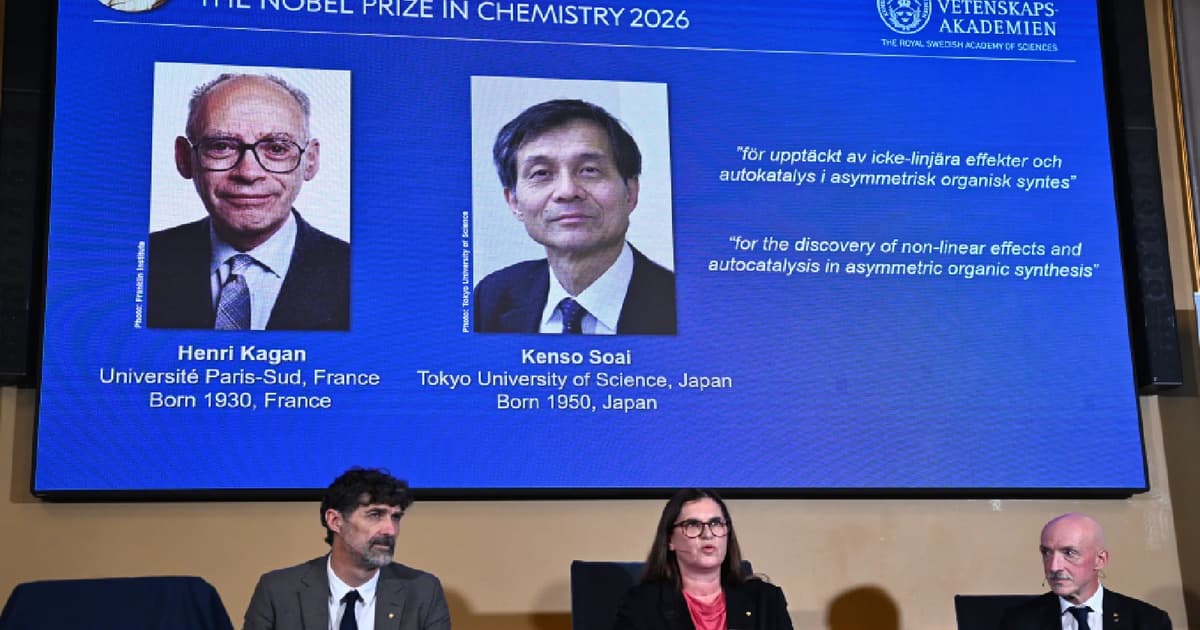
The Nobel Committee has recognised the work of Kagan and Soai for their contributions to understanding how chemical reactions can selectively favour one molecular mirror image over another. This development represents a significant advancement in asymmetric chemistry, a field critical to modern drug development.
Molecular mirror images, or enantiomers, are compounds that are identical in composition but opposite in their three-dimensional arrangement. Many pharmaceutical compounds require specific enantiomers to be effective, as the wrong mirror image can be ineffective or harmful. The ability to produce single enantiomers with high selectivity has long been a challenge for chemists and pharmaceutical manufacturers.
The discoveries recognised by the Nobel Committee provide methods to control chemical reactions so they preferentially produce one desired enantiomer rather than a mixture. This advancement reduces waste in pharmaceutical manufacturing and enables the production of purer, more effective medicines.
The implications of this work extend across the pharmaceutical sector globally. Drug manufacturers can now synthesise medications more efficiently and with greater precision, potentially reducing costs and improving access to medicines. The technology has applications spanning treatments for various medical conditions and represents a fundamental tool in modern medicinal chemistry.
The 2026 prize underscores the importance of fundamental chemical research in addressing practical challenges facing the healthcare and pharmaceutical industries worldwide.