World · India Bureau
Once-dismissed 'junk' DNA plays crucial role in chromosome pairing
Scientists have discovered that repetitive DNA sequences long considered genetic waste actually serve as unique identification markers that help chromosomes locate and pair with their correct partners during egg cell development. The finding challenges decades of assumptions about non-coding DNA and reveals an elegant quality-control mechanism that eliminates defective eggs before they mature.
LSN India ·
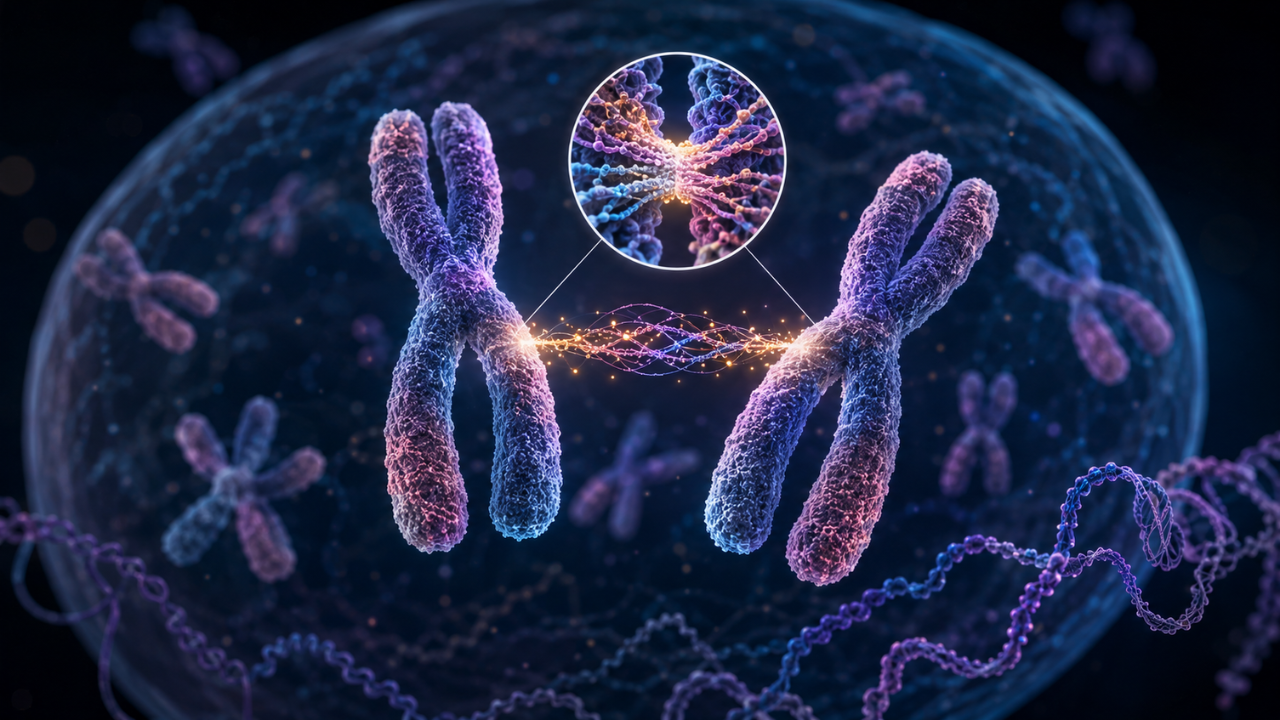
Researchers have identified a previously unknown function of repetitive DNA sequences positioned near chromosome centers, which act as molecular barcodes enabling chromosomes to recognize and pair with their correct partners during the formation of egg cells. These DNA patterns create a distinctive identification system that guides each chromosome toward its appropriate match, a process essential for successful reproduction.
When this barcode system becomes disrupted or damaged, chromosomes fail to identify their partners correctly, resulting in incorrect pairings or complete pairing failures. Such errors can lead to chromosomal abnormalities that would be detrimental to cell viability and reproductive success.
The discovery reveals an elegant quality-control mechanism built into the reproductive process. Eggs containing chromosomal pairing errors are systematically eliminated by cellular surveillance systems before they mature, preventing the propagation of defective gametes and protecting against developmental abnormalities.
The research revives earlier hypotheses about the functional significance of "junk DNA"—the non-coding sequences that constitute a substantial portion of the genome. This finding suggests that many DNA sequences previously dismissed as genetic waste may actually perform critical regulatory and organizational functions, prompting scientists to reconsider the architecture and efficiency of the human genome.
The implications extend beyond basic reproductive biology, potentially informing research into infertility, miscarriage, and age-related reproductive decline in women, where chromosome pairing defects are known to play a significant role.