Opinion: 15-year-old girl and two-month-old infant found in a rock cave in the Knuckles hills — law, social reality and a human dilemma
In the end, the writer says, we must ask ourselves what kind of society we live in. This chain of events, the article argues, quietly questions the great tragedy, about which we do not speak, in a “great society” that we exalt.
LSN Sri Lanka ·
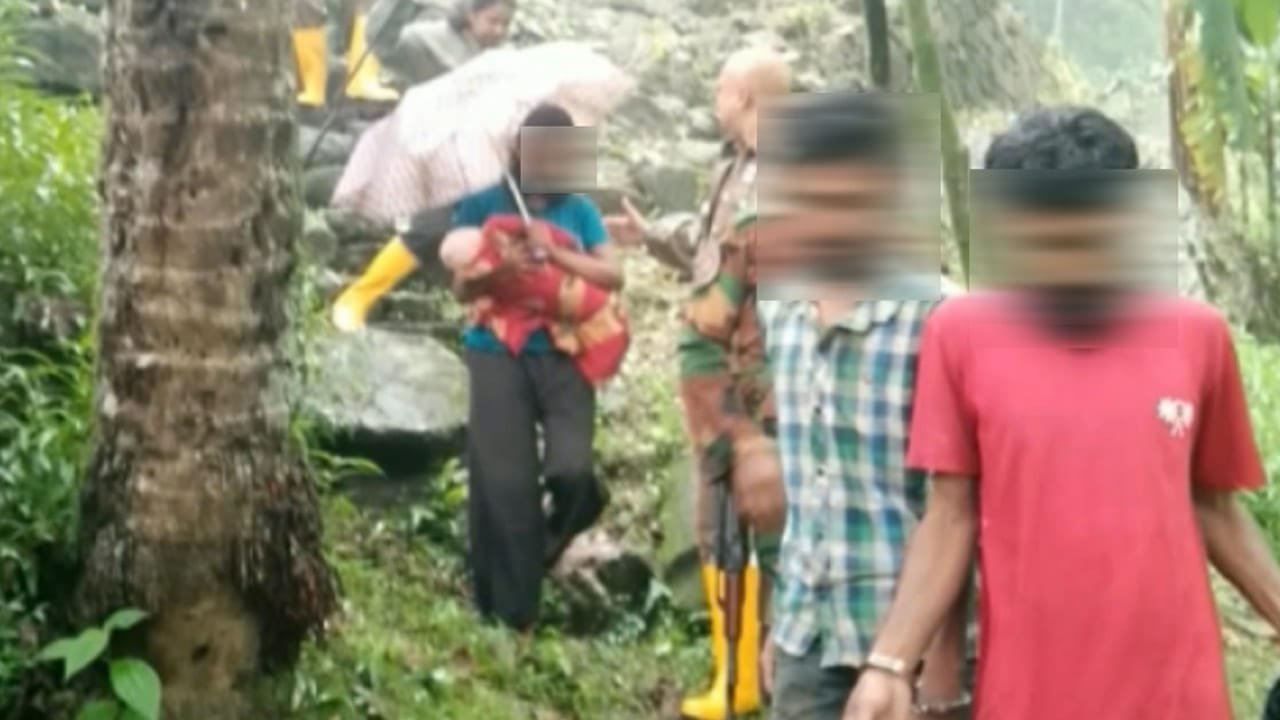
<p>A 15-year-old girl living in the Meemure Kandaketiya area of the Udadumbara police division, near the western slope of the Knuckles hills, went missing about five months ago. Her adults made a complaint to Udadumbara Police about her disappearance. Police investigations began, but no clue was received. The police, however, remained on high alert.</p>
<p>Life in remote, poor village areas such as Meemure is very different from the life we know. Their pattern of consumption is small enough to make one sad. Even very small variations therefore stand out.</p>
<p>A certain young man bought a somewhat larger quantity of food every day from a shop in the area. A young man buying extra rice and food is a small wonder that startles that district. That wonder becomes suspicion. It provides a clue to the police, and the police follow that clue. There is in our country a society whose consumption is such that buying one extra kilogram of rice gives rise to suspicion. The rest of this story should be discussed with that in mind.</p>
<p>The police pursued the young man who bought an extra kilogram of rice, 500 grams of onions and 100 grams of dried sprats. The officers who followed him found, in a dense forest area away from settlements, an underage mother staying with a two-month-old infant inside a rock cave covered with oilcloth.</p>
<p>The 15-year-old girl who had gone missing in the Meemure Kandaketiya area was that mother.</p>
<p>Questioning revealed that the child had been delivered inside the cave itself; that the umbilical cord had been cut with a sharp tool used in kithul-palm work; that herbal medicines obtained from the forest had been used to treat the mother and the infant; and that the infant had been bathed in a pan used for making kithul treacle. The father of this infant is 23 years old. It was he who had bought the extra kilogram of rice.</p>
<p>According to reports, the infant is in a healthy condition. The mother too is well. If so, what is the problem? The problem must be resolved within the legal framework of the wider society.</p>
<p>Under the law, the 23-year-old young man who is the father of this infant has committed a crime. Even the people who helped them to live are offenders before the law. Under the law, the young man has raped an underage young woman. That is a serious offence. Helping them is giving support to a crime.</p>
<p>On that legal basis, the girl’s father — that is, the 23-year-old — and a 36-year-old relative said to have helped him to hold their lives together have been arrested. They have been produced before the Teldeniya Magistrate’s Court and remanded in custody until 20 November. The girl and the infant have been cleaned and referred to Kandy National Hospital for treatment. Further investigations are being carried out by Udadumbara Police.</p>
<p>The incident has spread as a hot news story in newspapers and on social media. But it is a story that goes beyond merely elevating it as “a child being born in a cave” or as “a romantic love in which a boyfriend and girlfriend hid from society and ran away”. It is a human, painful reality, a result of social vulnerability, and a complex dilemma created when the law is enforced.</p>
<p>From a sociological point of view</p>
<p>Meemure and the Knuckles area are a difficult rural region with weak infrastructure. This incident is an illustration of how economic crises, limits in education and health services, and family and community pressures affect the form of a human life.</p>
<p>In a society without sex education and economically impoverished, there is little room for a young couple to form an idea of managing the feelings that arise from their own human nature. Faced with a pregnancy that follows a bond that then develops, they become still more bewildered. There is no space in society for such a situation. In this situation, society has also established an unprotected form in which that couple is described, legally, as criminals. That vulnerability has intensified to the point at which, if they have a pregnancy, a young couple decides to flee to a forest cave. What should finally be examined, the article says, is the inhumane form of this society, which calls itself Sinhala Buddhist. It is not clear to us, the writer says, whether anyone has understood that a young couple is forced to take such a risk because of the failure of society’s systems of safety and support.</p>
<p>The young man’s dedicated conduct, the article says, shows his responsibility. An honesty in not abandoning the child and the young woman, and an effort to protect the household, have been expressed. There is no legal definition for this human dedication. Before the law he is a rapist. Even if he had sexual relations with an underage girl with her consent, that is rape.</p>
<p>How the law operates and the dilemma it creates</p>
<p>In Sri Lanka the legal age of sexual consent is 16. Young women under 16 are children. Sexual relations with children, even if consensual, are treated as statutory rape. The penalties are serious, and although the court has discretion and is careful in some close-in-age situations, the law is basically strict. In this case there is a possibility that the young man will be imprisoned. The girl may be placed on probation or in protective custody. The infant may be sent to a children’s home. The combination of these three creates a social dilemma of pure loss: the family is broken, the child is separated from the mother, the young man is imprisoned, and another burden is added to society.</p>
<p>The purpose of the law is to protect minors. That is essential. But in reality, when adolescent relationships, pregnancies and family pressures push people into such difficult situations, enforcing the law carries a human cost. The question arises: “He protected the household, but the law makes him a rapist.” This is not to say that the law should be abolished. It is a questioning of society, families, education and support systems.</p>
<p>An incident that should not be glorified</p>
<p>It is easy to turn details such as the birth in the cave, the herbal medicines and the use of a kithul tool into a hot story. But it is painful. The story that an underage mother, a newborn infant and a young father tried to look after one another in the forest is not exemplary. It is a sign of social vulnerability. Recurrence of such incidents is not prevented by the law alone. It is prevented by improving education about sexuality, pregnancy and relationships in adolescence, family support, economic opportunities and community protection.</p>
<p>This incident is not solely the problem of one family or one couple. It is a reflection of the gap between the law and human reality in society. The law must be enforced. At the same time, society must create an environment that does not push a young couple to take such risks. An infant born in a rock cave, and the dilemma around her, quietly questions the safety and compassion of our society.</p>
<p>In the end, we must ask ourselves what kind of society we live in. This chain of events, the article argues, quietly questions the great tragedy, about which we do not speak, in a “great society” that we exalt.</p>
<p>Translated from the LSN Sinhala edition.</p>