Opinion: The hidden tragedy in Sri Lanka's drug policy that 'Ratama Ekata' exposes
Until the imbalance between punishment and treatment is corrected, prison cells will keep overflowing, but society will not be freed from the drug menace.
LSN Sri Lanka ·
<p>Ask, on the basis of the statistics, what the most serious social, economic and public health challenge facing Sri Lanka is today, and the answer is alarming. According to the 2024 Census of Population and Housing, the country's total population is 21,781,800 (21.78 million). The adult population aged over 18 is roughly 17 million.</p>
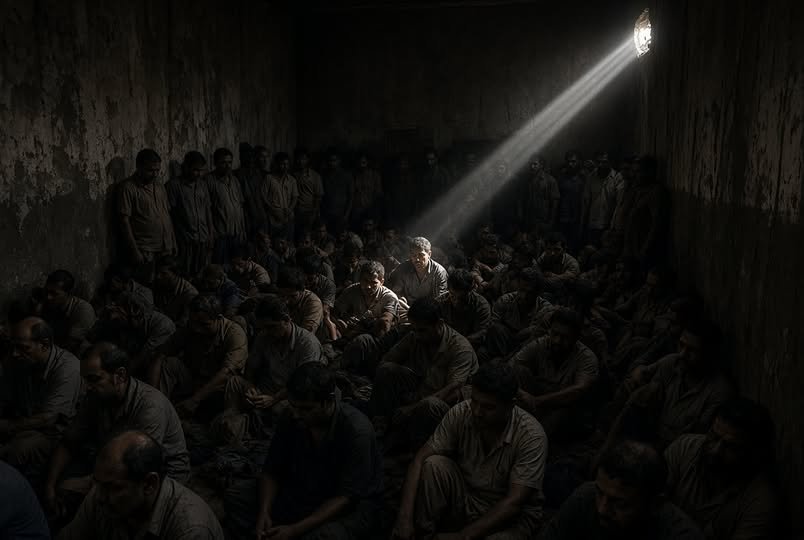
<p>Against that backdrop, Sri Lanka Police have revealed that 321,072 people were arrested for drug-related offences under the "Ratama Ekata" ("The whole nation together") special operation, which ran from 30 October 2025 to 14 November 2026.</p>
<p>By simple arithmetic, that is 1.47 per cent of the entire population. Measured against the active adult population over 18, the figure is 1.83 per cent. Put plainly, close to 2 per cent of the country's population are drug users.</p>
<p>Its real sociological meaning is that in a period of just under a year, roughly two of every 100 adult citizens in Sri Lanka have been arrested under drug laws.</p>
<p>Yet the more serious problem that emerges when one digs deeper into these figures is not the scale of the arrests. It is the huge imbalance in the scientific response the state offers to the people it arrests. Of the 321,072 arrested, only 2,691 have been referred to a rehabilitation process.</p>
<p>That is just 0.84 per cent of all arrests. In plain terms, this approach fails to direct even one in every 100 people arrested into rehabilitation.</p>
<p>The seriousness of this can be understood as follows.</p>
<p>The gap between the law enforcement machinery and the public health rehabilitation machinery is 99.16 per cent. This gap captures well the structural crisis in the country's drug control policy. This is exactly where the inability to genuinely confront the destructive drug menace lies.</p>
<p>The intensity of supply suppression and the structural change in the drug market</p>
<p>A look at the history of drug-related arrests in Sri Lanka shows that the trend has risen sharply over the past decade. According to the 2025 annual data of the National Dangerous Drugs Control Board (NDDCB), operations intensified through the Ratama Ekata programme brought total drug-related arrests across 2025 to 262,321. The most noteworthy point is that arrests involving the synthetic chemical drug 'ice', or methamphetamine, have overtaken traditional plant-based drugs such as cannabis and risen to 35 per cent of the total. The Ratama Ekata operation, launched in late 2025, has intensified these arrests further.</p>
<p>From a criminological perspective, the rise in arrests to 321,072 has to be read in two ways. The first is the hard work and operational efficiency of the police and other law enforcement agencies in trying to cripple the supply chain. The second is how deeply rooted the demand for drugs and the consumer base remain in society, even in the midst of such a massive series of police operations.</p>
<p>In particular, the high rate of arrests among young people aged 18 to 21 revealed by police data is a direct threat to the country's future workforce. In a country trying to recover from an economic crisis, it is clear that young people in the most productive age group falling into legal proceedings and drug addiction in this way will cause a long-term economic setback.</p>
<p>The capacity crisis in the rehabilitation system and the 'revolving door' phenomenon</p>
<p>Modern medicine and the United Nations Office on Drugs and Crime (UNODC) accept that people addicted to drugs are not simply criminals but part of a public health problem, suffering from a chronic brain disorder. Against that background, referring only 2,691 of the 321,072 people arrested for rehabilitation is a serious policy contradiction.</p>
<p>According to data reported in 2026 by the Bureau of Rehabilitation and the NDDCB, about 45 per cent of those who complete formal rehabilitation programmes succeed in staying free of drug use. That is a satisfying and encouraging success rate even by international standards. It confirms that the treatment methods and psychosocial interventions used by the country's rehabilitation institutions work in terms of quality.</p>
<p>The problem, however, lies in the capacity available to access that quality service. As even parliamentary committee reports have stressed, the number of beds in rehabilitation centres, the supply of professional counsellors and the funding available are extremely limited compared with the number of people jailed for drug offences. Although the Ratama Ekata operation has increased demand for rehabilitation referrals in some districts, existing institutional infrastructure cannot cope with that demand.</p>
<p>The direct result is what criminology calls the 'revolving door syndrome'. Addicts who are jailed without rehabilitation, or who pay a fine and are released, inevitably return to drug use as soon as they are back in society, and turn to petty crime and trafficking to find money for it. This causes severe overcrowding in the prison system, and raises the risk that young people jailed for a minor first offence will become members of organised drug networks while inside.</p>
<p>Four structural challenges revealed by the data</p>
<p>Analysing these statistics as a whole, four issues that policymakers must address urgently can be clearly identified:</p>
<p>1. The need to classify arrests: Among the 321,072 arrested, it must be clearly established how many are large-scale drug traffickers, how many are small-scale distributors and how many are addicts simply holding drugs for their own use. Jailing addicts and traffickers under the same legal framework makes the problem even more complex.</p>
<p>2. The lag in demand reduction: Public health investment in reducing demand has not matched the resources and effort spent on reducing supply. The 0.84 per cent rehabilitation rate is a mirror of that policy imbalance.</p>
<p>3. The complexity of chemical drugs: That about 35 per cent of all arrests are linked to 'ice' is a serious health warning. The neurological and mental disorders, including psychosis, caused by methamphetamine use are far more severe than those caused by heroin or cannabis, and require specialised medical treatment facilities.</p>
<p>4. The socio-economic cost: The number of family units built around the more than 300,000 people arrested could be close to a million. When parents or family breadwinners are jailed or addicted, a range of secondary social harms follow, such as children's education breaking down, domestic violence rising and poverty deepening.</p>
<p>The way forward to a balanced policy approach</p>
<p>International experience shows that no country in world history has defeated the drug menace through police power and harsh punishment alone.</p>
<p>Breaking the supply network, bringing large-scale traffickers to justice and confiscating their illegal assets are undeniably essential steps.</p>
<p>But unless the demand reduction mechanism is activated with equal speed and strength, the drug market cannot be broken even if arrests rise by several hundred thousand more.</p>
<p>To that end, first, community-based rehabilitation programmes operating under judicial supervision should be expanded instead of imprisonment. Since sending every addict to a residential centre is not practical, the current coverage of 0.84 per cent could be raised quickly by setting up outpatient treatment and counselling services through regional hospitals and Medical Officer of Health (MOH) offices.</p>
<p>Second, scientific primary prevention programmes targeting the school and university system should be implemented, and an aftercare mechanism should be built that provides vocational training and job opportunities to stop people who complete rehabilitation and return to society from relapsing.</p>
<p>The most important lesson the Ratama Ekata statistics teach us is that at a moment when the law enforcement machinery is working at full capacity, the treatment and rehabilitation machinery remains weak.</p>
<p>Until this imbalance between punishment and treatment is corrected, prison cells will keep overflowing, but society will not be freed from the drug menace.</p>
<p>(Sources: Department of Census and Statistics (2024 Census of Population and Housing report), Sri Lanka Police / Police Media Division (Ratama Ekata operation data), National Dangerous Drugs Control Board (NDDCB) 2025 annual reports, official statements of the Bureau of Rehabilitation and parliamentary committee reports.)</p>
<p>Translated from the LSN Sinhala edition.</p>