Opinion: The robe is not above the law: what the Kassapa saga reveals about the crisis in the Sangha
The robe is not above the law. The respect it commands must be earned by the conduct of the one who wears it. When that line breaks down, it is not just one person's monkhood that is in crisis, but the trust society places in the religious institution itself.
LSN Sri Lanka ·
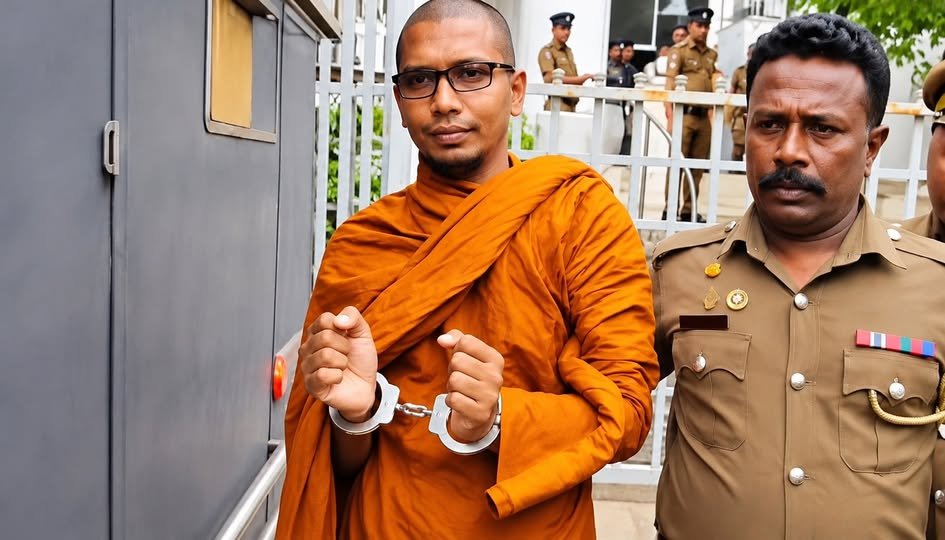
<p>The conduct of Balangoda Kassapa Thero has now gone well beyond a question of one monk's discipline. It has exposed a conflict between religious authority, the law of the state and political power in Sri Lanka. The most serious issue is not that he has been remanded. It is the attempt to establish before society that a person who wears the robe has a special right to act free of the law of the state.</p>
<p>Who stands above the law?</p>
<p>Kassapa Thero declared that he is answerable only to a Sangha court and not to any secular court. There is a Sangha tradition for governing a monk's discipline, but it is no substitute for the criminal law of the state. Wearing the robe gives no one the privilege of ignoring court orders. History bears this out. Our history holds many instances in which monks who broke the law of the state faced punishments ranging from being disrobed and expelled from the Sasana to the death penalty. There were limits to the social pressure that gave the robe political protection. We do not know whether people like Kassapa have enough education to know this history.</p>
<p>He protested in defiance of two court orders. Although he was required to appear before court in a specific case, he did not appear, and instead went on a fast and was issued a warrant. He continued fasting after the warrant was issued. During the fast he abused the police in foul language, swung a stick and challenged civilians to fight. He was part of a group involved in a clash with another monk, who was struck on the head with a stick and suffered an injury that needed 12 stitches. He was then taken into police custody.</p>
<p>Kassapa, who was brought from Anuradhapura prison to the Trincomalee court, is now in prison on a Trincomalee court order, and remained there as of today (17 November). Having tried to toy with the courts by defying them, he is now moving through the procedure followed when a person comes under the judicial process. The parties that appear to have sponsored him are no longer to be seen. Those who used Kassapa's robe to settle political scores are gone. He is facing the reality of dealing with the problem alone.</p>
<p>Conduct revealed at the hospital</p>
<p>The Anuradhapura court had ordered that Kassapa Thero and the group arrested with him be given a drug test and referred for a psychiatric examination. At the hospital, Kassapa Thero refused to allow a blood test. Footage of him shouting and threatening police officers was circulated on social media and by the mainstream media.</p>
<p>A special police team has now been ordered to investigate the clash at the Ruwanweliseya in Anuradhapura. That investigation will reveal the conduct of the monks on both sides of the clash. In the end, what it will question is the legal and moral limits of a citizen.</p>
<p>What society expects from a monk is restraint and the ability to calm a conflict. But when a monk himself becomes a main party to a conflict and displays threatening behaviour, the moral shock it causes in society is no small thing.</p>
<p>The robe as political power</p>
<p>Sri Lankan Buddhist society shows special respect to the robe. That respect is built on society's expectations of restraint, contentment with little, compassion and discipline. When the respect born of that lofty cultural value, handed down through history, is used as personal power, its nature changes. In sociological terms, this is the conversion of symbolic capital into political power. Its method is to build a belief that the respect owed to the robe lends one's actions a legitimacy that cannot be questioned.</p>
<p>That opens the way to interpreting criticism of the conduct of the person wearing the robe as an attack on the religion, and enforcement of the law as persecution of monks. We saw the scale of the social disaster this causes at the dansal grounds in front of the Ruwanweliseya.</p>
<p>What can the Mahanayake Theros do?</p>
<p>The deepest side of this crisis is opened up by a view put forward by Mawarale Bhaddiya Thero.</p>
<p>In a discussion with Lahiru Mudalige on Hari TV, he raised the question of the real power of the Sangha leadership. His view is that the Mahanayake Theros have no practical power to control such behaviour, and that they hold traditional, nominal positions.</p>
<p>This is not a personal charge against the Sangha leadership. It is a criticism of the institutional structure of the Sangha community. Even where traditional respect exists, if it does not translate into power that can enforce discipline, leadership is reduced to a symbolic post. That gives someone who disregards discipline room to build independent power using a religious identity.</p>
<p>Set beside Kassapa Thero's statement, this situation reveals a serious contradiction. If a monk who rejects the authority of the state's courts cannot in practice be controlled even by the Sangha authority he says he answers to, then his behaviour ends up being checked only by being beaten by the public.</p>
<p>How can the dignity of the robe be protected?</p>
<p>A monk has a legitimate right to hold political views and to stand up against social injustice. Such a stand also carries a social value beyond price. But a monk must understand its limits. A struggle takes shape only when society calls for it. Otherwise, the robe becomes a rag used for settling political scores.</p>
<p>The Kassapa Thero episode leaves society with two questions. How can institutional governance be built that can enforce internal discipline within the Sangha? And how can the respect owed to the robe be prevented from becoming a privilege of freedom from the law?</p>
<p>The robe is not above the law. The respect it commands must be earned by the conduct of the one who wears it. When that line breaks down, it is not just one person's monkhood that is in crisis, but the trust society places in the religious institution itself.</p>
<p>Translated from the LSN Sinhala edition.</p>