Opinion: What does the Russian Prosecutor General's historic visit mean?
The visit is officially about strengthening legal cooperation, but the foreign security team's rejection of Sri Lanka's main legal premises has understandably raised public curiosity and suspicion. Greater transparency would help head off rumours and build trust in state institutions.
LSN Sri Lanka ·
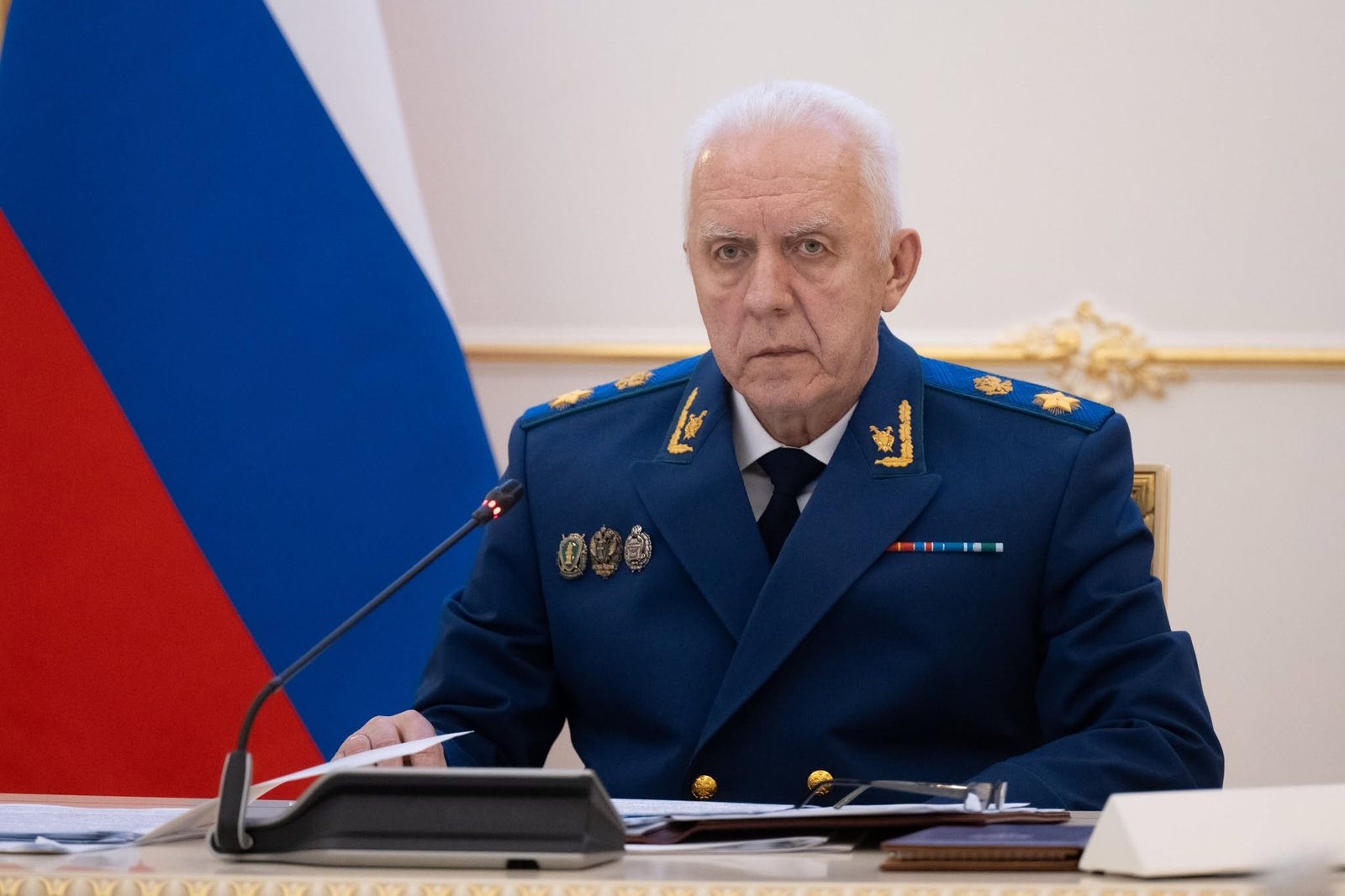
<p>Alexander Vladimirovich Gutsan, Prosecutor General of the Russian Federation, arrived at Bandaranaike International Airport in Katunayake on the night of Wednesday (25 November) on a special Russian state aircraft (RSD-306). Accompanied by a high-level official delegation of 21 members, the visit enters diplomatic history as the first official working visit between the legal supervisory institutions of Sri Lanka and Russia.</p>
<p>Who is Alexander Gutsan?</p>
<p>Born on 6 July 1960 in the town of Siverskiy in the Leningrad region of what was then the Soviet Union, Gutsan is a powerful figure with decades of experience in Russian administration and law.</p>
<p>Early life and education: He began his working life as a toolmaker at a Leningrad electrical engineering plant, and did compulsory service in the Soviet army from 1978 to 1981. In 1987 he graduated from the law faculty of Leningrad State University (now Saint Petersburg State University). Notably, former Russian President and Prime Minister Dmitry Medvedev was a contemporary in his university class.</p>
<p>Administrative and legal career: Gutsan began his legal career at the Leningrad/Saint Petersburg prosecutor's office and served as Deputy Prosecutor General of the Russian Federation for 11 years, from 2007 to 2018. From 2018 to 2025 he served as the President's plenipotentiary envoy to the Northwestern Federal District, a strategically important region of Russia.</p>
<p>Appointment as Prosecutor General: President Vladimir Putin appointed him Prosecutor General of the Russian Federation on 24 September 2025. He has been honoured with the title "Honoured Lawyer of the Russian Federation" and with high state awards including the Order of Honour and the Order of Friendship.</p>
<p>His role in the Russian system of government</p>
<p>The post of Prosecutor General in Russia is very different from, and far broader in powers and structure than, the office of Attorney General in Western or Commonwealth countries, including Sri Lanka.</p>
<p>Sri Lanka's Attorney General acts mainly as the government's chief legal adviser and criminal prosecutor, whereas Russia's Prosecutor General heads the country's entire legal supervisory system. His main responsibilities include:</p>
<p>• Directly supervising whether federal ministries, investigative agencies and regional administrations apply the law properly.<br>
• Appearing as prosecutor on behalf of the state in judicial proceedings.<br>
• Checking the legality of criminal investigations and pre-investigation activities.<br>
• Ensuring that citizens' human rights and freedoms are protected.<br>
• Coordinating the overall crime-prevention and anti-corruption mechanisms.</p>
<p>The aim and strategic importance of the Colombo visit</p>
<p>According to official statements, Gutsan is due to hold bilateral talks with Sri Lanka's Attorney General Parinda Ranasinghe and senior officials of the Ministry of Justice, the Ministry of Public Security and other relevant law enforcement agencies.</p>
<p>1. Cooperation agreements and technical exchange: The main goal of the visit is to sign cooperation programmes and memoranda between the two countries' prosecutors' offices. Information-sharing and technical training are expected, particularly to combat technology-driven cybercrime, corruption, money laundering, terrorism and transnational organised crime. Given the financial crime and cyber security challenges Sri Lanka faces today, gaining technical experience from a country with advanced cyber capabilities such as Russia is important for Sri Lanka.</p>
<p>2. The 70th anniversary of diplomatic relations: In 2027, Sri Lanka and Russia will mark 70 years since formal diplomatic relations began. Although some agreements already existed between the two countries at prosecutors' office level, this is the first time a Russian Prosecutor General has visited Sri Lanka, so it is seen as a step towards raising bilateral legal and diplomatic ties to a new level ahead of the 70th anniversary. However, the real results of the visit will depend on the legal obligations in the agreements signed and how they are put into practice.</p>
<p>Security arrangements and the debate they have raised</p>
<p>What drew the most attention among local media and the public was the tight security surrounding the visit and the change of meeting venues.</p>
<p>Change of venue: Before the visit, newspapers including the Sunday Times reported that Russian security officials who came to Sri Lanka as an advance team had advised that taking Gutsan to the Attorney General's Department in Hulftsdorp or to the premises of the Commission to Investigate Allegations of Bribery or Corruption (CIABOC) was unsuitable for security reasons. Steps were therefore taken to move the official talks to other secure locations. Very tight security was also deployed for the journey from the airport to Colombo.</p>
<p>The government's position: Commenting on this, Justice Minister Harshana Nanayakkara said the Sri Lankan government had imposed no restriction or ban, and that the advice on meeting venues came from the Russian security team's own assessments.</p>
<p>Analytical background</p>
<p>Under international diplomatic protocol, when a senior security or legal chief of a country such as Russia travels abroad, its Federal Protective Service (FSO) carries out an independent security audit. Because the heavy crowding, traffic congestion and layout of buildings around the Hulftsdorp court complex could hamper an emergency evacuation, it is normal for any foreign security team to avoid such places.</p>
<p>Even so, it is reasonable that the rejection of the country's main legal premises by a foreign security team has raised curiosity and suspicion among the public. Although official sources say this is simply a visit to strengthen bilateral legal cooperation, informing the public more transparently about the purpose of such high-level foreign visits, the nature of the agreements signed and security decisions would help prevent needless rumours and strengthen public trust in state institutions.</p>
<p>Translated from the LSN Sinhala edition.</p>