World · Sri Lanka Bureau
Parliamentarians must lead the defence of human rights as global democracy erodes, says UN rights chief Volker Türk
Human rights provide common ground by protecting human dignity, limiting power and setting principles that must be upheld regardless of political differences, Türk said, urging all MPs to take the lead in defending them at a time when they are under severe strain.
LSN Sri Lanka ·
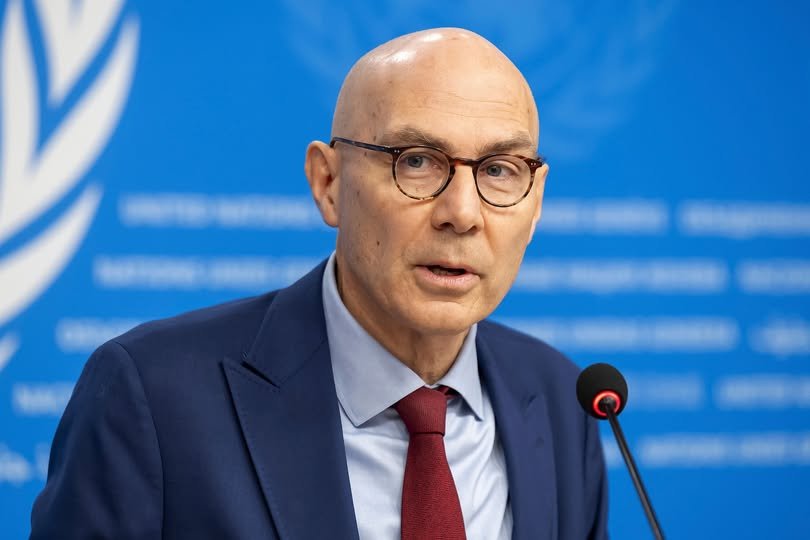
<p>The whole world is in deep turmoil because of armed conflict, rising inequality, discrimination, political polarisation, climate change and fast-evolving technologies such as artificial intelligence (AI), UN High Commissioner for Human Rights Volker Türk has warned.</p>
<p>He made the remarks on 13 November 2026 while addressing the Inter-Parliamentary Union (IPU) Global Parliamentary Summit on Human Rights in Geneva, Switzerland.</p>
<p>These global pressures have led to a retreat of democracy around the world, and the challenges facing human rights institutions and human rights defenders have grown more intense, the High Commissioner said.</p>
<p>Lessons of history and today's challenges</p>
<p>Recalling that the international community has overcome huge crises before, Türk stressed that after the Second World War, states adopted the Universal Declaration of Human Rights to protect human dignity, curb the abuse of power and provide guidance for meeting global challenges. Today, however, those principles and protections are under severe attack, he said.</p>
<p>Threats against parliamentarians</p>
<p>The High Commissioner also expressed serious concern about growing threats faced by parliamentarians. According to IPU data, the overwhelming majority of MPs report being intimidated and harassed, and women and minority representatives in particular are targeted with online attacks. Such attacks weaken democratic institutions and obstruct good governance, he said.</p>
<p>Positive parliamentary action</p>
<p>Despite these challenges, Türk praised several successful examples of parliamentary leadership in advancing human rights. Among the main ones were legislative efforts to abolish the death penalty in countries such as Lebanon and Malaysia, and Portugal's successful drug policy reforms, which helped reduce drug-related harm and HIV infections.</p>
<p>Three key priorities for parliamentarians</p>
<p>The UN High Commissioner for Human Rights set out three main priorities that parliamentarians should pursue to overcome current challenges.</p>
<p>1. Put human rights at the centre of laws and budgets:<br>
- Ensure that all legislation and public spending strengthen human rights rather than weaken them.<br>
- Regulate emerging technologies, especially AI, through transparency, accountability, human rights due diligence and independent oversight.<br>
- Consider the long-term impact of decisions on future generations.</p>
<p>2. Promote inclusive, representative parliaments:<br>
- Increase women's participation and leadership in political decision-making.<br>
- Focus on measures such as gender-equality targets, quotas and reforms that remove structural barriers.<br>
- Address harassment and abuse against women MPs and support policies such as universal childcare.</p>
<p>3. Defend the universality of human rights:<br>
- Reject attempts to politicise human rights or apply them selectively.<br>
- Protect civic space and uphold the freedoms of expression, association and peaceful assembly.<br>
- Engage directly with communities to show how human rights matter in people's daily lives.</p>
<p>A Global Alliance for Human Rights</p>
<p>Türk also drew attention to the launch of the Global Alliance for Human Rights, a broad coalition bringing together governments, parliaments, cities, young people, civil society and business ahead of the 80th anniversary of the Universal Declaration of Human Rights in 2028. Its aim is to strengthen solidarity and mobilise support for human rights worldwide.</p>
<p>Closing his address, the High Commissioner stressed that parliaments play a decisive role in resolving disagreements through dialogue rather than violence, building consensus and advancing the common good. Human rights provide the common ground for this by protecting human dignity, limiting power and establishing principles that must be upheld regardless of political differences, he said, calling on all parliamentarians to take the lead in defending those principles at a time when human rights are under severe strain.</p>
<p>Translated from the LSN Sinhala edition.</p>