World · India Bureau
Passive Cooling Technology Keeps Buildings Cooler Without Power
Researchers have demonstrated that buildings can maintain temperatures significantly below ambient levels using a passive cooling system that harnesses radiative heat loss to the sky. The innovation could offer energy-efficient alternatives to mechanical air conditioning in warm climates.
LSN India ·
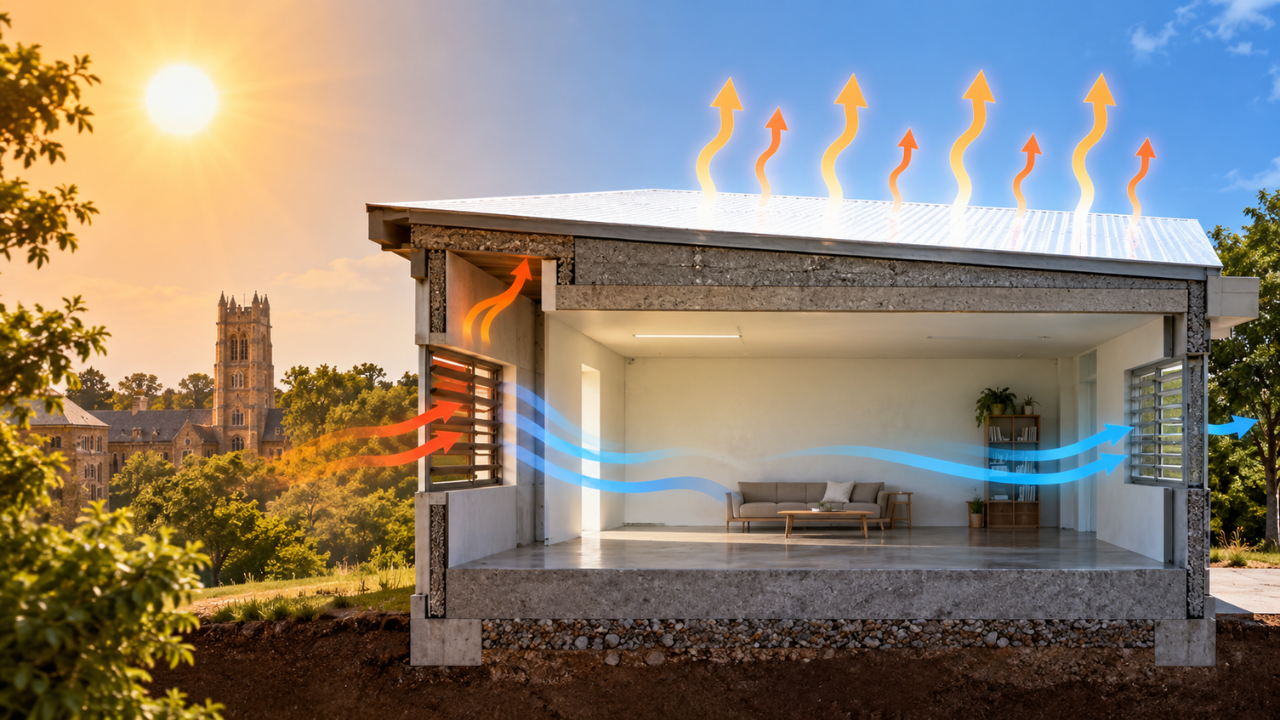
A pioneering experiment has shown that specially designed roofs can cool buildings by up to 3.9 degrees Celsius below outdoor temperatures without consuming electricity. The passive system works by allowing thermal radiation to escape through the atmosphere to space, effectively dissipating heat that would otherwise accumulate in structures.
The technology combines three key elements to achieve cooling: a specially engineered roof surface that releases heat towards the sky, thermal mass within the building that absorbs and stores temperature variations, and natural airflow driven by temperature differences between interior and exterior spaces. This integration creates a self-regulating cooling mechanism that operates continuously without mechanical intervention.
The experimental setup demonstrated that the approach maintains stable indoor temperatures even as outdoor conditions fluctuate. The roof surface plays a critical role by selectively emitting infrared radiation at wavelengths that pass through the atmosphere and into space, while remaining transparent to incoming solar radiation.
For India and other South Asian nations facing rising cooling demands and electricity constraints, radiative cooling presents a compelling alternative to traditional air conditioning systems. The technology is particularly suited to regions with clear skies and moderate humidity levels, where atmospheric conditions favour effective heat radiation. Implementing such systems could significantly reduce energy consumption in commercial and residential buildings while maintaining occupant comfort.