Culture & Entertainment · India Bureau
PCB Seeks $25,000 Per Player for Nepal League Clearance
Pakistan's cricket board has allegedly withheld no-objection certificates for Pakistani players joining the Nepal Premier League unless a substantial fee is paid per player, according to reports.
LSN India ·
The Pakistan Cricket Board under chairman Mohsin Naqvi has reportedly blocked Pakistani cricketers from participating in Nepal's premier domestic T20 league without payment of USD 25,000 per player, raising fresh concerns about player movement restrictions in South Asian cricket.
The financial barrier effectively prevents Pakistani nationals from securing no-objection certificates, or NOCs, which are typically required by cricket boards to permit their players to compete in foreign domestic tournaments. The reported fee structure has drawn criticism from league organizers in Nepal, who argue such conditions place unnecessary impediments on player participation.
Pakistan's cricket board maintains regulatory authority over player movement and has historically imposed conditions on NOC issuance for overseas franchise participation. However, the specific fee requirement marks an escalation in financial conditions previously applied to overseas league clearances.
The development underscores ongoing tensions around player availability and board-imposed restrictions in the South Asian cricket ecosystem. Neither the PCB nor Nepal Premier League officials have formally commented on the reported fee structure, though the allegations have circulated widely among cricket media outlets tracking player registration for the upcoming season.
The incident reflects broader questions about harmonizing player access across regional T20 leagues and the regulatory mechanisms cricket boards employ in managing international participation.
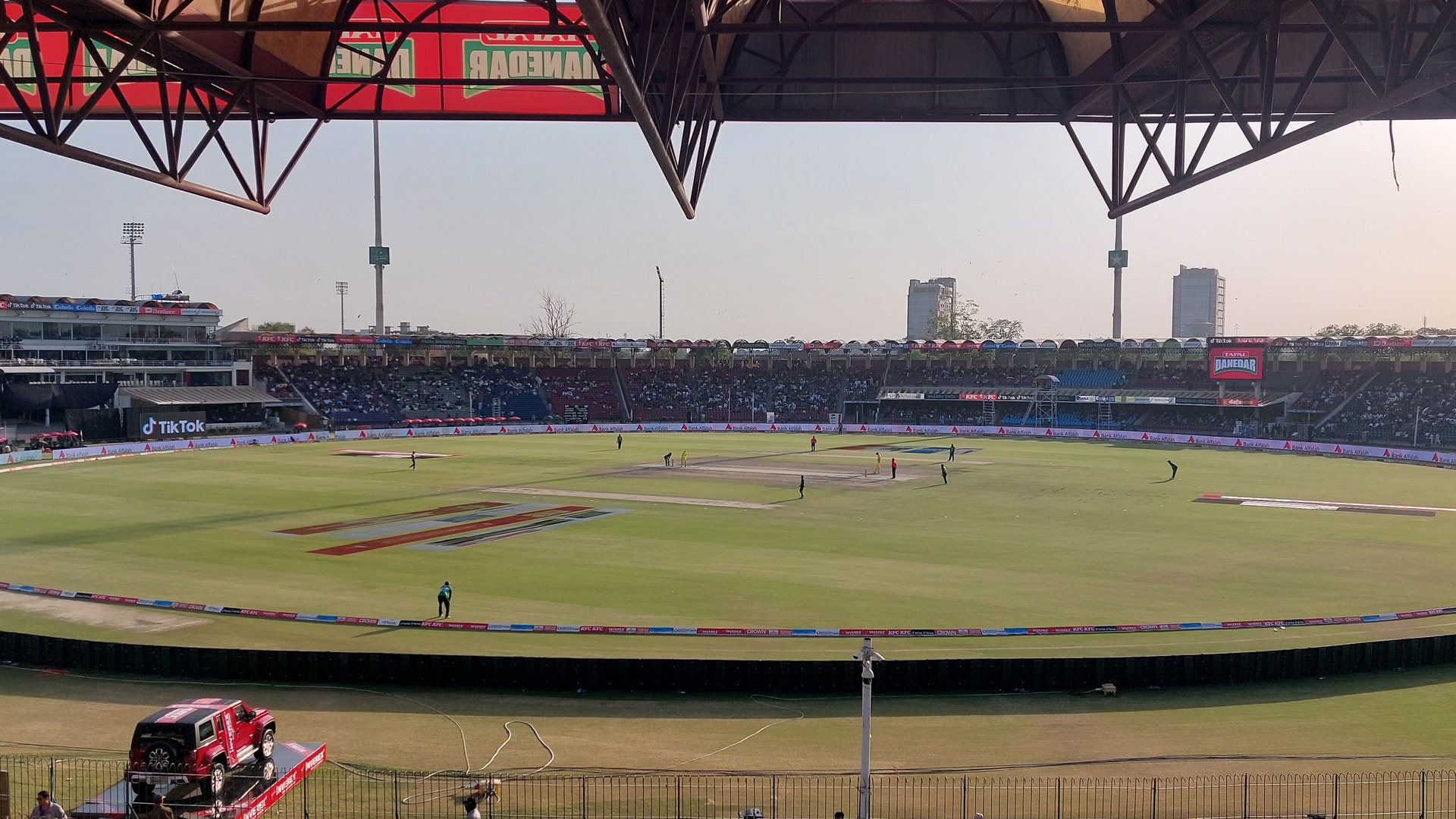
Photo: Gaddafi Stadium, Lahore, during the third ODI between Pakistan and Australia, April 2022. Ahmed Abdulbasit via Wikimedia Commons (CC BY-SA 4.0).