Business · Philippines Bureau
Philippine stocks sink to six-year low as Moody's Analytics cuts 2026 growth forecast to 2.4%
The main PSEi index fell 2 per cent to its weakest close since May 2020 and the peso slid towards 64 to the dollar, as investors fretted over high inflation and a slowing economy.
LSN Philippines ·
<p>Philippine shares fell to their lowest level in more than six years on Monday (16 November), while the peso weakened against the US dollar, as worries over stubborn inflation and slowing growth weighed on investors.</p>
<p>The benchmark Philippine Stock Exchange index (PSEi) dropped 111.61 points, or 2 per cent, to close at 5,481.88, its weakest finish since 18 May 2020, during the Covid-19 lockdowns, The Manila Times reported. The broader All Shares index lost 1.65 per cent to 3,102.78, according to the Philippine News Agency. It was the index's fourth straight losing session.</p>
<p>The peso closed at 63.94 to the dollar, down 22 centavos from 63.72 on Friday, after trading between 63.74 and 63.95.</p>
<p>Market analysts pointed to fears of stagflation, a mix of high inflation and weak growth, as well as the prospect of another US Federal Reserve rate rise in December after higher-than-expected US inflation in October. Luis Limlingan, head of sales at Regina Capital Development Corp., said investors were also concerned that the Bangko Sentral ng Pilipinas (BSP) had limited room for further monetary tightening without hurting economic activity.</p>
<p>The sell-off came as Moody's Analytics, the economic research arm of Moody's, lowered its 2026 growth forecast for the Philippines to 2.4 per cent from 3 per cent, below the government's already reduced target of 3.5 to 4.5 per cent.</p>
<p>"The economy is losing momentum faster than anticipated, with growth again falling short of our and market expectations," Moody's Analytics said in a commentary released to media on Monday.</p>
<p>The Philippine economy grew 2.1 per cent year on year in the third quarter, down from a revised 2.4 per cent in the second quarter and the weakest pace since the first quarter of 2021. Moody's Analytics said resilient exports and government spending had not been enough to offset weak domestic demand, with private investment contracting for a fifth straight quarter and household consumption slowing. It said political uncertainty and corruption controversies had likely weighed on business confidence.</p>
<p>Inflation reached 7.8 per cent in October, a more than three-year high and above the BSP's 2 to 4 per cent target for an eighth consecutive month. Moody's Analytics warned that high prices and a weak peso were squeezing household spending, and that slower global growth could hit remittances from Filipinos abroad.</p>
<p>Remittances offered some support in September. BSP data released on Monday showed cash remittances sent through banks rose 2.6 per cent from a year earlier to $3.20 billion, the fastest growth in eight months, according to BusinessWorld. The United States remained the largest source, followed by Singapore and Saudi Arabia.</p>
<p>Moody's Ratings, a separate unit, rates the Philippines Baa2 with a stable outlook, one notch above the lowest investment grade.</p>
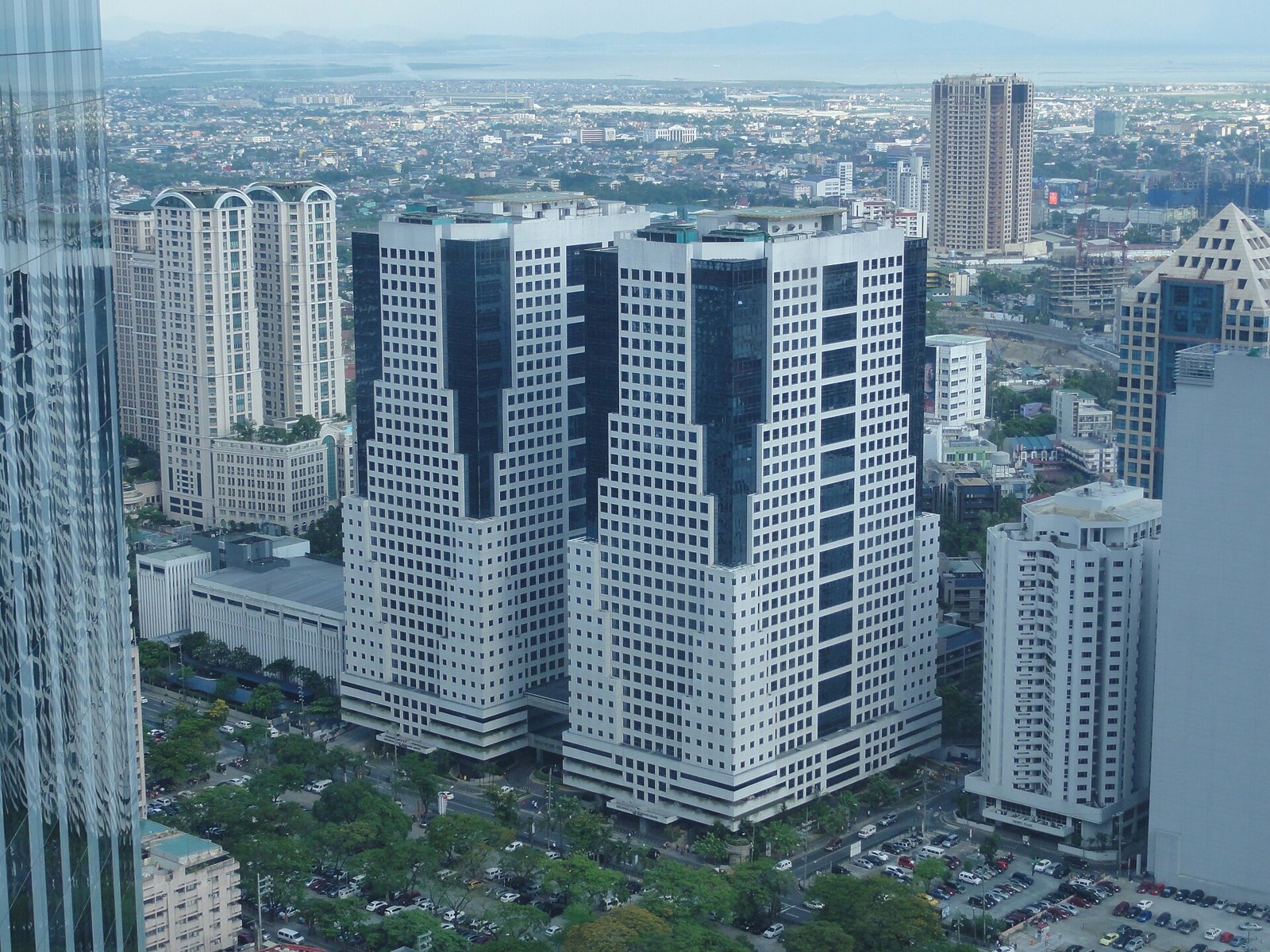
<p>Photo: The Philippine Stock Exchange Centre in Ortigas Center, Pasig City. Patrick Roque via Wikimedia Commons (CC BY-SA 4.0).</p>