World · India Bureau
Physicists challenge decades-old assumption that black holes cannot split
A new theoretical study suggests that rapidly spinning black holes might be capable of splitting into two smaller black holes, potentially overturning a long-held assumption in physics. The research proposes that under specific conditions, such a division could occur without violating known physical laws.
LSN India ·
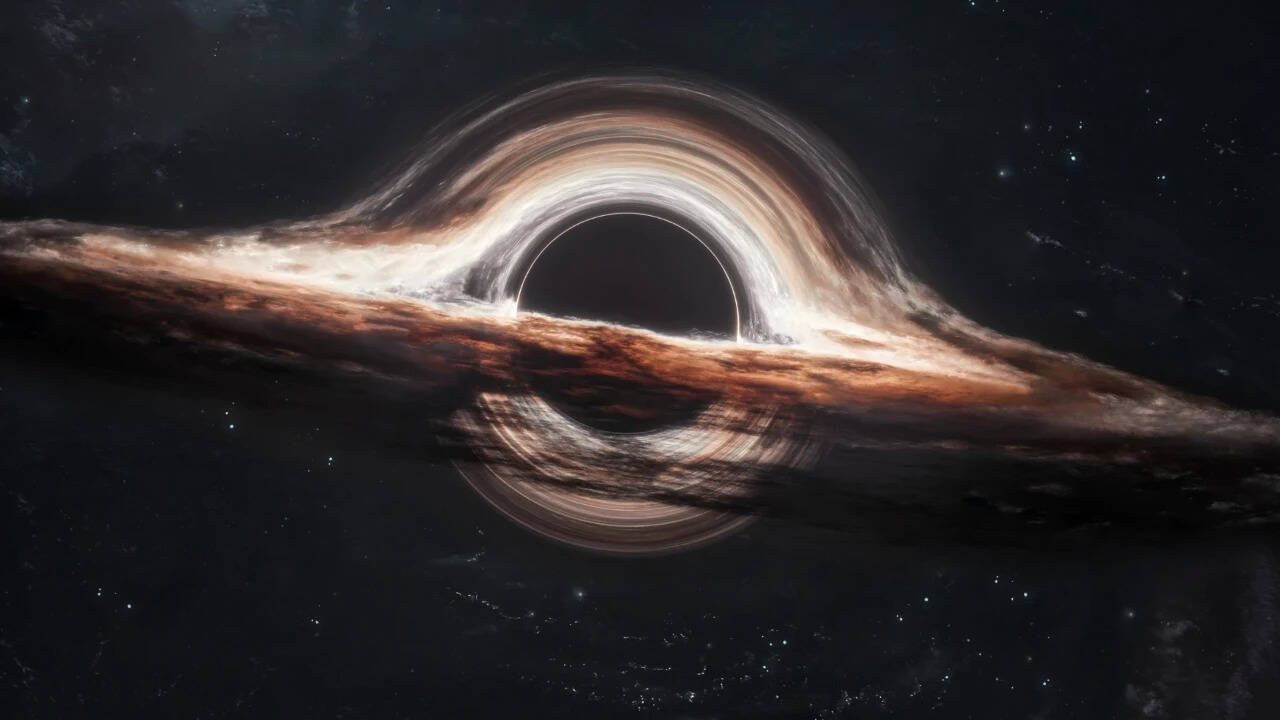
For decades, the scientific consensus has held that while black holes can merge, they cannot split apart—a principle grounded in entropy and the area theorem. However, recent calculations by theoretical physicists challenge this foundational assumption, suggesting that black holes spinning near their maximum speed might actually be capable of dividing into two separate objects.
The new research explores the conditions under which a rapidly rotating black hole could theoretically undergo such a dramatic transformation. Rather than violating established physical laws, the study proposes that under specific circumstances, black hole splitting could occur while maintaining consistency with thermodynamic principles and other fundamental constraints of physics.
To describe this unusual scenario, researchers have introduced the concept of pair-of-pants topology—a mathematical framework that envisions how a single black hole structure might bifurcate into two distinct entities. This topological approach provides a theoretical pathway for understanding how such an event could unfold within the accepted laws of physics.
Despite the theoretical possibilities outlined in the calculations, no direct observation of a splitting black hole has ever been recorded. The findings remain purely theoretical, offering physicists a new direction for understanding black hole dynamics and behavior under extreme conditions. The research may prompt scientists to reconsider long-standing assumptions about the immutability of black hole mergers.