Culture & Entertainment · India Bureau
Polish Woman's 17th Century Grave Reveals Vampire-Prevention Ritual
Archaeologists in Poland have uncovered an unusual burial practice from the 1600s, where a woman named Zosia was interred with an iron sickle and padlocked toe to prevent her rising as a vampire. The discovery provides rare insight into supernatural beliefs and death customs of early modern Poland.
LSN India ·
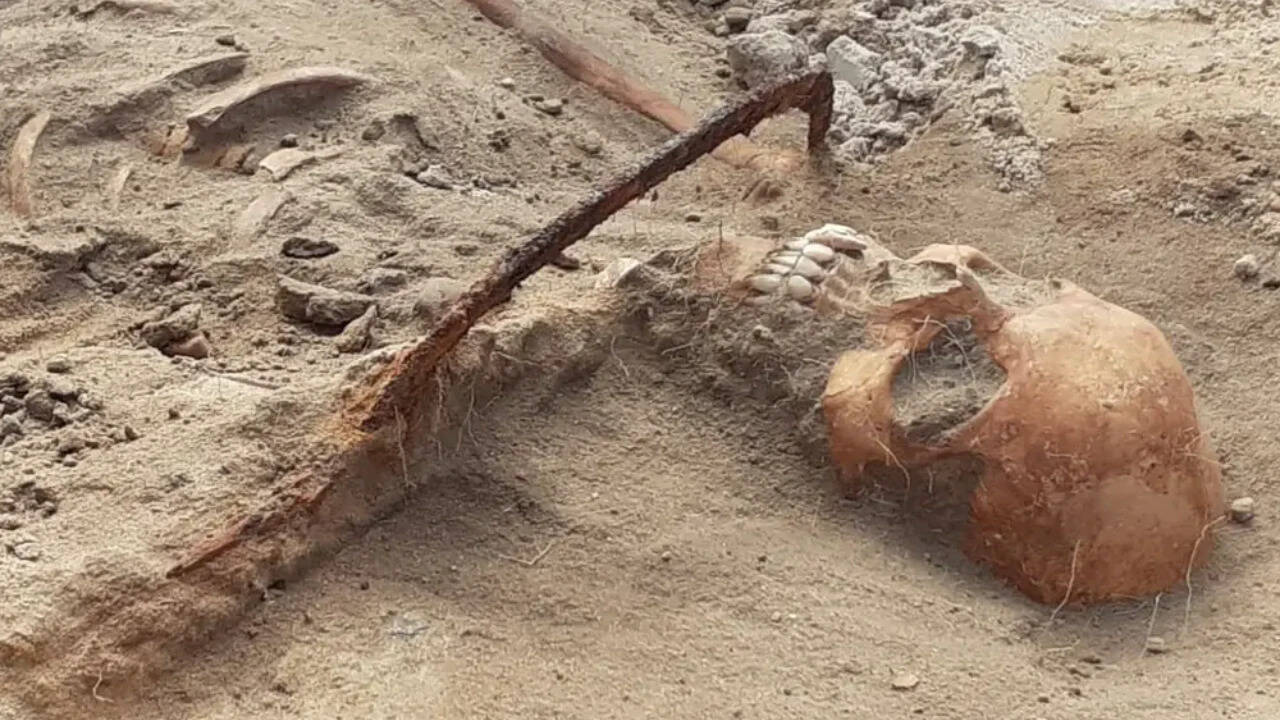
The grave of Zosia, unearthed at the cemetery in Pień, Poland, contained unusual artefacts that reveal how communities approached the fear of the undead during the 17th century. Alongside her skeletal remains, researchers found an iron sickle positioned across her body and a padlock fastened around her toe, both appearing to serve a singular purpose: to keep her confined to the grave.
These burial practices were not uncommon in early modern Eastern Europe, where beliefs in vampirism and the supernatural held considerable sway among rural and urban populations alike. The placement of iron implements and restraints was thought to prevent the deceased from leaving their grave and returning to the living world, a concern that transcended merely superstitious folklore and reflected genuine community anxieties about death and disease.
The nature and quality of Zosia's grave goods suggest she came from a relatively affluent background, indicating that vampire-prevention measures were practised across different social strata. This finding has prompted researchers to investigate further into her life circumstances, family connections, and the specific cultural and historical factors that may have led her community to take such precautions at her burial.
Archaeologists note that such discoveries are invaluable for understanding the worldview of 17th century Polish society, particularly how people grappled with mortality and sought to impose order and control through ritual practices at the threshold between life and death.