Culture & Entertainment · India Bureau
Quantum imaging theory from 20 years ago finally proven in laboratory tests
A theoretical framework proposed by a Chicago physicist two decades ago for creating high-resolution quantum images using superconductors has now received experimental validation through research conducted in Germany.
LSN India ·
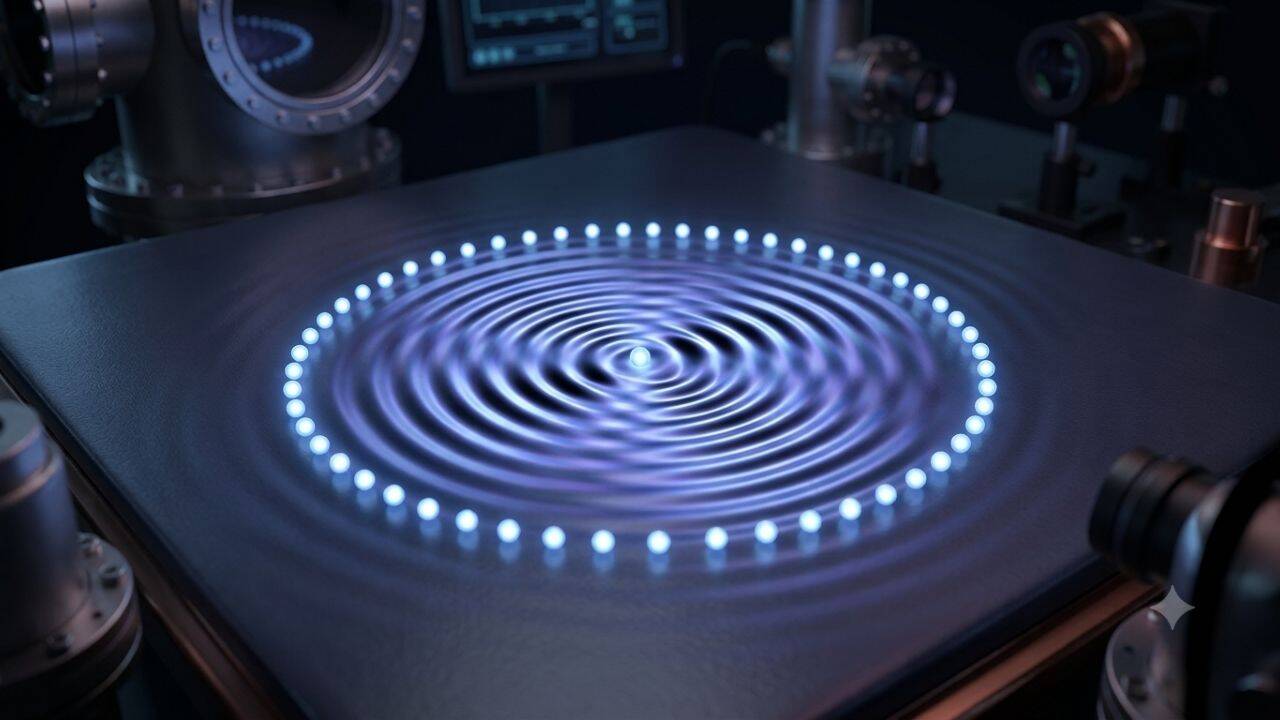
Dirk Morr of the University of Illinois Chicago developed the quantum imaging theory in the early 2000s, proposing that superconductors could be harnessed to produce images at quantum scales with unprecedented resolution. The concept remained largely theoretical until recently, when German researchers designed and executed experiments that successfully demonstrated the principle in practice.
The experimental work, guided by Morr's theoretical model, produced quantum images that closely matched the physicist's earlier predictions. This convergence of theory and experiment represents a significant milestone in quantum imaging technology, validating decades of theoretical work and opening new possibilities for practical applications.
Quantum imaging, which operates at the subatomic level, has potential applications across multiple fields including materials science, nanotechnology, and fundamental physics research. The successful demonstration using superconductors suggests that this approach could lead to powerful new tools for examining matter at scales previously difficult to access.
The confirmation of Morr's 20-year-old theory highlights the often lengthy timeline between theoretical proposals and experimental verification in cutting-edge physics. With experimental proof now established, researchers can move forward with exploring practical implementations and refinements of the quantum imaging technique using superconductor-based systems.