World · India Bureau
Rare Cosmic View Reveals Secrets of Forming Planetary Systems
Astronomers have discovered an unusual celestial structure that provides an unprecedented side-on perspective of a planetary nursery. The distinctive formation, resembling a hamburger when viewed from the edge, offers scientists critical insights into how planets are born around distant stars.
LSN India ·
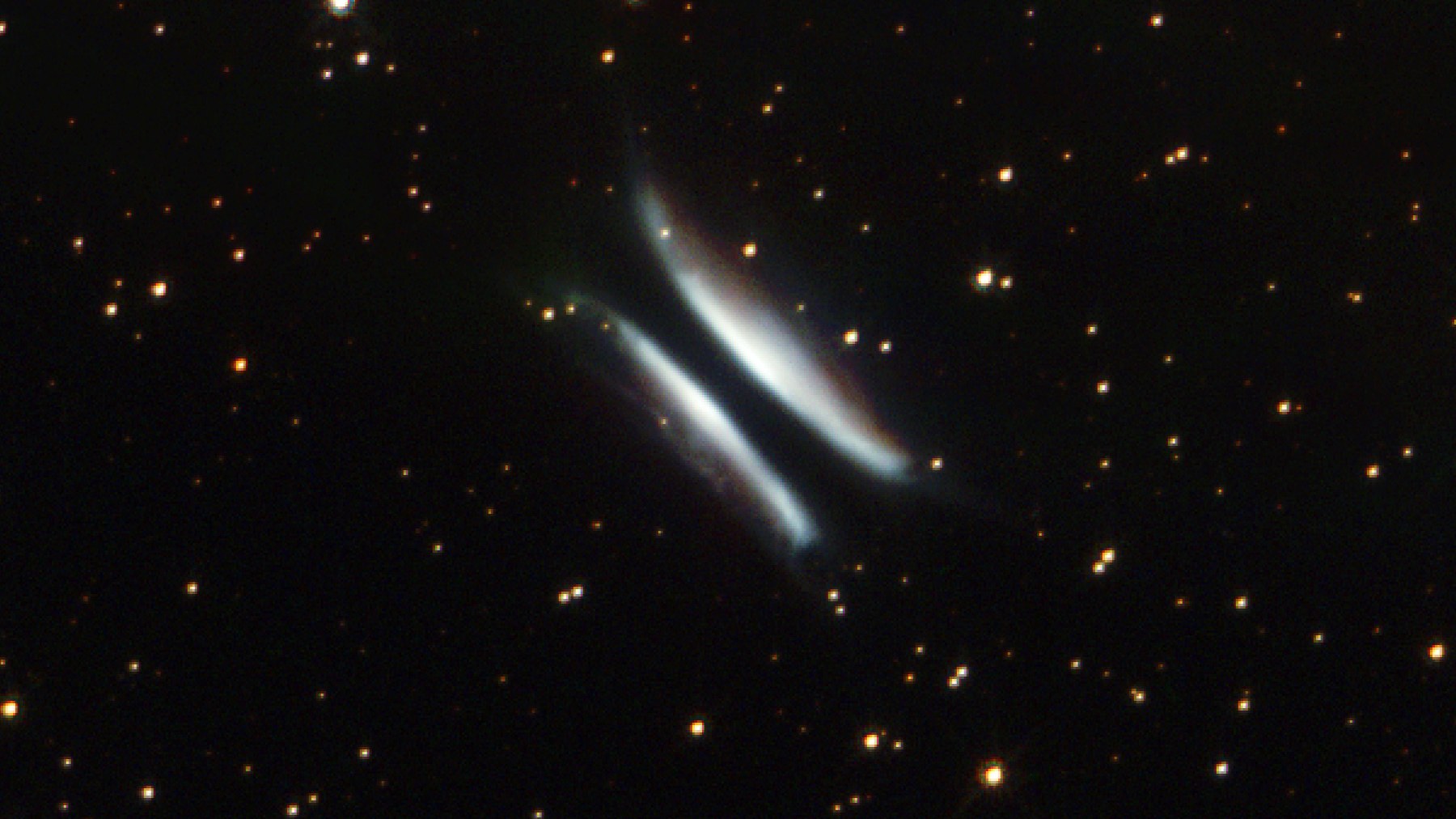
A newly observed astronomical phenomenon is giving researchers an exceptional opportunity to study planetary formation in detail. The cosmic structure, which has earned the colloquial nickname 'hamburger' due to its appearance, consists of a central star surrounded by a disk of gas and dust—the raw materials from which planets develop.
What makes this discovery particularly significant is the viewing angle. Most planetary systems are observed from angles that obscure their full structure, but this system's edge-on orientation provides astronomers with a clear, cross-sectional view of the planetary nursery. This perspective allows scientists to examine the disk's composition, density variations, and internal structures with unprecedented clarity.
The side-on view is valuable for understanding the mechanics of planet formation. By observing how dust particles interact, how gaps form in the disk, and how material organizes at different distances from the star, researchers can better comprehend the processes that eventually lead to the birth of fully-formed planets.
This observation contributes to the broader scientific effort to understand planetary systems throughout the universe. As astronomers continue to survey exoplanetary disks across various viewing angles and stages of development, discoveries like this hamburger-shaped system help refine models of how planetary systems—including our own—come into being.
Photo: Gomez's Hamburger (IRAS 18059-3211), an edge-on planet-forming disk around a young star, imaged by the Hubble Space Telescope. NASA/ESA and The Hubble Heritage Team (STScI/AURA) via Wikimedia Commons (public domain).