Culture & Entertainment · India Bureau
Rare Gajalakshmi sculpture from Rashtrakuta era discovered neglected in Telangana
A significant archaeological find from the medieval Rashtrakuta period has been identified in Medak district, Telangana, lying in a state of disrepair. Heritage researchers and local historians have begun examining the rare Gajalakshmi sculpture to assess its historical importance and condition.
LSN India ·
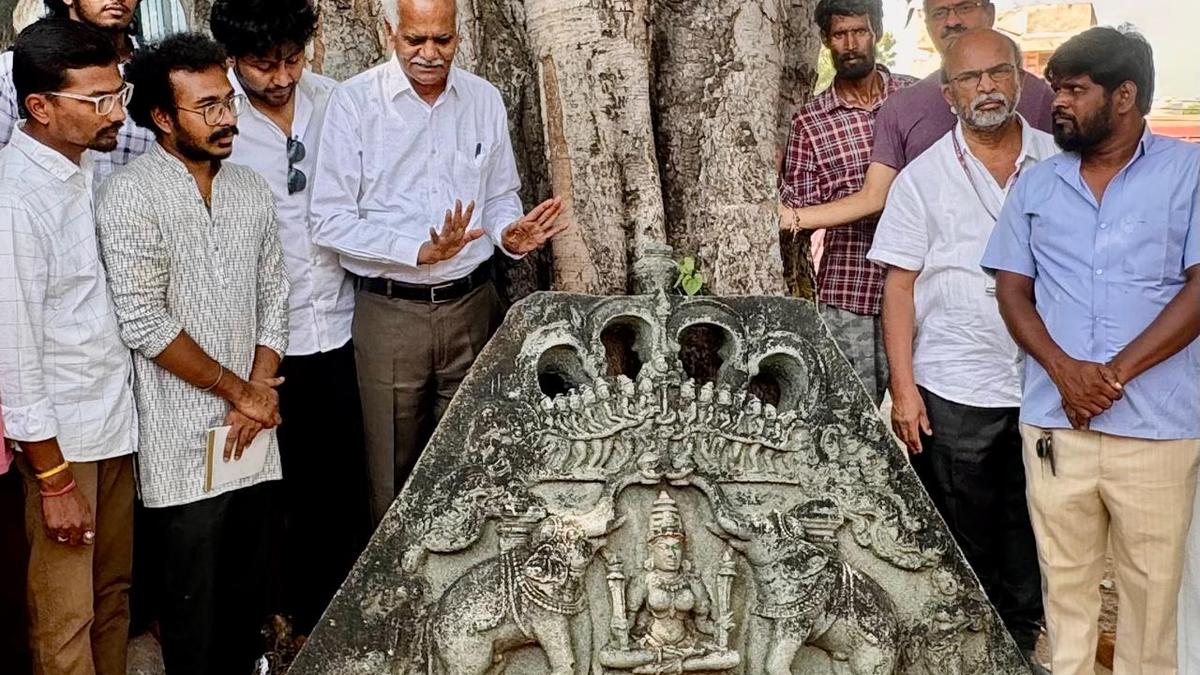
A team comprising heritage conservationists and academic historians, working alongside members of Kotha Telangana Charitra Brundam, a local heritage organization, has documented a Gajalakshmi sculpture of considerable antiquity in Medak district. The artwork, attributed to the Rashtrakuta period—a significant epoch in South Indian history spanning the 8th to 10th centuries—has remained largely neglected at its current location.
The Gajalakshmi iconography, traditionally depicting the goddess of wealth and prosperity flanked by elephants, represents an important artistic tradition from the medieval Deccan. Sculptures from this period are valued by scholars for their aesthetic refinement and historical insights into religious practices and patronage networks of ancient dynasties.
The discovery underscores ongoing challenges in heritage preservation across rural Telangana, where numerous artifacts of archaeological significance remain undocumented or inadequately protected. The examination by the expert team aims to establish the sculpture's provenance, assess its current state of deterioration, and potentially facilitate measures for its conservation and documentation.
The Rashtrakuta dynasty, which wielded considerable influence across the Deccan plateau, left behind an extensive architectural and sculptural legacy. Findings from this period continue to provide researchers with valuable data regarding the region's medieval history, artistic traditions, and cultural exchanges.