World · India Bureau
Rare iron form in Chinese lunar samples offers clues to Moon's ancient magnetism
Analysis of soil samples returned by China's Chang'e-6 mission has identified an unusual form of metallic iron that could unlock secrets about the Moon's vanished magnetic field. The discovery suggests extreme impacts on the lunar surface played a crucial role in creating and preserving this unique iron variant.
LSN India ·
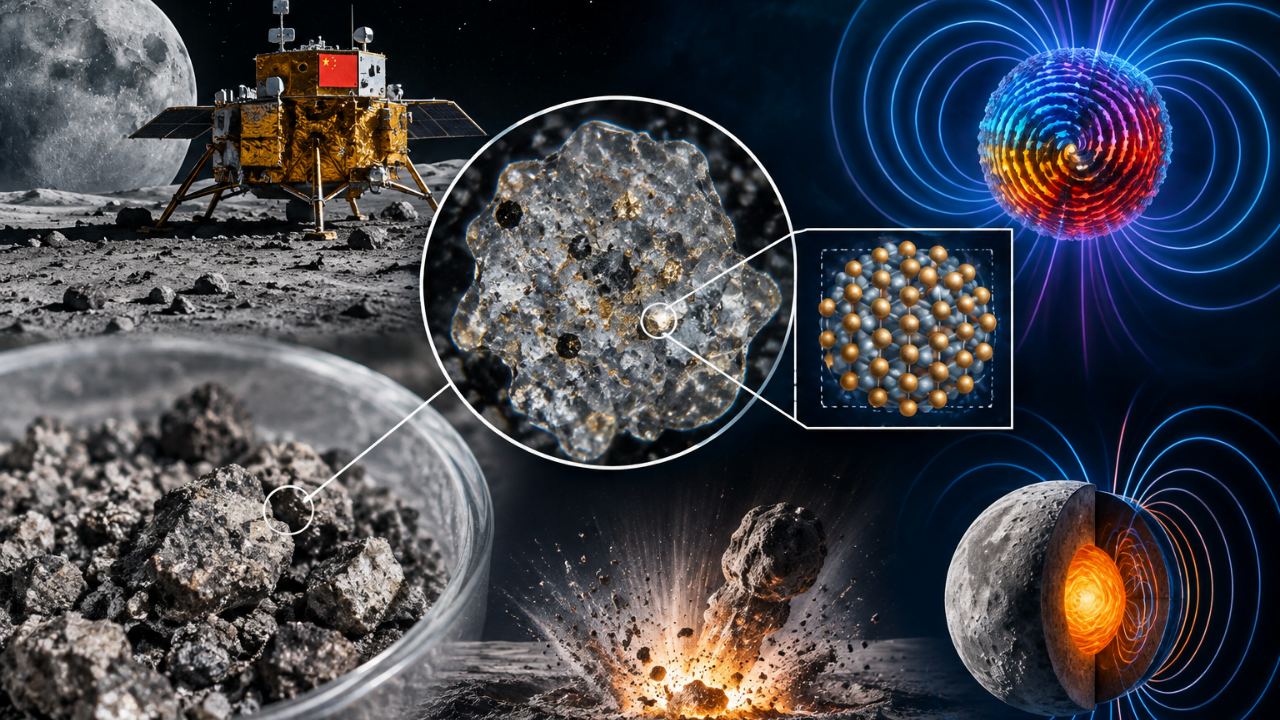
Scientists examining material brought back by the Chang'e-6 spacecraft have identified γ-Fe, a rare form of iron with exceptional magnetic properties not commonly found in nature. The presence of this metallic iron in lunar soil samples represents a significant finding that may reshape current understanding of the Moon's geological and magnetic history.
Researchers propose that the Moon's surface has undergone extreme impacts over millions of years, and these violent collisions created conditions necessary for the formation and preservation of γ-Fe. The unique magnetic characteristics of this iron form suggest it could retain information about the Moon's ancient magnetic field, which is believed to have weakened and disappeared billions of years ago.
The discovery holds considerable implications for lunar science, as the Moon's magnetic history remains poorly understood. By studying how γ-Fe preserves magnetic information, scientists may gain fresh insights into the Moon's interior composition, its cooling processes, and the mechanisms that governed planetary magnetism in the early solar system.
The Chang'e-6 mission, which successfully collected and returned lunar samples to Earth, continues to yield groundbreaking findings that advance international knowledge of Earth's nearest celestial neighbor. These discoveries underscore the value of robotic lunar exploration in answering fundamental questions about the Moon's evolution and its place in the broader story of the solar system.