Culture & Entertainment · World News Bureau
Salvaged books become lifeline as Gaza's libraries and schools lie in ruins
With educational institutions and homes destroyed across Gaza, surviving books have taken on new significance as rare repositories of knowledge and cultural memory. Efforts to preserve and share these salvaged volumes offer a glimpse of resilience amid widespread devastation.
LSN World News ·
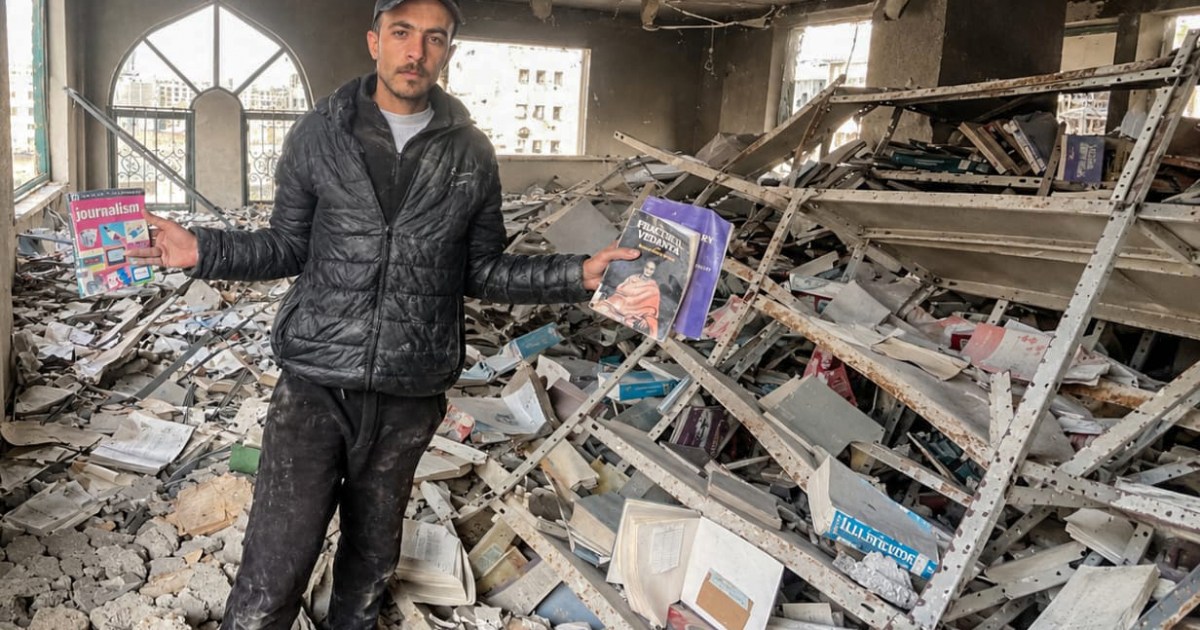
The destruction of libraries, schools, and residential areas across Gaza has transformed individual books into precious artifacts. Where entire collections once stood, scattered volumes now represent irreplaceable links to education, history, and cultural heritage that communities are working urgently to protect and make accessible.
Residents and aid organizations have begun documenting and cataloging surviving texts, recognizing that each book carries knowledge that may otherwise be lost. In a territory where access to educational materials has become severely limited, these recovered works serve both practical and symbolic purposes—enabling continued learning while embodying the persistence of intellectual life amid crisis.
Community initiatives have emerged to share available books among families and displaced persons, creating informal lending networks where printed materials circulate as essential resources. Libraries that once served as public institutions have been replaced by grassroots efforts to maintain literacy and provide children with access to reading materials during periods of displacement and uncertainty.
The safeguarding of these texts reflects broader challenges in preserving cultural institutions and educational infrastructure. International humanitarian organizations are partnering with local initiatives to catalog surviving materials and explore long-term preservation strategies, acknowledging that books represent both immediate needs and enduring connections to pre-conflict life.