Business · World News Bureau
Saudi Arabia quietly shifts crude exports via Omani waters
The world's second-largest oil exporter is increasingly routing shipments through alternative channels off Oman's coast, employing ship-to-ship transfers and dark cargo movements to circumvent traditional shipping lanes.
LSN World News ·
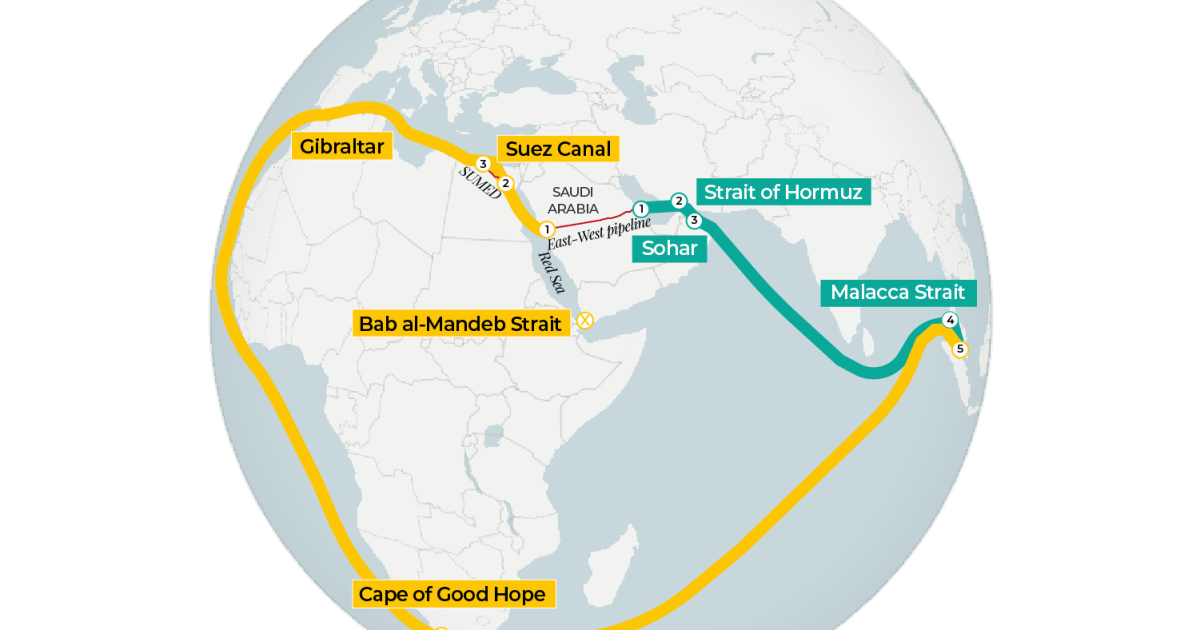
Saudi Arabia has begun systematically diverting crude oil exports away from its primary Red Sea shipping routes, instead funneling supplies through unconventional maritime pathways near Oman, according to shipping data and industry sources. The strategic shift involves a combination of vessel-to-vessel transfers in international waters and the use of ships operating with minimal tracking transparency, allowing the kingdom to maintain export volumes while reducing exposure to regional security concerns.
The Yanbu terminal on the Red Sea has traditionally served as Saudi Arabia's primary loading facility for crude destined for international markets. However, increased reliance on routes via the Strait of Hormuz and waters off Sohar in Oman reflects growing efforts to diversify export corridors and mitigate risks associated with regional tensions and shipping disruptions.
This diversification strategy comes as global crude markets remain sensitive to supply interruptions from the Middle East. By employing darker shipping methods and indirect routing, Saudi Arabia can maintain steady exports while managing logistical and geopolitical challenges. The practice of ship-to-ship transfers, conducted in international waters, allows operators to obscure cargo origins and destinations, complicating efforts by external parties to track and potentially disrupt supplies.
Industry observers note the tactical significance of these routes, which bypass key chokepoints while distributing export risk across multiple pathways. The kingdom's investment in alternative logistics reflects both operational pragmatism and broader strategic positioning within an increasingly complex global energy market.