World · India Bureau
Scientists crack 1,600-year-old secret of Rome's colour-shifting glass
Researchers have successfully replicated the optical properties of the ancient Lycurgus Cup, a Roman artifact renowned for its ability to change colour. The breakthrough involved recreating the delicate balance of gold and silver nanoparticles that give the historic glass its mesmerizing light-bending effects.
LSN India ·
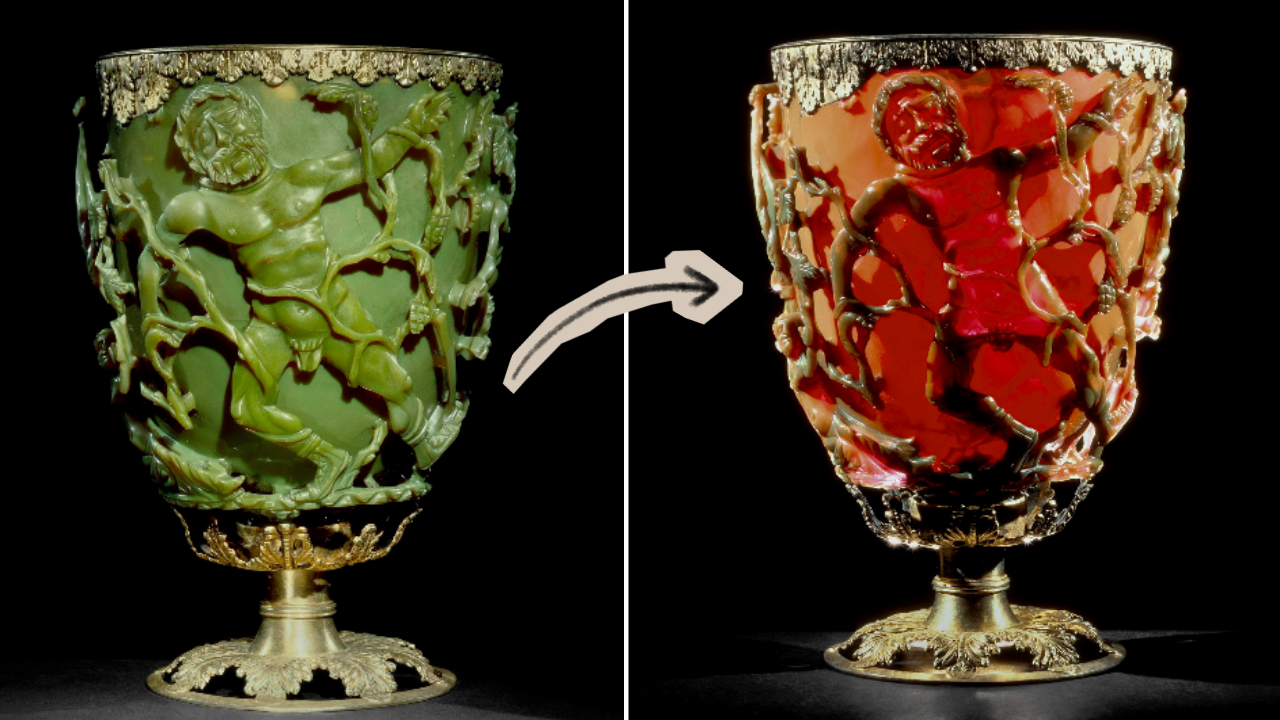
An international team of scientists has achieved a significant milestone by recreating the sophisticated glass-making technique behind the Lycurgus Cup, one of the most prized examples of Roman craftsmanship. Created approximately 1,600 years ago, the cup represents an extraordinary feat of ancient engineering, displaying a remarkable ability to shift colour depending on the angle and type of light striking its surface.
The colour-changing phenomenon results from microscopic particles of gold and silver suspended throughout the glass matrix. These metallic nanoparticles interact with light in ways that were not fully understood until modern scientific analysis. The research team employed both historical methods and contemporary analytical techniques to decode and replicate this ancient formula, marking a convergence of archaeological inquiry and materials science.
The successful replication opens new avenues for scientific research extending far beyond historical curiosity or artistic reproduction. The findings could inform developments in optical technologies, nanotechnology, and materials engineering. Scientists believe the techniques employed in crafting the original cup may have applications in modern manufacturing and innovation.
To honour this discovery, a contemporary sculpture inspired by the historic Lycurgus Cup is set to be unveiled shortly. The modern interpretation will showcase how ancient craftsmanship principles can inform and inspire contemporary artistic expression, bridging millennia of human creativity and technical achievement.