World · India Bureau
Scientists discover ancient glass sponge reefs thriving off Canada's coast
A groundbreaking 1987 discovery off British Columbia revealed that glass sponge reefs, thought extinct for 40 million years, were still alive and flourishing in the cold Pacific waters. The finding fundamentally altered scientific understanding of these remarkable deep-sea ecosystems.
LSN India ·
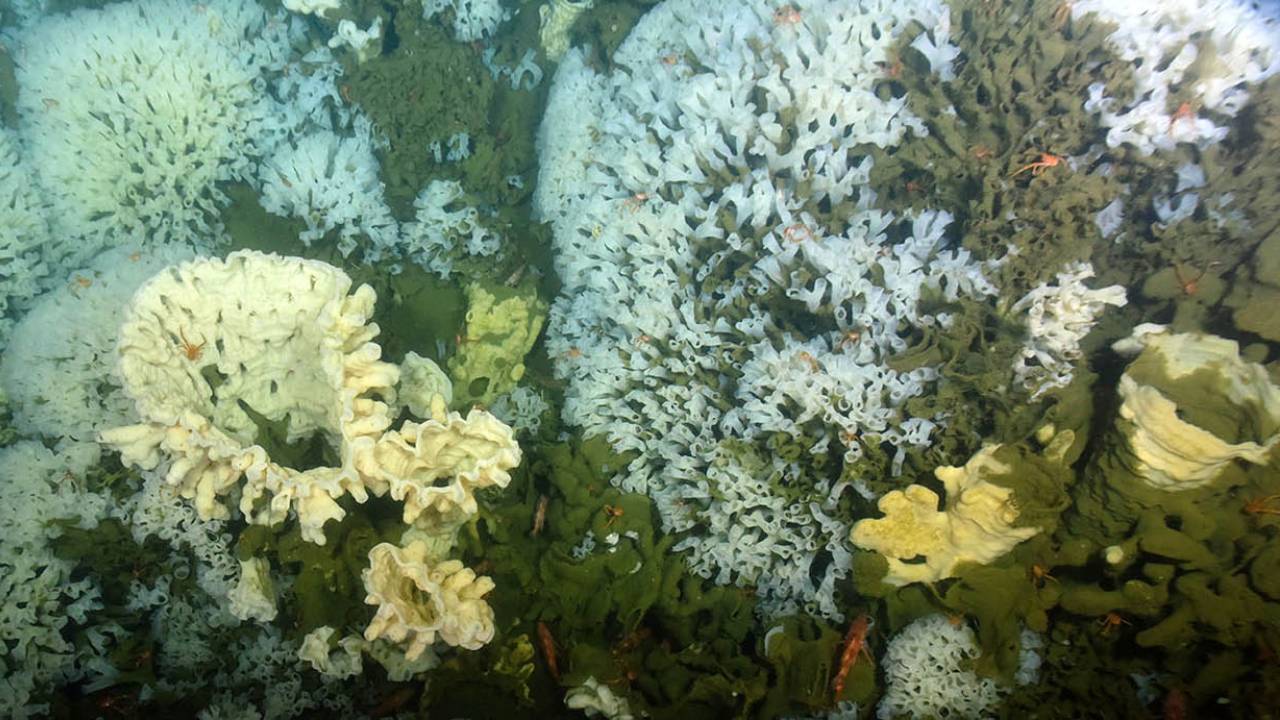
Canadian researchers made a startling discovery in 1987 when they found living glass sponge reefs thriving in British Columbia's Hecate Strait, challenging the long-held scientific consensus that these ancient reef-building organisms had disappeared millions of years ago. The reefs, which are over 9,000 years old, exist in some of the most inhospitable deep-water environments, creating a unique submarine ecosystem that scientists have termed the "Sea of Glass."
The discovery fundamentally reshaped understanding of marine paleontology and deep-sea biology. Prior to the finding, researchers believed glass sponge reefs had vanished approximately 40 million years ago, surviving only in fossil records. The presence of thriving colonies off Canada's Pacific coast demonstrated that these ancient creatures had persisted in isolated deep-water habitats, largely unknown to the scientific community until exploration technologies advanced sufficiently to detect them.
Today, the glass sponge reefs persist across several locations along the British Columbia coast, including Hecate Strait, Queen Charlotte Sound, and Howe Sound. These ecosystems represent a rare window into ancient marine environments, offering researchers invaluable insights into how life adapts and survives in extreme deep-sea conditions. The reefs continue to attract scientific attention as researchers work to understand their ecology and ensure their protection from human activities such as deep-sea trawling.