Business · India Bureau
Scientists map 600-million-year evolutionary pathways in animal genomes
An international research team has traced the genetic evolution of animals across hundreds of millions of years by studying thousands of genomes and ancient chromosome fragments. The study reveals how chromosomal restructuring shaped the diversity of life on Earth.
LSN India ·
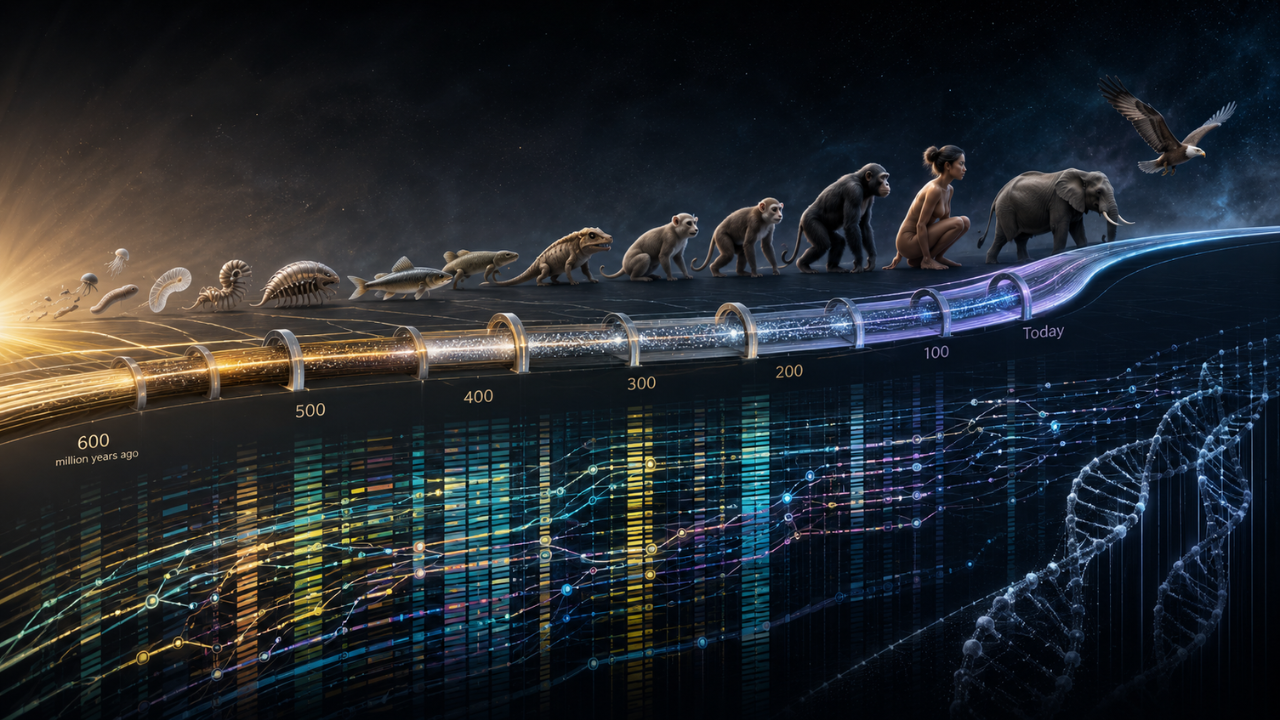
Researchers examining vast genomic datasets have reconstructed a detailed evolutionary timeline showing how animal chromosomes have merged, split, and reorganized over approximately 600 million years. By analyzing thousands of genomes alongside fragments of ancient chromosomal structures, scientists identified recurring patterns in how genetic material has been reshuffled across different species throughout Earth's history.
The research reveals that some animal lineages have preserved ancestral chromosome arrangements remarkably well, maintaining genetic structures inherited from their distant ancestors. In contrast, other species have undergone dramatic chromosomal reorganization, with their genomes bearing little resemblance to those of their evolutionary predecessors. These divergent paths highlight the variable pace and nature of genetic change across the animal kingdom.
A critical turning point emerged approximately 550 million years ago, when chromosomal fusion events accelerated dramatically. During this period, multiple distinct chromosomes merged together at unusually high rates, fundamentally reshaping the genetic architecture of numerous animal lineages. The consequences of these ancient fusion events remain visible in modern animal genomes today, influencing the genetic frameworks that underpin biological diversity.
The findings suggest that these "evolutionary highways"—predictable patterns in chromosomal change—have played a fundamental role in animal diversification. Understanding these genomic pathways offers insights into how genetic complexity evolved and how different species adapted their genetic organization to suit their ecological roles over deep time.