World · India Bureau
Scientists unlock secrets of coelacanth's unusual skull growth mechanism
International researchers have discovered how the coelacanth, a prehistoric fish species, manages skeletal development through a hinged skull structure while maintaining a proportionally small brain. The findings offer new insights into evolutionary adaptations in deep-sea creatures.
LSN India ·
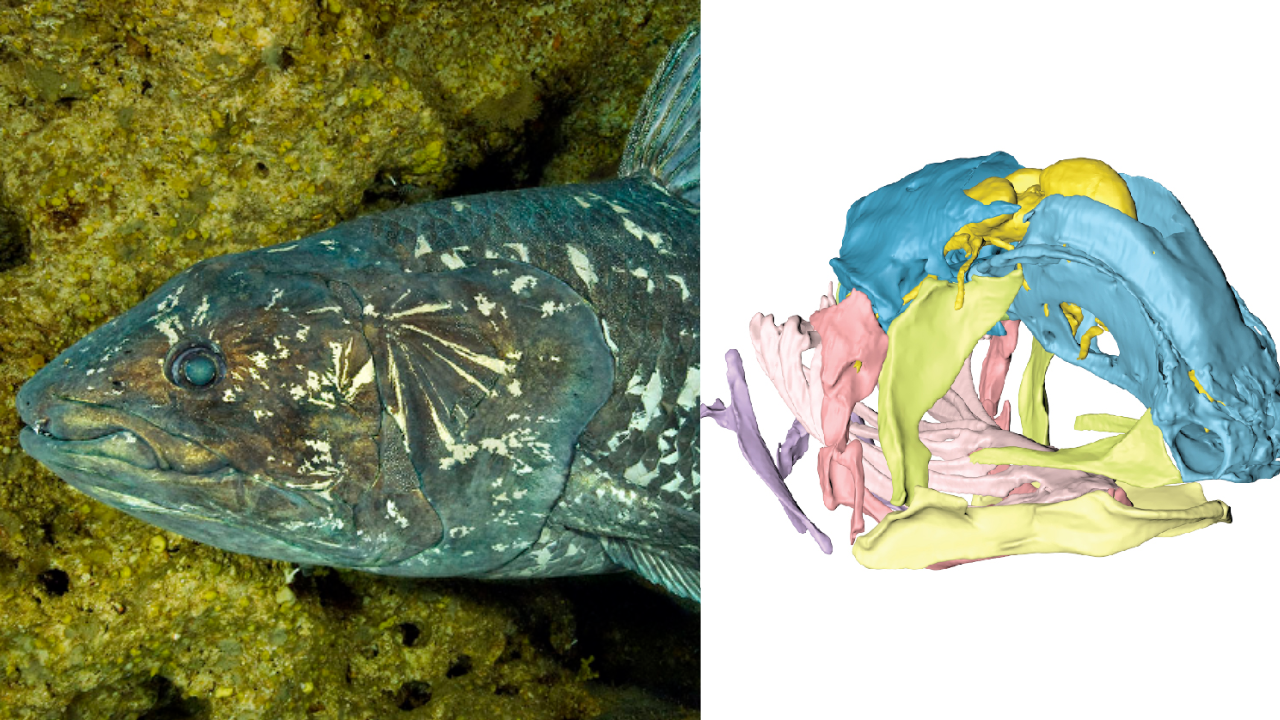
Marine biologists have identified the biological mechanisms that allow coelacanths to develop their distinctive hinged skulls without corresponding increases in brain size, according to recent scientific research. The coelacanth, often referred to as a 'living fossil' due to its ancient lineage, has long fascinated researchers studying evolutionary biology and deep-sea adaptation.
The research reveals that the fish's skull structure features specialized hinges that enable significant growth and movement while the cranial cavity housing the brain remains comparatively compact. This anatomical arrangement represents a unique evolutionary solution to the constraints faced by organisms dwelling in deep oceanic environments where different physiological pressures apply.
The discovery contributes to a broader understanding of how aquatic species have adapted their body structures to survive in extreme conditions. Scientists note that the coelacanth's neurological economy—maintaining a small brain relative to body size—aligns with observations of other deep-sea fish species, suggesting potential adaptive advantages for organisms in low-energy marine environments.
The findings emerged from detailed anatomical and developmental studies of coelacanth specimens, employing advanced imaging and comparative analysis techniques. Researchers suggest these insights may help illuminate how different species have evolved distinct solutions to fundamental challenges of skeletal and neurological development across varying environmental contexts.
The coelacanth, discovered off the coast of southern Africa in 1938 after being thought extinct for millions of years, continues to provide valuable data for evolutionary and comparative biology research.