Culture & Entertainment · Malaysia Bureau
Self-taught carpenter masters ancient joinery to build thriving furniture business
A 31-year-old entrepreneur in Jertih has transformed online-learned carpentry skills into a growing enterprise, crafting solid-wood beds using traditional joinery techniques that require neither nails nor screws. The venture demonstrates how heritage woodworking methods continue to find market demand in contemporary Malaysia.
LSN Malaysia ·
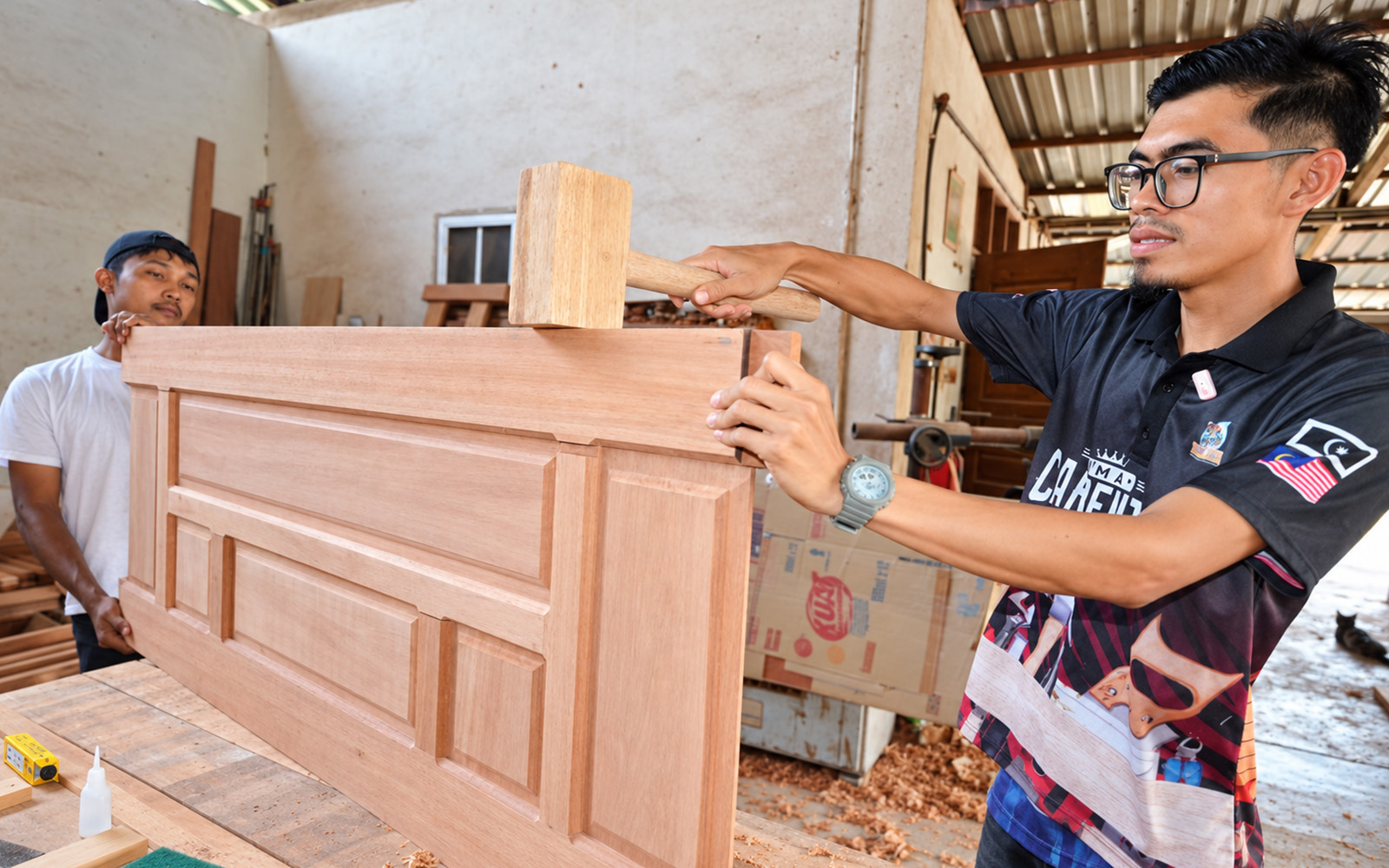
Atifin's journey into furniture manufacturing began unconventionally, with the entrepreneur teaching himself carpentry through online resources before establishing his workshop in the small Terengganu town of Jertih. Rather than adopting modern fastening methods, he deliberately chose to revive traditional wooden joinery techniques, creating beds that rely entirely on precision-fitted joints to hold pieces together.
The technique, which has been used for centuries in furniture-making across Asia, requires exacting craftsmanship and careful measurement. By eliminating nails and screws, Atifin produces pieces that are not only structurally sound but also aesthetically refined, appealing to customers seeking quality and durability in their furniture.
The business has expanded significantly since its inception, demonstrating sustained interest in solid-wood furniture among Malaysian consumers. Atifin's success underscores a broader trend of renewed appreciation for traditional craftsmanship and locally-made products, particularly among buyers prioritising longevity and environmental sustainability over mass-produced alternatives.
The enterprise has created employment opportunities in Jertih while positioning traditional woodworking as a viable contemporary business model. As the furniture industry increasingly grapples with sustainability concerns, approaches like Atifin's—combining heritage techniques with modern entrepreneurship—offer an alternative pathway for small manufacturers seeking to differentiate their products in a competitive market.