World · Vietnam Bureau
Singapore's air quality deteriorates as Indonesian fire smoke drifts north
Air quality in Singapore's central region slipped back into unhealthy levels Monday as smoke from active fires in Indonesia's Kalimantan and Sumatra provinces moved across the region. The development marks a return of transboundary pollution that regularly affects Southeast Asia during the fire season.
LSN Vietnam ·
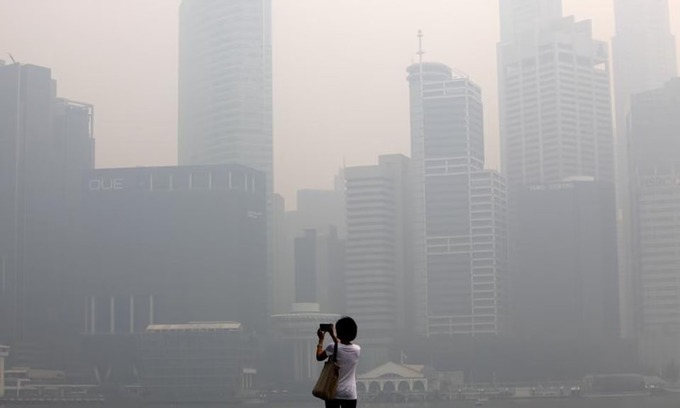
Singapore's National Environment Agency recorded unhealthy air quality readings in the central zones of the city-state on Monday, reversing a period of improvement. The deterioration came as smoke plumes from burning vegetation in Indonesia's Kalimantan and Sumatra regions drifted northward across the Strait of Malacca and into Singapore's airspace.
The return of unhealthy air conditions underscores the recurring challenge faced by Southeast Asian nations during dry seasons, when fires in Indonesia—whether from agricultural clearing, peatland burning, or uncontrolled blazes—generate substantial smoke emissions. This transboundary pollution regularly affects neighboring countries including Malaysia and Singapore, creating public health concerns and prompting regional coordination efforts.
Monday's air quality deterioration serves as a reminder of the region's vulnerability to seasonal fire patterns. Environmental agencies across Southeast Asia maintain monitoring systems and issue air quality alerts during such episodes, while health authorities typically advise residents, particularly those with respiratory conditions, to limit outdoor activities and use protective masks when air pollution reaches unhealthy levels.
The situation reflects broader environmental management challenges in the region, where land-use practices, climate patterns, and transboundary wind systems combine to create recurring air quality crises that demand sustained international cooperation and domestic enforcement of environmental regulations.