Business · India Bureau
Spanish copper mine yields Bronze Age clues of far-flung trade networks
Archaeologists excavating an ancient copper mine in southern Spain have uncovered extensive evidence of Bronze Age metal production, with findings suggesting the region's copper reached as far north as Scandinavia through established trade routes.
LSN India ·
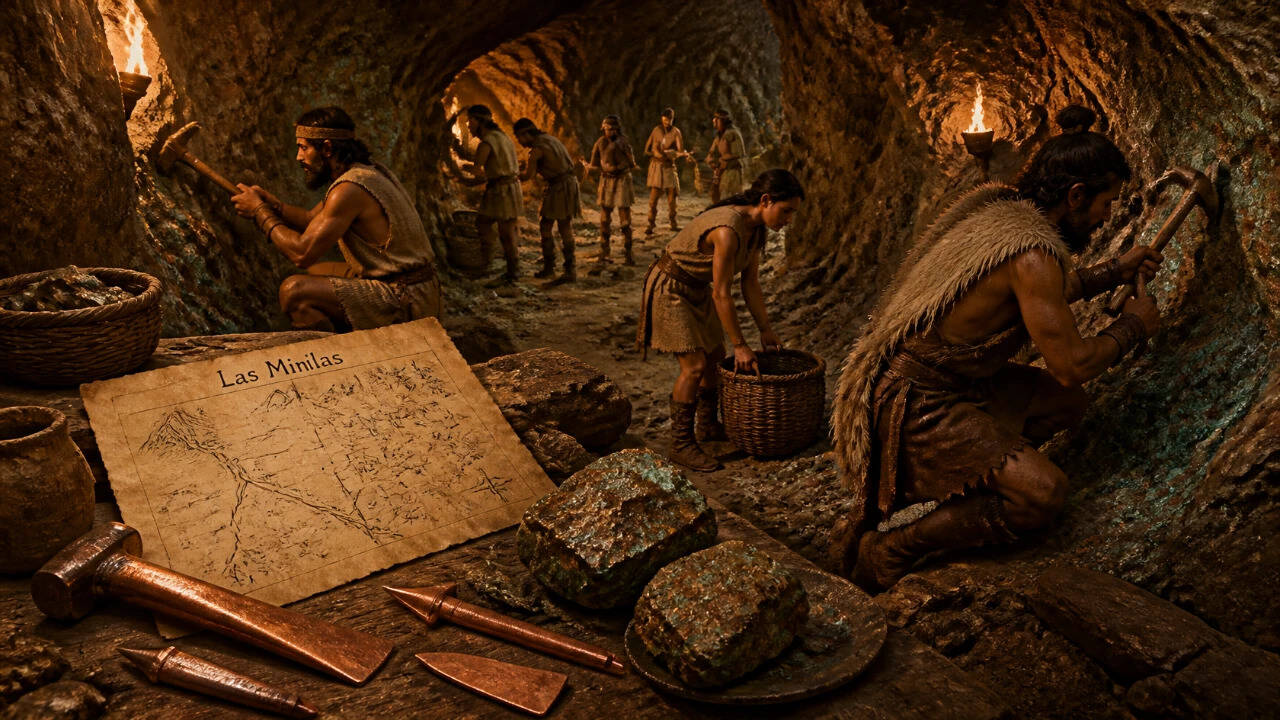
An extensive archaeological investigation of Las Minillas, a prehistoric copper mine in southern Spain, has revealed the scale and sophistication of Bronze Age metal extraction and distribution across Europe. Researchers recovered more than 700 stone tools and numerous pottery fragments at the site, establishing clear evidence of intensive mining operations spanning roughly 600 years, from approximately 1300 to 700 BC.
The abundance of artefacts indicates sustained, organized copper production during this period. Stone tools recovered at the excavation site demonstrate the techniques employed by ancient miners to extract ore from the earth, while pottery shards provide chronological markers and insights into daily life among the workforce.
The findings point to sophisticated commercial networks that linked Bronze Age communities across the European continent. Copper extracted from Las Minillas likely entered trade routes that extended far beyond the Iberian Peninsula, with evidence suggesting the metal reached as far north as Scandinavia. This discovery underscores the interconnectedness of Bronze Age societies and the importance of metal trade in sustaining long-distance economic relationships.
The research demonstrates that the Bronze Age was characterized by complex supply chains and trading partnerships, challenging earlier assumptions about the isolation of ancient communities. The Las Minillas investigation adds to growing evidence that precious metals served as key commodities linking distant regions during this transformative historical period.