World · India Bureau
Spanish pig descendants help scientists unlock obesity research secrets
A population of feral pigs descended from Spanish livestock on a Georgia island is providing researchers with unique insights into obesity and metabolic diseases. The animals' genetic heritage and isolated environment make them ideal subjects for studying weight-related disorders.
LSN India ·
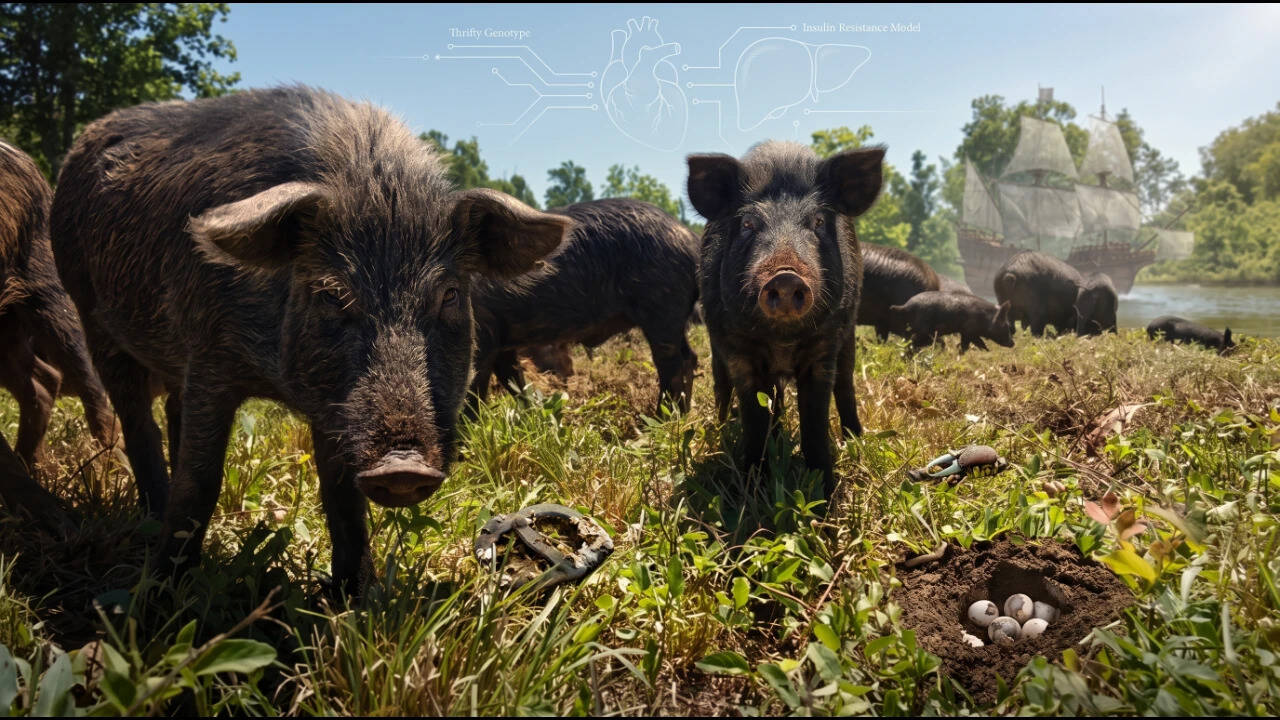
Scientists are turning to an unlikely research subject to advance understanding of obesity: a herd of feral pigs inhabiting an island off the coast of Georgia in the United States. These animals are direct descendants of Spanish pigs introduced centuries ago, and their isolated island population has become invaluable for metabolic disease research.
The pigs' genetic lineage, combined with their adaptation to island conditions over generations, has created a natural laboratory for studying how organisms develop obesity and related health complications. Researchers have documented significant variation in weight and metabolic profiles among individual animals, mirroring patterns observed in human populations.
Unlike laboratory animals bred specifically for research, these feral pigs maintain genetic diversity that more closely reflects natural population variation. This characteristic allows scientists to identify genetic and environmental factors contributing to obesity with greater applicability to human health conditions.
The research builds on growing recognition that animal models derived from natural populations can provide insights that traditional laboratory specimens may not. Understanding the mechanisms driving obesity in these pigs could inform prevention and treatment strategies for metabolic diseases affecting humans across South and Southeast Asia, where obesity rates have been rising significantly.
The study demonstrates how unexpected research subjects can advance medical science, offering researchers a unique opportunity to examine the complex interplay between genetics, environment, and metabolic health in a population closely paralleling human obesity patterns.