World · India Bureau
Spanish vineyard proves sustainable farming boosts soil health over two decades
A long-term study of a Spanish vineyard operated without irrigation or pesticides has demonstrated significant improvements in soil quality and biological activity. The research suggests that minimalist agricultural practices could benefit water-stressed farming regions across arid and semi-arid climates.
LSN India ·
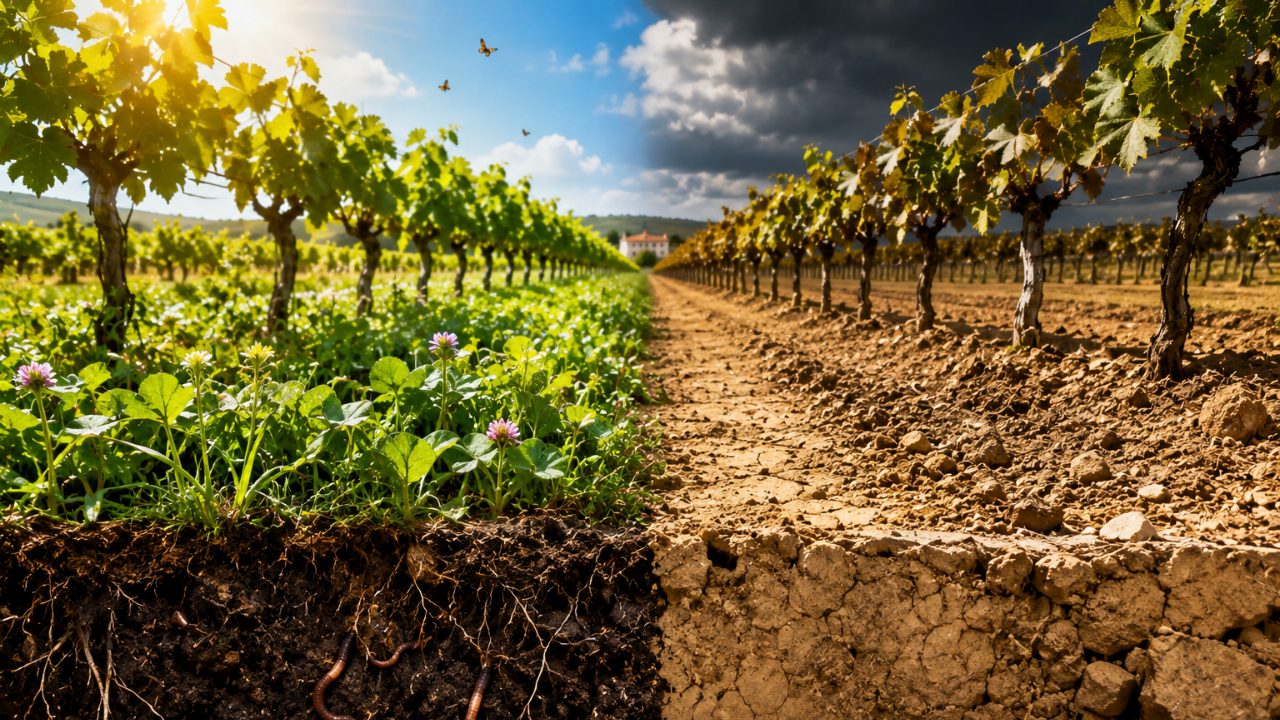
Two decades of observation at a Spanish vineyard operated without chemical inputs or artificial watering has yielded compelling evidence that reduced soil disturbance dramatically improves soil health in dry conditions. The study found that permanent vegetation cover doubled the organic matter content in the topsoil compared to traditionally tilled vineyard sections, enhancing both soil structure and fertility.
The sustained practice of allowing native and planted vegetation to remain undisturbed significantly increased soil porosity and microbial activity, creating a more resilient growing environment despite water limitations. These biological improvements strengthen the soil's ability to retain moisture and nutrients, critical advantages in regions facing chronic water scarcity.
The findings provide practical evidence that minimizing soil disturbance—a cornerstone of regenerative agriculture—delivers measurable environmental and agronomic benefits over extended periods. As water availability becomes an increasing challenge for farmers in arid and semi-arid regions, the vineyard's two-decade track record demonstrates that sustainable practices can maintain or improve productivity while reducing dependency on external inputs.
The research suggests that similar approaches could be adapted for vineyards and other perennial crops across water-limited agricultural zones, offering an economically viable pathway toward more sustainable farming systems.