Business · Singapore Bureau
Sri Lanka launches pilot programme for Chinese autonomous aerial taxis
Sri Lanka has begun testing passenger-drone services, positioning itself among more than a dozen nations exploring urban air mobility solutions. The initiative marks the island nation's entry into the rapidly evolving autonomous aviation sector.
LSN Singapore ·
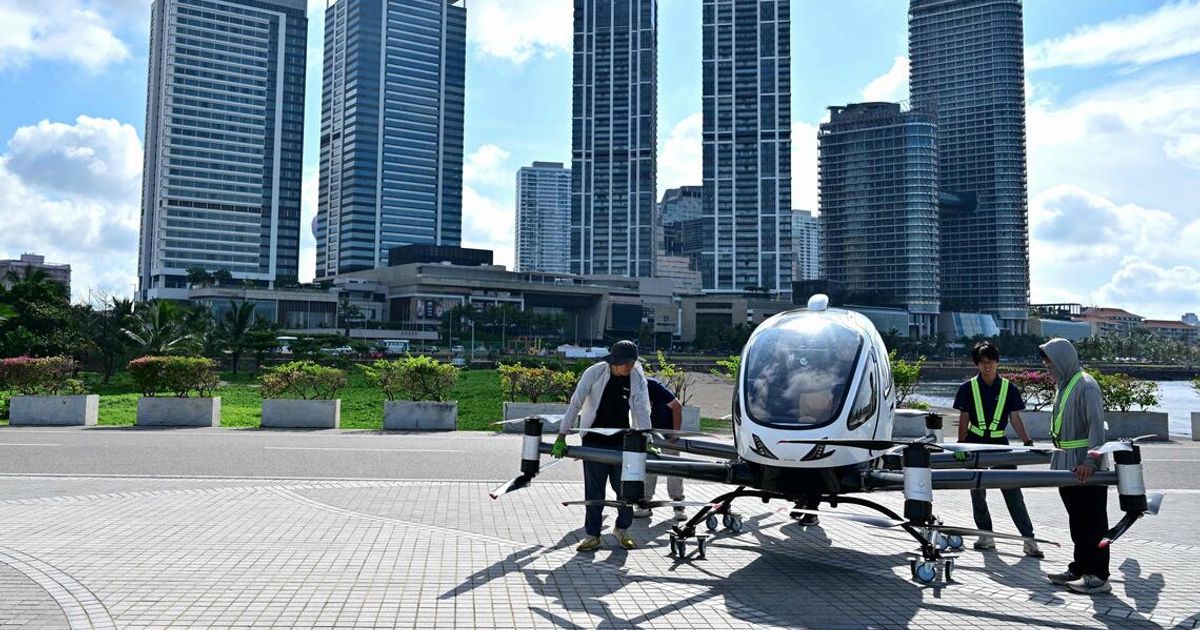
Sri Lanka has commenced pilot operations of a Chinese-developed flying taxi service, joining a growing global movement to integrate autonomous aerial vehicles into urban transportation networks. The programme represents a significant step in the country's adoption of emerging mobility technologies and its efforts to modernise transport infrastructure.
The deployment aligns with similar initiatives underway across Asia, Europe, and North America, where regulatory authorities and private operators are testing passenger-drone capabilities in controlled environments. These trials aim to establish safety protocols, operational frameworks, and public acceptance benchmarks before wider commercial rollout.
The flying taxi service offers potential benefits including reduced urban congestion, faster point-to-point travel, and lower carbon emissions compared to conventional ground transportation. However, successful implementation will require navigating regulatory challenges, airspace management issues, and public confidence concerns.
Several countries have already initiated or completed pilot phases of autonomous aerial taxi services, with manufacturers focusing on short-distance urban routes. Sri Lanka's participation in this development underscores the technology's expanding geographic footprint and growing interest from nations seeking innovative solutions to transport challenges.