Business · Sri Lanka Bureau
Sri Lanka's Current Account Deficit Deepens Amid Surging Fuel Costs
Sri Lanka's current account has remained in deficit for a fourth consecutive month, as fuel import expenses surge dramatically year-on-year. The spike in energy costs continues to strain the island nation's external finances.
LSN Sri Lanka ·
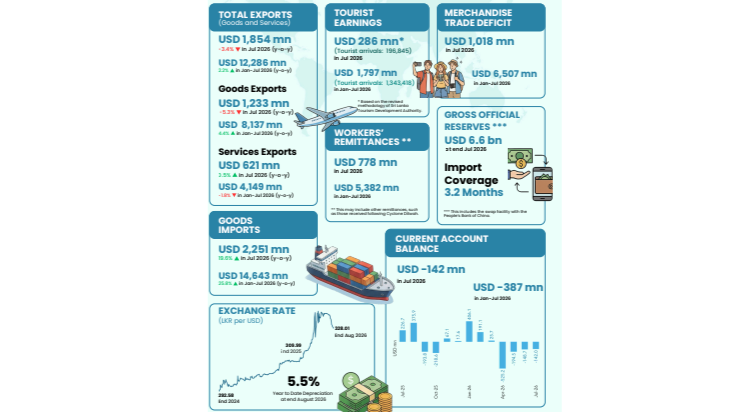
Sri Lanka's balance of payments position has deteriorated further, with the current account remaining in deficit territory for the fourth month running. The persistent shortfall in the current account reflects mounting pressures on the nation's import bill, particularly from energy-related expenditures.
Fuel import costs climbed substantially in July 2026, rising 68.0 percent compared to the same month last year. The significant year-on-year increase underscores the continued impact of global energy price movements on Sri Lanka's external sector and highlights the vulnerability of the island's import-dependent economy.
The prolonged current account deficit signals ongoing challenges in balancing the nation's external accounts. With fuel imports representing a critical component of overall import spending, the sharp increases in oil and petroleum product costs have effectively widened the gap between exports and imports.
Economic analysts and policymakers are closely monitoring the trend, as successive months of current account deficits can deplete foreign exchange reserves and increase pressure on the rupee. The energy import situation remains a key variable determining Sri Lanka's near-term external economic stability.