Culture & Entertainment · Sri Lanka Bureau
Sri Lanka still has no national system to manage used electric vehicle batteries
With more than 100,000 electric vehicles now registered, a state audit says there is still no proper way to collect, track and dispose of their batteries, as officials say new producer-responsibility rules and a battery policy are close.
LSN Sri Lanka ·
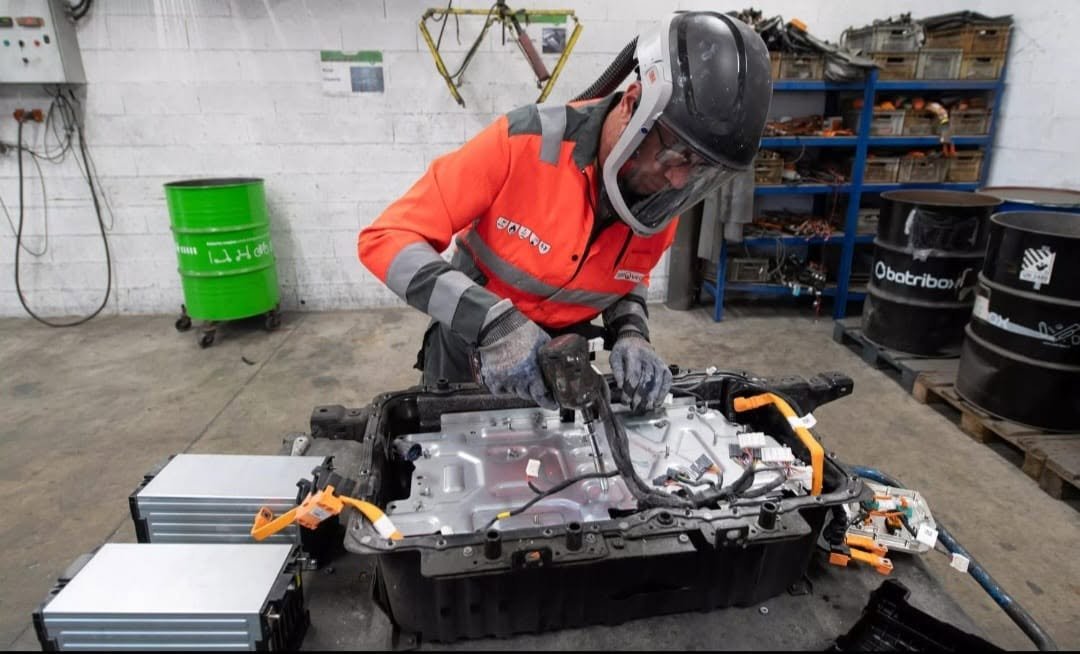
<p>Petrol and diesel vehicles are still the most widely used in the world. According to a report issued by Hedges & Company in May, some 1.7 billion vehicles are now on the world's roads every day. The debate over the harm done to the environment by the gases released from the fossil fuels they burn began decades ago.</p>
<p>Vehicle makers therefore looked for alternatives to fossil fuels. Hybrid vehicles, which run on fuel and a rechargeable battery, emerged as a result, and carmakers then moved to introduce vehicles that run on electricity alone. Many countries are now promoting electric vehicles to reduce climate change, control air pollution and save the foreign exchange spent on fuel imports. According to the International Energy Agency's (IEA) Global EV Outlook 2026 report, 20 million electric cars were sold worldwide in 2025, growth of about 20 per cent on 2024. The IEA further forecasts that electric car sales could rise to 23 million this year.</p>
<p>Electric vehicle use rising</p>
<p>Electric vehicle sales have also been rising steadily in Sri Lanka. Electric vehicle registrations rose from 340 in 2020 to 12,519 by 2024. Across all vehicle categories, 35,268 electric vehicles had been registered by 30 November 2025, about 80 per cent of them motorcycles. These figures were recorded against a background of vehicle import restrictions imposed because of the economic crisis.</p>
<p>According to a special performance audit report on electric vehicle use, post-use management and environmental impact, issued by the National Audit Office on 22 September 2026, the number of registered electric vehicles in Sri Lanka passed 100,000 by June 2026. Disposing of and recycling the batteries of these vehicles in an environmentally friendly way is essential, but the audit report states clearly that no proper programme for this has yet been put in place in the country.</p>
<p>Why battery recycling matters</p>
<p>To build a useful discussion on the issue, we spoke to three experts: Professor Wijendra Bandara, Chairman of the Sustainable Energy Authority; Dr Kokila Ranasinghe of the Department of Chemistry, Faculty of Natural Sciences, Open University of Sri Lanka; and Kapila Rajapaksha, Director General of the Central Environmental Authority.</p>
<p>Dr Kokila Ranasinghe of the Open University of Sri Lanka in Nawala explained why this matters (remarks translated from Sinhala):</p>
<p>"Dumping the lithium-ion batteries used in electric cars with ordinary waste or in the open can cause four main kinds of harm. The extent of the damage depends on the battery's chemical make-up, the amount of material it contains and the electrical energy left in it. If the casing breaks or decays over time, the lithium salts, the electrolyte solution and, in some batteries, nickel and cobalt compounds can get into the soil. With rainwater these materials can flow into streams and rivers or seep through the soil into groundwater. If the materials released from a battery are present in water in sufficient concentration, they can be toxic to small aquatic organisms.</p>
<p>"Even a used battery can still hold an electrical charge. If it is crushed while waste is being transported, an internal short circuit can cause a fire, and the smoke and toxic gases released are harmful to us. Discarding a battery also means losing the chance to recover copper (Cu), lithium (Li) and other valuable materials. Recycling them makes it possible to produce new raw materials while also reducing environmental damage. In particular, because an electric car's lithium-ion battery system is made up of many cells, there is a higher risk that a fire in one cell will spread to the others and become far more serious.</p>
<p>"It is now more than 15 years since Sri Lanka began importing hybrid vehicles, and sales of electric vehicles have also gone up. There is no need to delay introducing laws on batteries any further."</p>
<p>EU rules that are not to be ignored</p>
<p>The European Union's Battery Regulation No 2023/1542 introduces a legal framework covering a battery's entire life cycle, from production to final disposal. It sets out producers' responsibilities and sets targets for collecting and recycling batteries and recovering valuable raw materials, including lithium. China, the world's leading producer of electric vehicles, also operates a system to track a battery's path from the time it is made until it is taken out of use. That allows it to control the informal disposal of battery waste and bring reusable resources back into the economy.</p>
<p>The special performance audit report points out that Sri Lanka has still not given proper attention to such measures. According to the report, between 2020 and 2025 the country had no adequate national mechanism for collecting, storing, transporting and finally disposing of used batteries. The audit identified as key problems the lack of a national system able to track a battery from import until it is taken out of use and finally disposed of, and the failure to record battery replacements and disposals adequately in the records of the Department of Motor Traffic.</p>
<p>Legal regulations for batteries soon</p>
<p>However, the National Environmental (Amendment) Act No 15, certified on 21 July 2026, has introduced new legal provisions to implement Extended Producer Responsibility (EPR).</p>
<p>Central Environmental Authority Director General Kapila Rajapaksha explained it as follows (remarks translated from Sinhala):</p>
<p>"Whoever makes or imports electric vehicle batteries must take responsibility, after the sale, for disposing of them again in an environmentally friendly way. The legal provisions for that have been included in the Act and the regulations have now been drawn up. They have been sent to the Legal Draftsman and are now at the final stage. Businesses that bring plastics, electrical equipment and batteries into Sri Lanka must inform the Central Environmental Authority of the steps they take to prevent these from being released informally into the environment again.</p>
<p>"We give companies that produce things like plastics a target of collecting back and recycling something like 40 to 60 per cent of their annual output, and they must confirm that to us with data. If they do not, they will be liable to a fine. Once the EPR law comes into force we will be able to manage this.</p>
<p>"We have prepared a programme to make the main companies that import vehicle batteries into Sri Lanka, and vehicle importers, aware of the amended EPR law. The guidelines in the Act include providing a report from a recognised laboratory on the battery's condition, submitting an agreement with a reuser or recycling firm that will take the used battery, handing the old battery removed after a new one is fitted to an approved institution, submitting a certificate to the Central Environmental Authority that the battery has been handed over, and sending batteries that cannot be reused abroad for recycling or resource recovery. We can reach a final agreement on matters relating to implementing the Act before the end of this year."</p>
<p>A battery policy close at hand</p>
<p>Three committees have been appointed to draw up the country's energy policies. Professor Wijendra Bandara, who chairs the battery policy committee as well as the Sustainable Energy Authority, said (remarks translated from Sinhala):</p>
<p>"The electricity policy has been drawn up, given Cabinet approval and gazetted. The green hydrogen policy has now been drawn up and has Cabinet approval, and is still to be gazetted. The battery policy has been drafted and handed over to the ministry. There is a process to follow when making a policy. We must discuss it with all the stakeholders involved and get their views, and it must be opened to public comment. The battery policy is now due to go out for public comment. On the 11th of next month we will hold a discussion with stakeholders to gather views and proposals. After that the draft will be reviewed again and the final draft prepared. It will be gazetted only after it goes for Cabinet approval and is approved by Parliament.</p>
<p>"In the battery policy we have made it compulsory for every battery to have an HS Code (Harmonized System Code). It must be possible to look up all the information about a battery whenever needed. It cannot disappear anywhere along the way. It is only now, as electric vehicle use rises, that even other countries in the world have started to take more interest in this. There is still no proper programme in the world for recycling these batteries; methods will develop in future. We must make our laws with these things in mind.</p>
<p>"In Sri Lanka, only about 60 to 70 per cent of our electricity needs are generated from renewable energy. We still cover the remaining 30 to 40 per cent with fossil fuels. As electric vehicle use rises, we must increase renewable energy generation to match. If, instead of putting diesel in the vehicle, we put diesel in the power plant and use that to charge the car, our goal will not be achieved."</p>
<p>Translated from the LSN Sinhala edition.</p>