Sport · India Bureau
String Theory Pioneer Ashoke Sen Explores Frontiers of Physics
Renowned Indian theoretical physicist Ashoke Sen, recipient of the prestigious Oskar Klein Medal, delves into fundamental questions about the nature of matter and reality. His work challenges conventional understanding of how the universe operates at its most basic level.
LSN India ·
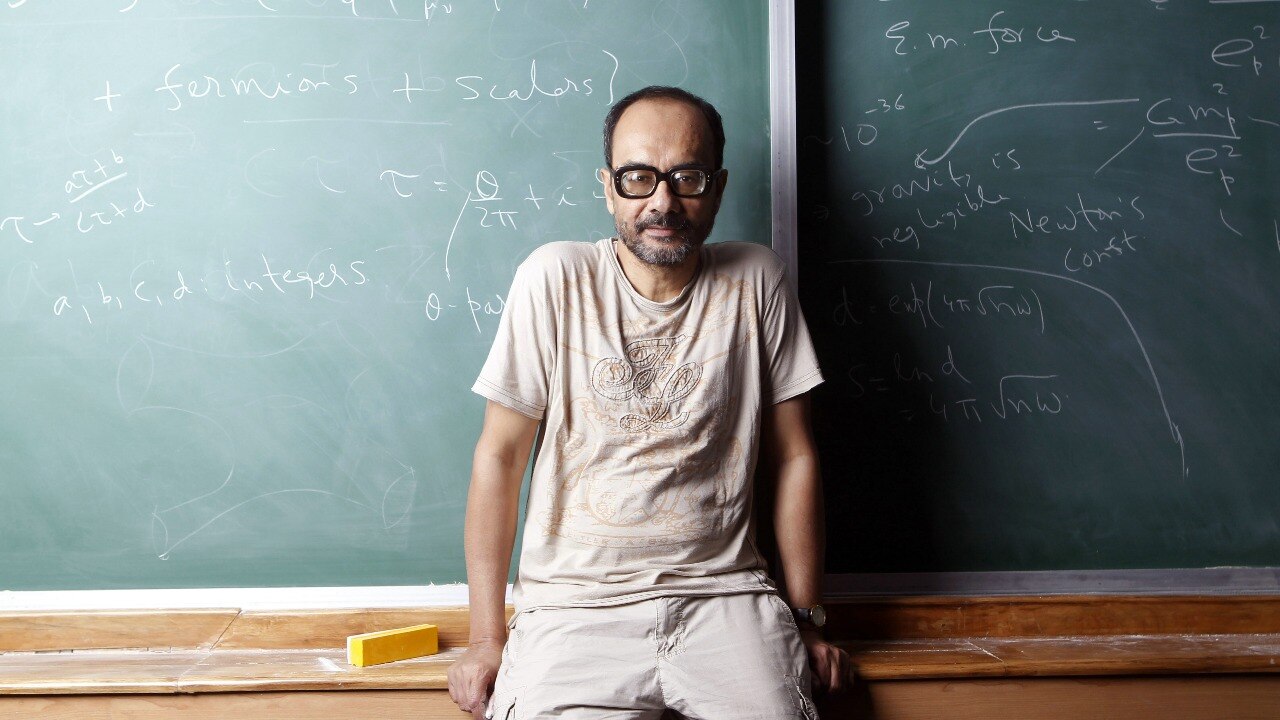
Ashoke Sen, one of India's most celebrated theoretical physicists, has dedicated his career to investigating whether the fundamental building blocks of the universe are indeed strings rather than particles. As a recipient of the Oskar Klein Medal, one of the highest honours in theoretical physics, Sen has made significant contributions to string theory and our understanding of quantum mechanics.
String theory proposes that all matter and energy in the universe are composed of tiny, vibrating strings of energy rather than point particles. This radical departure from conventional particle physics attempts to unify quantum mechanics with general relativity, addressing some of the deepest mysteries in physics that have remained unsolved for decades.
Sen's research has focused on various aspects of string theory, including dualities and symmetries that govern how strings interact. His work has helped advance the field considerably, though string theory remains controversial within the scientific community due to the challenge of empirical verification.
The theoretical physicist's contributions have positioned him among the leading voices in contemporary physics research. His inquiries into the unknown continue to shape discussions about the fundamental nature of reality and the universe's underlying structure, inspiring new generations of scientists to pursue answers to questions that have long puzzled humanity.