Culture & Entertainment · India Bureau
Study shows green roofs outperform white roofs in cooling buildings
Research from the University of Hawaii has found that vegetation-covered roofs maintain significantly lower temperatures than white reflective surfaces in tropical urban environments. The findings suggest green roofs could help mitigate rising city temperatures caused by urban heat island effects.
LSN India ·
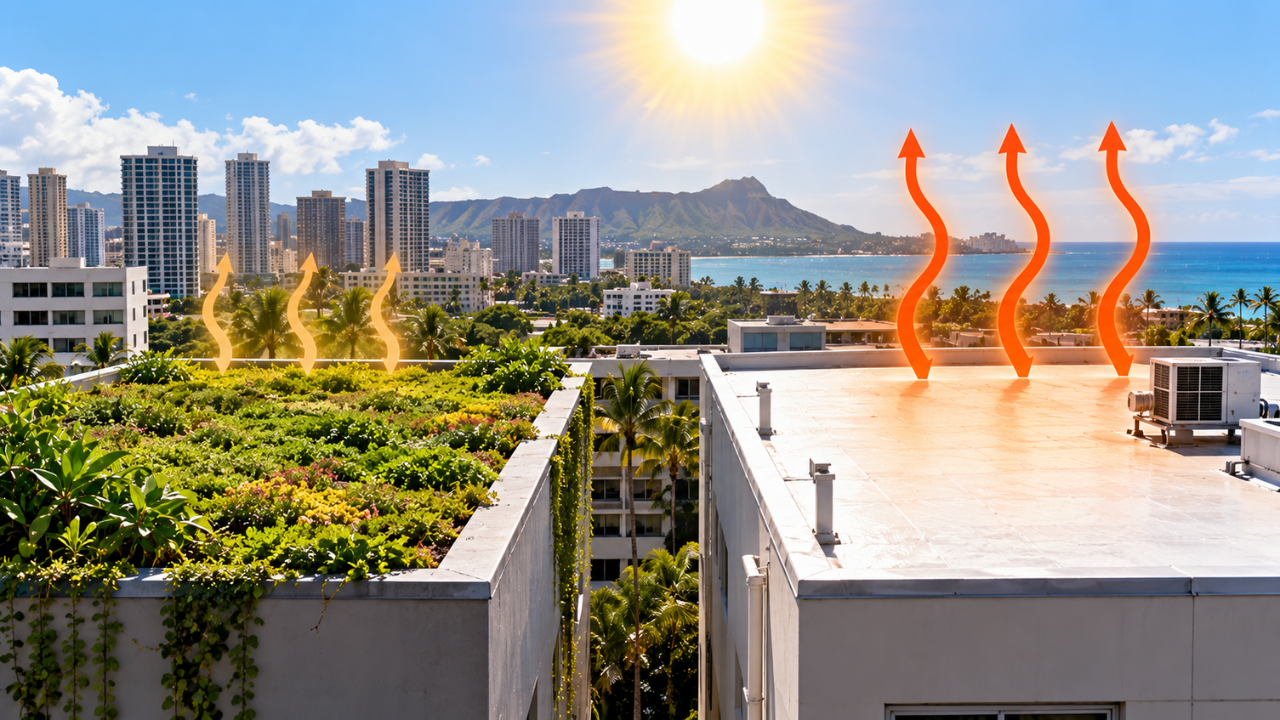
A comprehensive study conducted by researchers at the University of Hawaii has demonstrated that green roofs are more effective at regulating building temperatures than white roofs in warm climates. The research, which examined rooftop performance in Honolulu, revealed measurable differences in thermal properties between the two cooling approaches.
The vegetated green roofs maintained average daytime surface temperatures that were 4.1 degrees Fahrenheit lower than their white roof counterparts. More significantly, peak temperature readings on the green roofs were 18.5 degrees Fahrenheit cooler than those recorded on white roof installations, indicating substantially improved thermal performance during the hottest parts of the day.
The superior cooling effect of green roofs stems from the process of evapotranspiration, in which plants release moisture that cools the surrounding air. This natural cooling mechanism operates continuously throughout daylight hours, providing sustained temperature reduction that extends beyond the immediate rooftop surface to affect ambient air temperatures in the vicinity.
The findings have important implications for urban planners and building managers seeking to address rising temperatures in densely populated areas. As cities worldwide grapple with intensifying urban heat island effects, the research suggests that vegetation-based roofing systems offer a viable, environmentally beneficial strategy for improving building energy efficiency and enhancing local climate resilience in tropical and subtropical regions.