World · India Bureau
Switzerland buries thousands of underwear to assess soil health
Swiss researchers have deployed an unconventional method to evaluate soil quality across the country, burying 2,000 pairs of cotton underwear at various locations. The experiment aims to measure decomposition rates as an indicator of soil biodiversity and ecosystem functioning.
LSN India ·
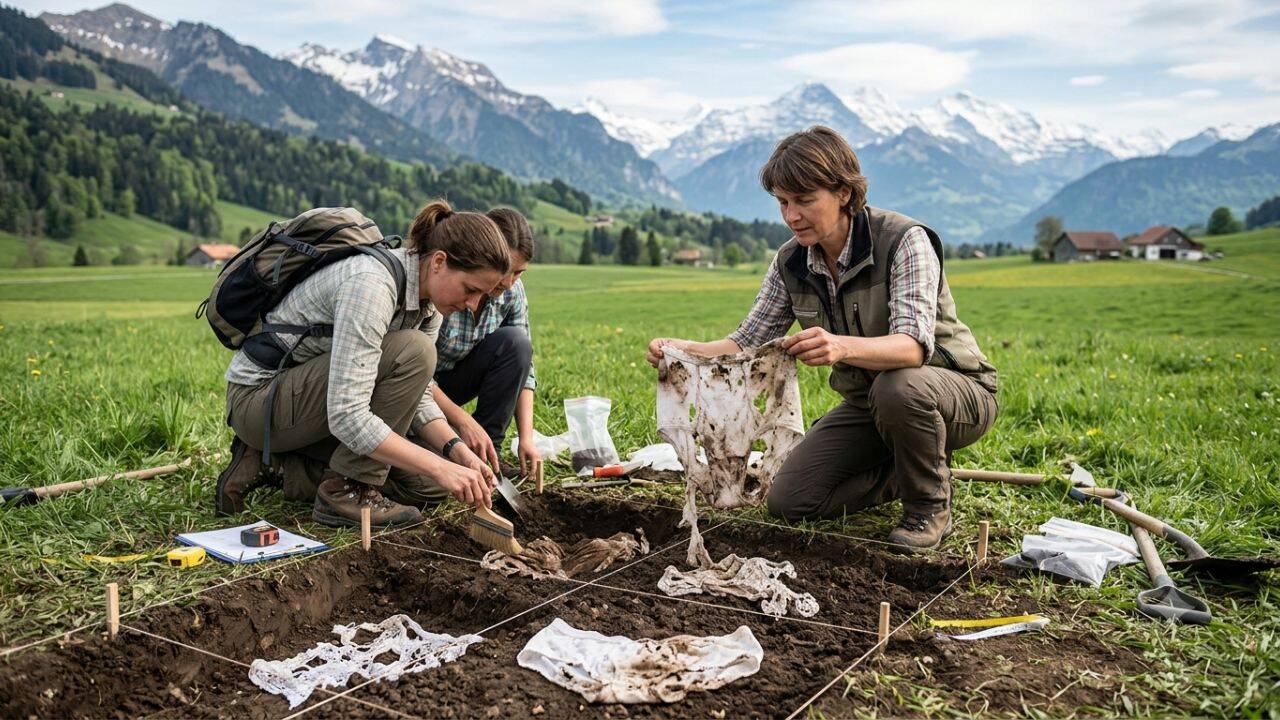
Scientists in Switzerland have launched an unusual large-scale soil assessment project by burying cotton underwear at multiple sites across the nation. The initiative, known as a standardized soil health test, utilizes the decomposition rate of organic fabric as a measurable indicator of soil microbial activity and overall ecosystem health.
The method works on a straightforward principle: cotton degrades at predictable rates depending on soil conditions, moisture levels, and the abundance of microorganisms present. By retrieving and analyzing the buried garments after a set period, researchers can determine how actively soil organisms are breaking down organic matter—a key measure of soil fertility and ecological function.
This innovative approach has gained traction in soil science circles as a cost-effective and standardized way to compare soil quality across different regions and land-use types. The underwear test provides researchers with tangible data about microbial populations and decomposition rates without requiring expensive laboratory equipment or complex analysis.
The Swiss study represents part of a broader international effort to better understand and monitor soil health. Healthy soils are critical for agriculture, carbon storage, water filtration, and supporting biodiversity, making such assessment tools increasingly important as environmental challenges mount across the globe.