World · India Bureau
Tagore portrait defacement reignites Bangladesh identity debate
The vandalism of Rabindranath Tagore's portrait in Dhaka has triggered intense scrutiny over cultural preservation and national identity in Bangladesh. The incident underscores growing tensions between political factions in the aftermath of July 2024's political upheaval.
LSN India ·
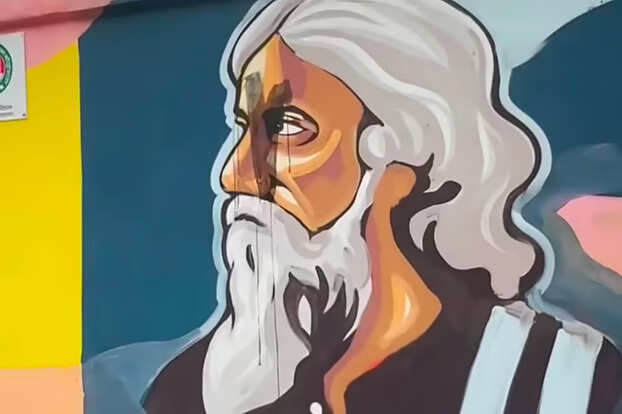
Dhaka has been gripped by fresh controversy following the defacement of a portrait of Rabindranath Tagore, the Nobel laureate poet and cultural icon revered across South Asia. The vandalism has prompted widespread public concern about the protection of cultural heritage and symbols in Bangladesh, with civil society groups mobilizing to condemn the act.
The incident arrives amid heightened political turbulence in Bangladesh following the July 2024 uprising, which fundamentally reshaped the nation's political landscape. Observers have linked the portrait's defacement to escalating tensions involving the Jamaat-e-Islami party, whose ideological positions have long been contested by secular and progressive movements within the country.
Tagore's legacy remains deeply contested terrain in Bangladesh's contemporary politics. While his contributions to Bengali literature and philosophy are internationally celebrated, his secular worldview and vision of a pluralistic society have made him a symbolic flashpoint in debates about Bangladesh's cultural direction. The defacement has mobilized artistic communities and intellectuals to reaffirm their commitment to preserving the poet's legacy.
The controversy underscores the fragile relationship between politics and culture in modern Bangladesh. As the nation grapples with defining its national identity following recent political upheaval, disputes over cultural icons have emerged as a barometer of broader ideological divisions. The incident has reinvigorated discussions about how Bangladesh negotiates competing visions of its past and future.