Technology · India Bureau
Tech-enabled grazing restores grassland biodiversity in American heartland
A South Dakota ranching family has successfully revitalized their land's ecological health by combining rotational grazing with satellite-guided virtual fencing technology. The innovative approach has led to a marked resurgence in wildlife populations while reducing labor demands.
LSN India ·
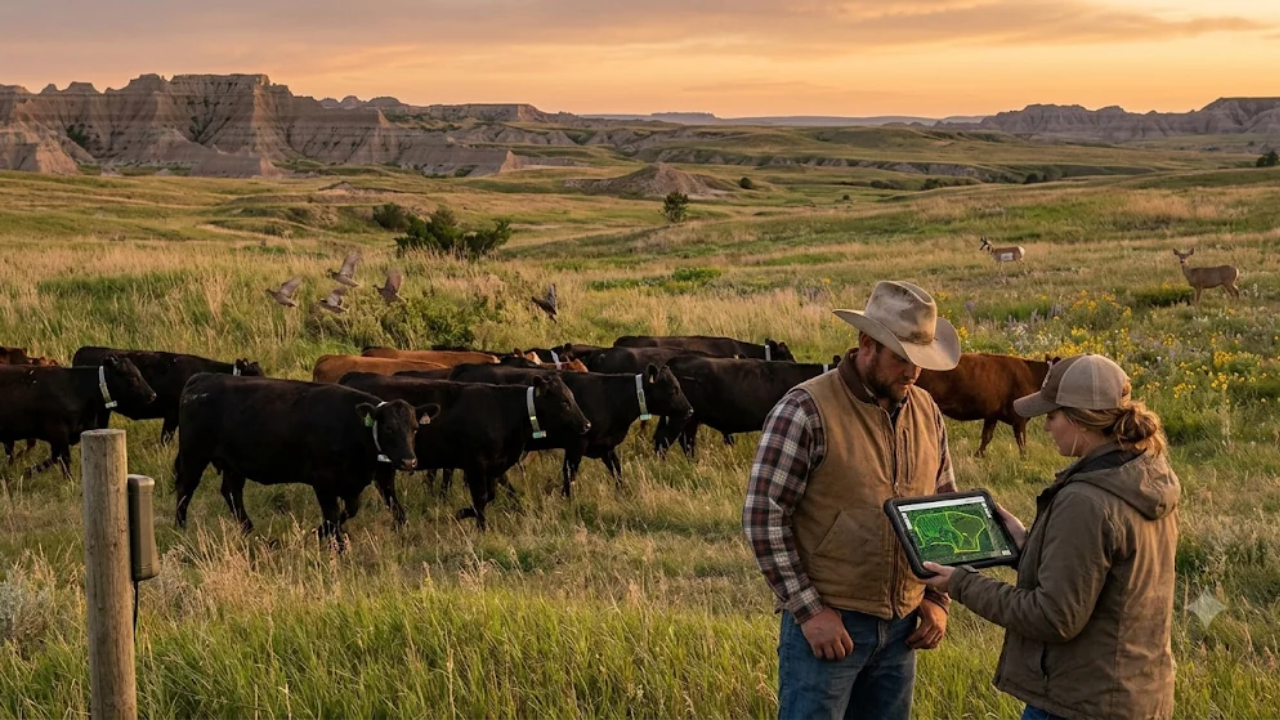
Ranchers in South Dakota have demonstrated how precision agriculture technology can serve conservation goals, deploying satellite-guided virtual fencing to manage cattle movement across their grasslands. By implementing rotational grazing practices—systematically moving livestock between pasture sections to allow vegetation recovery—the operation has substantially improved plant health and restored native grassland ecosystems.
The virtual fencing system uses GPS and satellite technology to establish invisible boundaries for cattle, eliminating the need for traditional fencing infrastructure while enabling more flexible grazing patterns. This precision management allows grasslands extended rest periods between grazing cycles, facilitating the regeneration of native plant species that form the foundation of prairie ecosystems.
The ecological benefits have been substantial. Native bird populations have diversified and increased across the property, while larger mammal species have returned to areas previously degraded by continuous grazing. The restored grassland structure now supports a more complex food web and improved soil health.
Beyond environmental gains, the technology has yielded practical operational advantages. The satellite-guided system reduces labor requirements for cattle management and monitoring, allowing ranchers to achieve better land stewardship with improved efficiency. The approach exemplifies how modern technology can align agricultural productivity with ecological restoration objectives.