Politics · India Bureau
Tech weaponisation, mineral controls threaten global progress: Modi at BRICS
As the two-day BRICS Summit concluded, Prime Minister Narendra Modi warned against the politicisation of technology and critical minerals, while Chinese President Xi Jinping unveiled fresh initiatives on artificial intelligence, trade and manufacturing.
LSN India ·
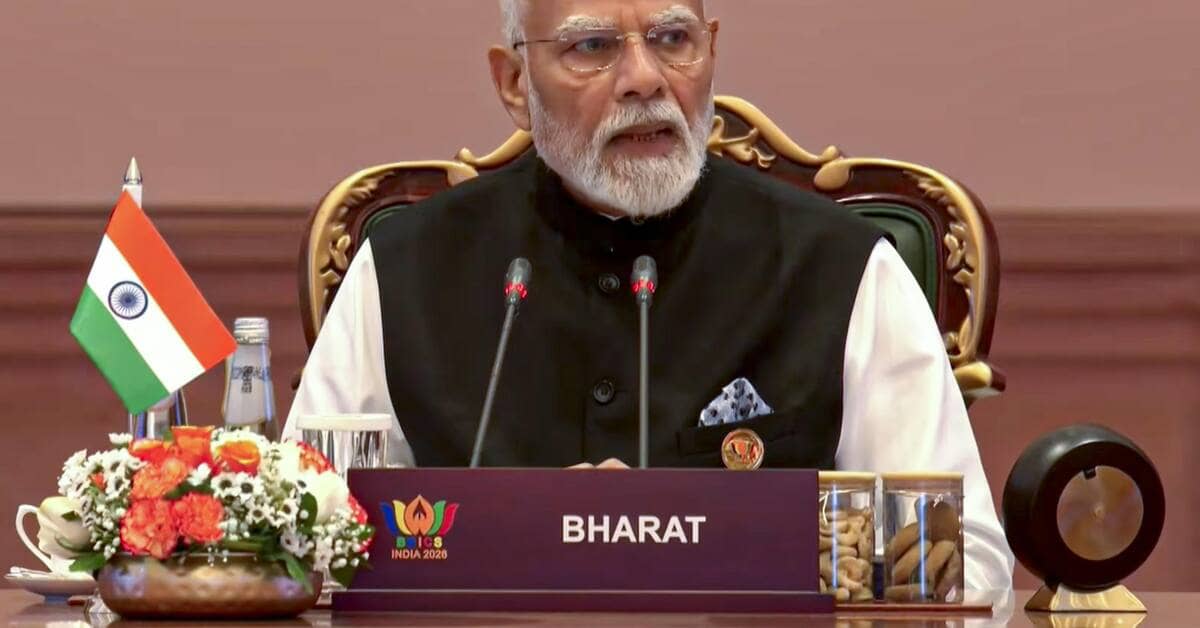
Prime Minister Narendra Modi on Tuesday cautioned BRICS nations against the weaponisation of technology and critical mineral resources, arguing that such moves undermine collective progress and development. Speaking at the conclusion of the two-day summit, Modi emphasised the need for resilient and diversified supply chains that are not vulnerable to geopolitical pressures or strategic rivalries.
The Prime Minister stressed the importance of inclusive technology frameworks that benefit all nations, particularly emerging economies and developing countries. He highlighted India's commitment to bridging the digital divide and ensuring equitable access to technological advancement across the Global South.
Chinese President Xi Jinping, addressing the summit, proposed a series of collaborative initiatives spanning artificial intelligence, international trade, and advanced manufacturing. The proposals aim to strengthen cooperation among BRICS members and position the bloc as a counterweight to Western-dominated technological and economic frameworks.
The summit concluded with consensus on the need for more multipolar approaches to global governance and economic development. Both leaders underscored the importance of protecting developing nations' interests in ongoing negotiations over critical mineral extraction, supply chain management, and technology transfer agreements.
The BRICS grouping, which includes Brazil, Russia, India, China and South Africa, has increasingly positioned itself as a voice for the Global South in international forums, challenging existing power structures in global trade and technology governance.