World · India Bureau
Teen inventor creates affordable brain-controlled prosthetic arm using brainwaves
A 17-year-old developer has designed a mind-controlled prosthetic limb that responds to brainwave signals, dramatically reducing the cost of advanced prosthetic technology. The innovation uses non-invasive electrodes to interpret neural signals and head movements for device control.
LSN India ·
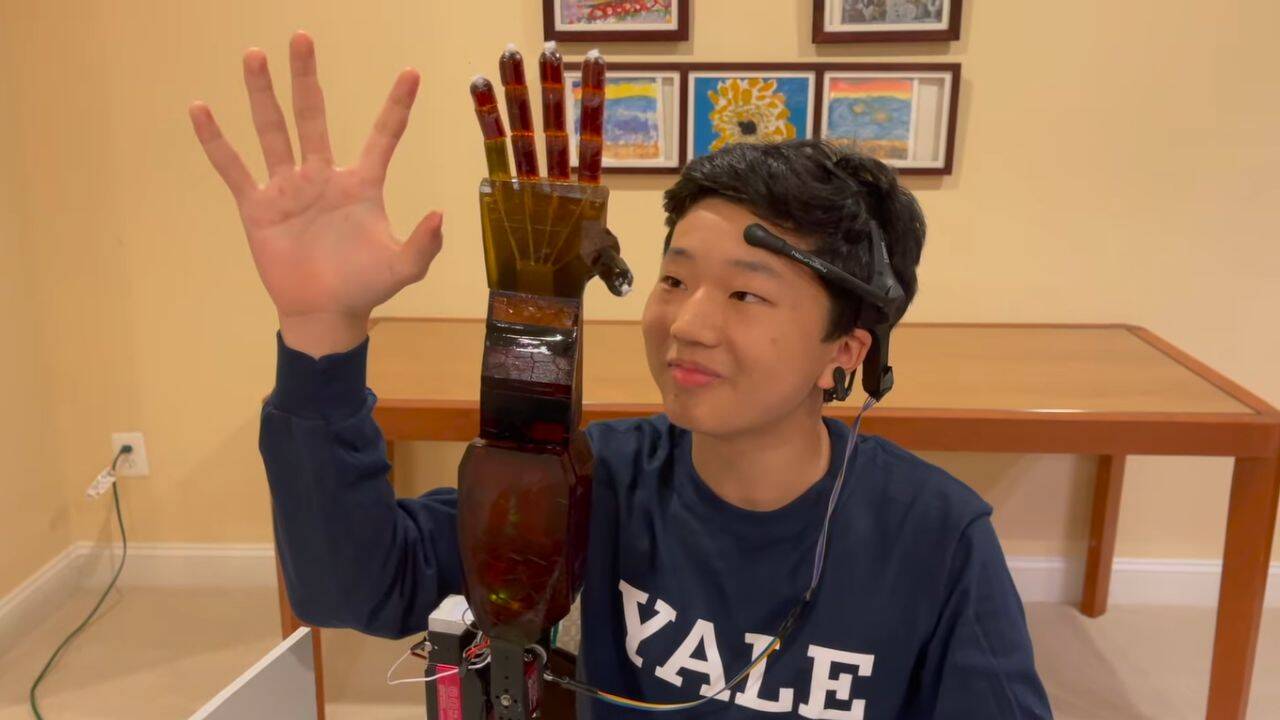
Benjamin Choi has developed a prosthetic arm capable of responding to brainwave signals at a fraction of the cost typically associated with advanced prosthetic limbs. The device, built during the pandemic, utilizes non-invasive electrodes to read neural activity and interpret head gestures, allowing users to control the limb through thought and natural movement cues.
The breakthrough addresses a significant barrier to prosthetic technology adoption across South and Southeast Asia, where cost remains a primary obstacle to access. By leveraging machine learning algorithms, Choi's design interprets complex brainwave patterns, translating neural intent into precise arm movements without requiring surgical implantation of sensors.
The innovation has attracted considerable attention from researchers and funding bodies interested in prosthetic advancement. Choi's work demonstrates the potential for emerging technologies to democratize access to sophisticated medical devices, particularly in regions where conventional prosthetics remain prohibitively expensive.
The teenage inventor continues to refine his technology while pursuing further research into machine learning applications within the medical device sector. His project exemplifies how young innovators can address critical healthcare challenges through creative problem-solving and accessible design principles.