World · India Bureau
Teen invents adaptive 3D-printed VR controller to overcome grip limitation
A 14-year-old has designed an innovative adaptive virtual reality controller after struggling to use standard gaming equipment. The 3D-printed device enables him to play VR games through pressure-based controls rather than traditional hand gripping.
LSN India ·
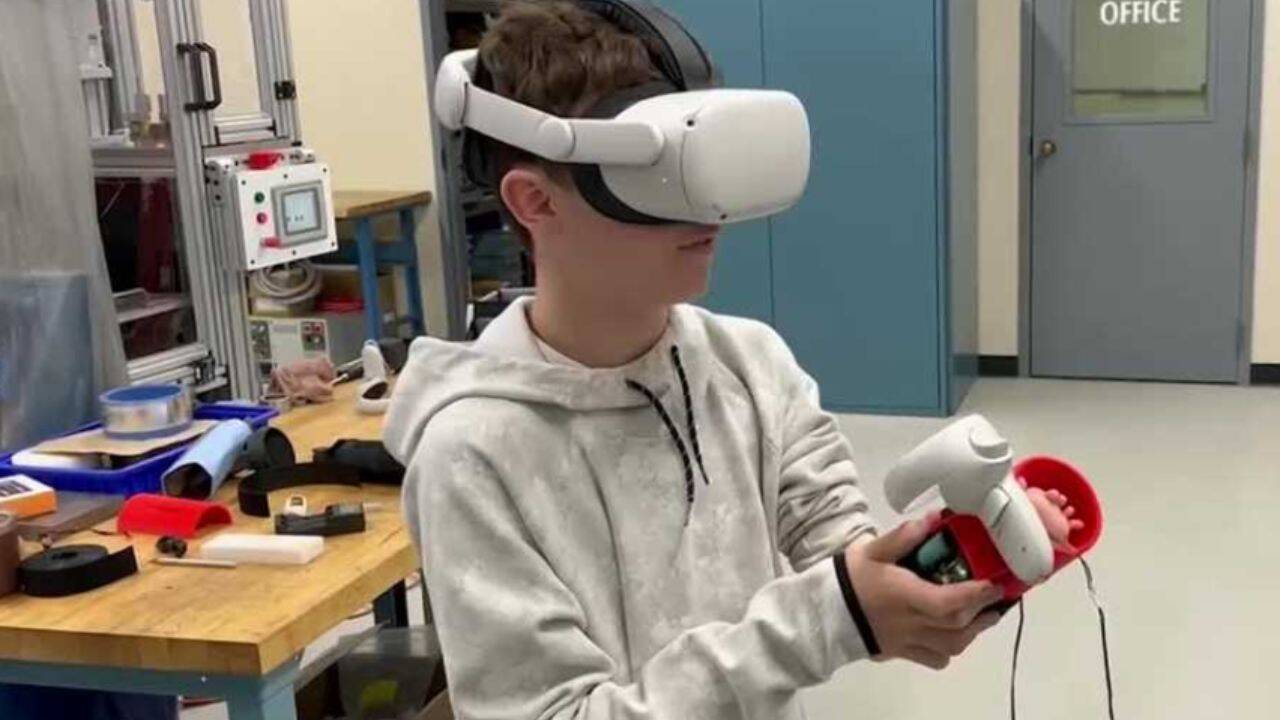
Scott Merrow, a teenager from Auburn in the United States, faced a significant barrier to enjoying virtual reality gaming due to difficulty gripping conventional controllers. Rather than abandon the hobby, Merrow collaborated with his mechanical engineer uncle to develop a customized solution tailored to his needs.
The project resulted in an adaptive VR controller built through 3D printing technology. After testing and refining multiple prototypes, Merrow created an arm sleeve device equipped with a pressure-sensitive sensor system. The innovation allows him to play VR games by applying varying degrees of pressure rather than relying on traditional hand grip mechanisms.
The development of adaptive gaming equipment addresses broader accessibility challenges within the gaming industry. As virtual reality technology becomes increasingly mainstream, solutions like Merrow's design demonstrate how customized hardware can enable broader participation in interactive entertainment. The project reflects growing recognition that gaming accessibility benefits from user-driven innovation and collaborative problem-solving between young people and experienced engineers.
Merrow's approach exemplifies how technological constraints can be transformed into opportunities for innovation. His work has potential implications for others facing similar challenges with standard gaming equipment, highlighting the role that 3D printing and adaptive design can play in making entertainment more inclusive.