World · India Bureau
Teen's malaria model wins $50,000 prize for mosquito net strategy
A 16-year-old student has developed a mathematical model that could significantly enhance the effectiveness of insecticide-treated bed nets in combating malaria. The breakthrough research earned the young innovator a $50,000 award.
LSN India ·
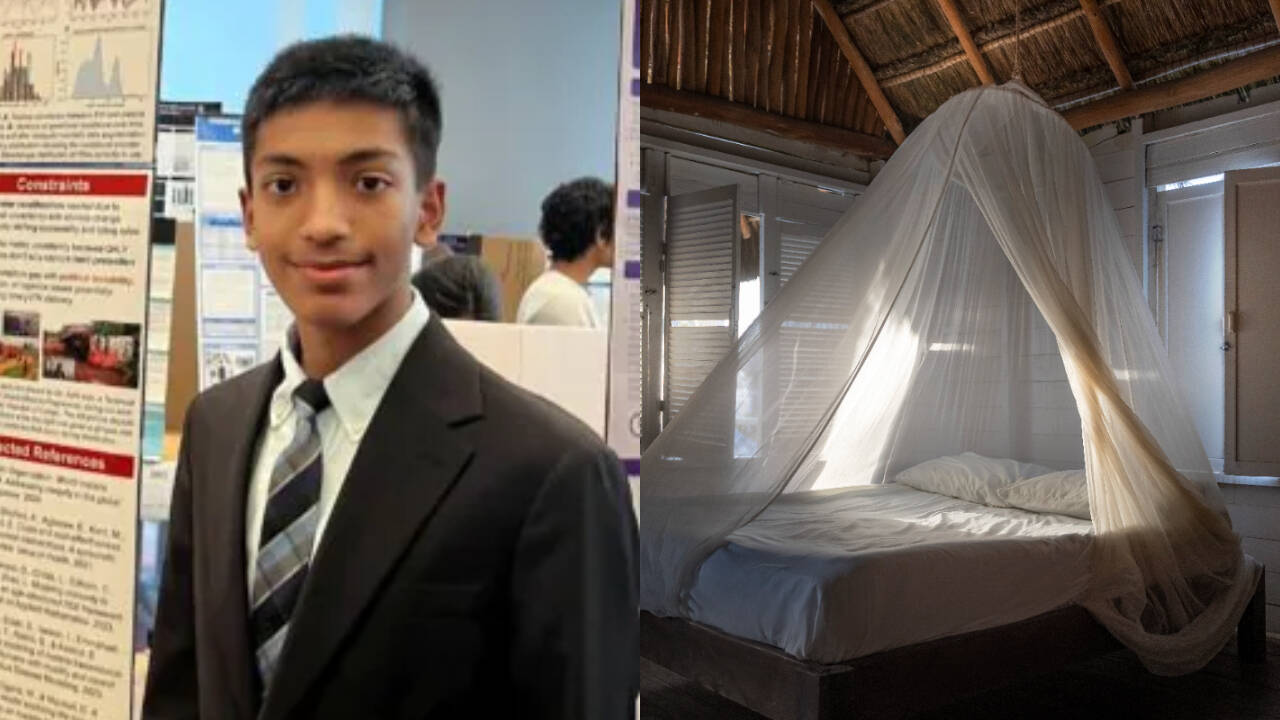
The student's computational model suggests that strategic deployment of mosquito nets could potentially double their impact in reducing malaria transmission rates. The research applies mathematical principles to optimize how bed nets are distributed and utilized across populations, addressing a critical gap in disease prevention strategies.
Malaria remains a significant public health challenge across South and Southeast Asia, with millions of cases reported annually. Insecticide-treated bed nets have proven effective in reducing transmission, but their impact varies considerably depending on usage patterns and distribution methods. The student's model provides a data-driven approach to maximizing their protective benefit.
The $50,000 prize recognizes the innovative approach to an age-old public health problem. The work demonstrates how young researchers can contribute meaningfully to disease prevention efforts through technological and analytical innovation. Such approaches are increasingly valued by health authorities and research organizations seeking scalable solutions to combat malaria.
The model's findings could influence how public health programs implement bed net distribution campaigns across high-risk regions. By identifying optimal deployment strategies, health organizations may achieve greater disease reduction with existing resources. The research adds to growing evidence that combining traditional interventions with modern analytical methods can enhance public health outcomes in endemic areas.