World · India Bureau
Thai king cobras adapt to farmland survival using forest patches, canals
A new study reveals that king cobras in Thailand's agricultural regions depend heavily on fragmented forest areas and irrigation canals to sustain viable populations. The findings underscore the delicate balance these apex predators maintain in increasingly human-dominated landscapes.
LSN India ·
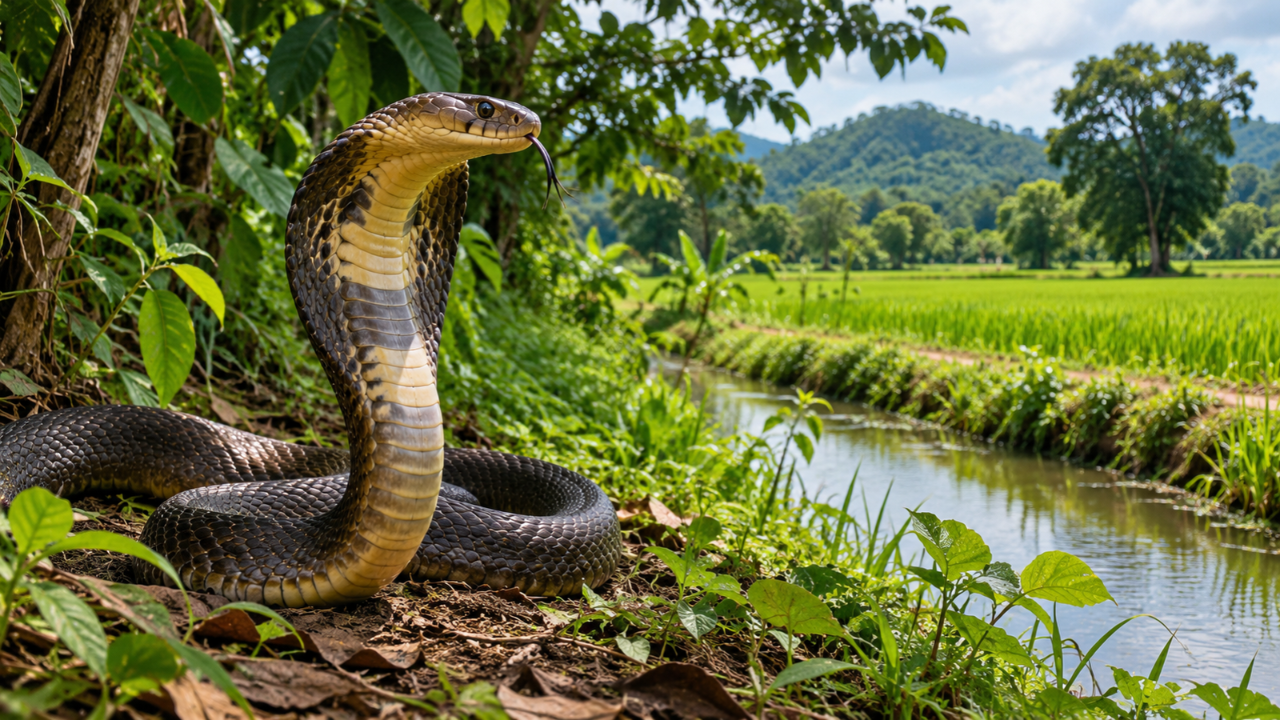
King cobras in Thailand's extensively cultivated farmlands are relying on scattered forest fragments and man-made water channels as critical habitats to maintain their survival, according to recent research findings. The study demonstrates that despite widespread agricultural conversion across the region, these iconic reptiles have adapted to utilize the remaining natural corridors and infrastructure within farming zones.
Forest patches, though fragmented and isolated from larger wilderness areas, serve as essential refuges where king cobras can hunt for prey, shelter, and breed. These small protected areas function as lifelines for the species, allowing populations to persist in otherwise unsuitable terrain dominated by crops and human settlements. Simultaneously, irrigation canals that crisscross agricultural lands provide supplementary pathways and hunting grounds for the snakes.
The research highlights the species' remarkable ecological flexibility but also underscores the vulnerability of Thailand's king cobra populations to further habitat loss. As agricultural pressure intensifies and landscapes continue to fragment, the narrow margins for survival grow increasingly precarious. Conservation efforts must focus on maintaining connectivity between forest fragments and protecting water bodies that support these populations.
The findings contribute to growing evidence that large predators can coexist with human activities in modified landscapes, provided that adequate habitat corridors and refuge areas remain available. For Thailand, protecting these fragmented ecosystems and maintaining irrigation infrastructure becomes crucial for ensuring the long-term survival of one of Asia's most formidable and culturally significant snake species.