World · India Bureau
Thai researchers reveal previously unknown king cobra behavioural patterns
Scientists studying king cobras in Thailand have documented behavioural traits that challenge existing understanding of the world's longest venomous snake. The findings provide fresh insights into how these apex predators interact with their environment and each other.
LSN India ·
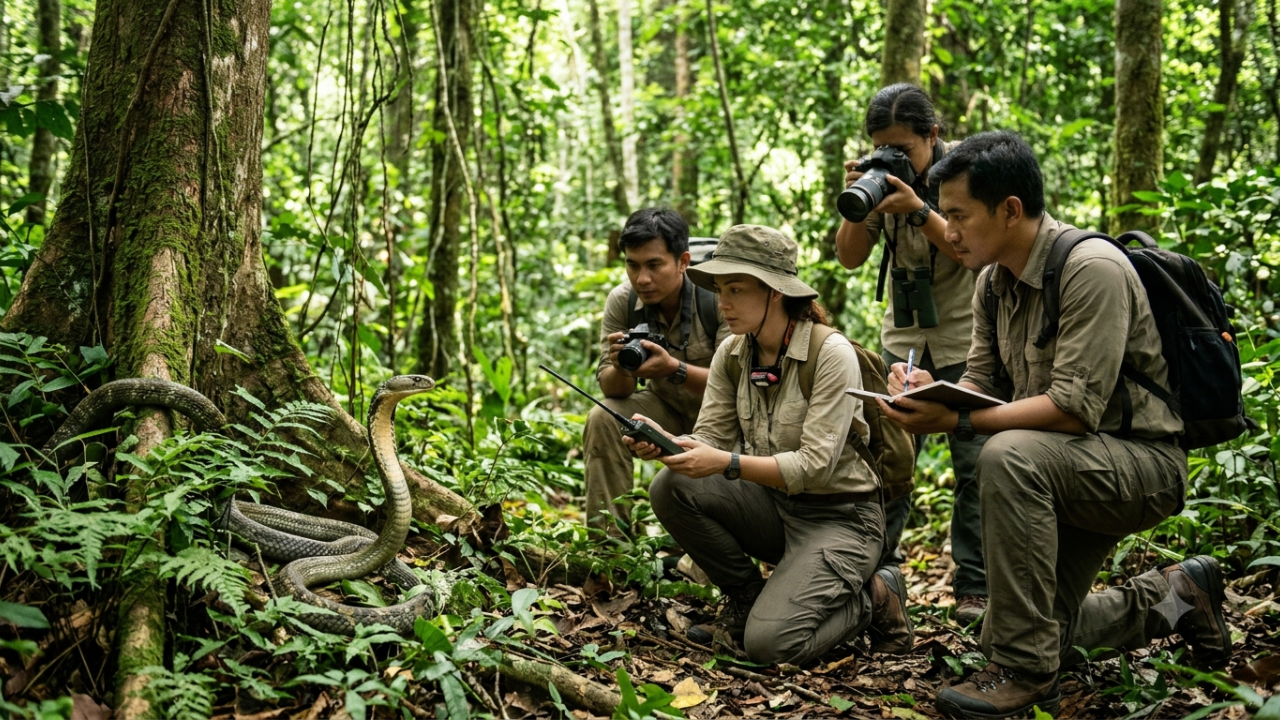
Researchers conducting fieldwork in Thailand have identified previously undocumented behavioral characteristics of king cobras, expanding scientific knowledge of one of Asia's most formidable reptiles. The study, conducted through systematic observation and documentation in natural habitats, reveals nuances in how these snakes operate that were not widely recognized in earlier research.
King cobras, scientifically known as Ophiophagus hannah, are the world's longest venomous snakes and are found across South and Southeast Asia. Despite their prominence in regional ecosystems and cultural significance, many aspects of their behavior remain poorly understood. The Thai research team focused on observing snakes in their natural environment rather than relying solely on captive specimens, yielding more authentic behavioral data.
The newly documented behaviors include previously unknown patterns in how king cobras hunt, interact with rivals, and navigate their territories. These findings suggest that the species exhibits greater behavioral complexity than earlier assessments had indicated. The research underscores how field-based studies continue to refine scientific understanding of even well-known species.
The discoveries have implications for both wildlife conservation efforts and human safety in regions where these snakes coexist with communities. Better understanding of king cobra behavior can inform more effective and humane management strategies. Scientists emphasize that continued field research is essential for documenting the full range of behavioral adaptations these snakes employ to survive in diverse habitats across tropical Asia.