World · India Bureau
Thai scientists uncover rare 'devil flower' fungus-feeding plant species
Botanists have identified a remarkable new flowering plant species in Thailand that feeds entirely on underground fungi and lacks any visible leaves or green structures. The discovery of Thismia daemona in Thong Pha Phum National Park represents a significant find, with fewer than 50 specimens believed to exist.
LSN India ·
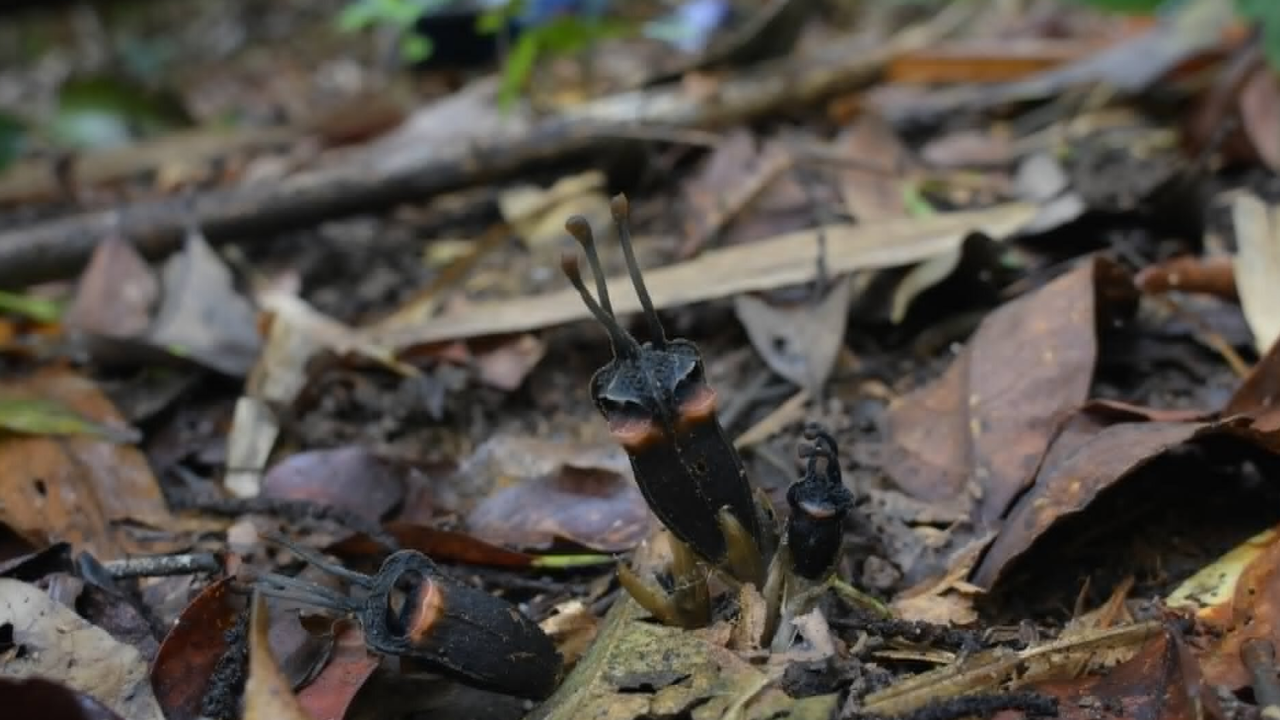
Scientists conducting research in Thailand's Thong Pha Phum National Park have documented the existence of Thismia daemona, an unusual flowering plant that has captured the attention of the botanical community. The species represents a remarkable adaptation to life in the forest floor ecosystem, having completely abandoned the traditional plant dependence on photosynthesis and sunlight.
The plant's distinctive appearance, characterized by horn-like protrusions and an otherworldly form devoid of leaves or chlorophyll-bearing structures, prompted researchers to assign it the colloquial name 'devil flower.' This striking morphology reflects the species' unusual survival strategy, which relies entirely on a parasitic relationship with subterranean fungal networks for sustenance.
Thismia daemona is part of a rare and poorly understood group of flowering plants that have evolved to thrive without producing their own food through photosynthesis. Instead, the species taps into fungal networks beneath the forest soil, extracting nutrients that support its growth and reproduction. Such mycoheterotrophic plants remain among botany's lesser-studied organisms, with many species restricted to small geographic ranges.
The discovery underscores the ongoing importance of biological surveys in Southeast Asia's tropical regions, where numerous plant species remain undocumented or poorly understood. Researchers estimate that fewer than 50 individual plants of this species currently exist, highlighting the significance of conservation efforts in protecting Thailand's unique botanical heritage and the complex fungal-plant relationships that sustain forest ecosystems across the region.